Many custom options...


And formats...



Rare in Chinese / Japanese...
Buy a Rare calligraphy wall scroll here!
Personalize your custom “Rare” project by clicking the button next to your favorite “Rare” title below...
2. Tiger Heart
3. Kakazu
4. Violet Color
5. Kishan
6. Shimabukuro
8. Hu
10. RJ
11. Responsibility
13. Leung
14. Amazing Grace
15. Illusion
16. Hau
17. Big Dream
18. Happy
19. Sun Goddess
20. Treasure
21. Legendary Turtle
22. Intense / Serious / Deep / Profound
25. Nguyen / Ruan
26. Buddhism
27. Banzai / Wansui
28. Banzai
Religious Seeker
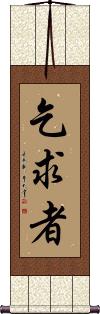
乞求者 is a rare Buddhist-only term for a seeker (one who seeks religion or enlightenment).
Tiger Heart
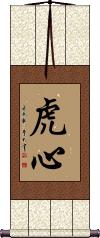
虎心 is “Tiger Heart” in Chinese and Japanese.
This can be a name and is also a rare and exotic gourmet dish served on occasion in southern China.
Kakazu
Surname
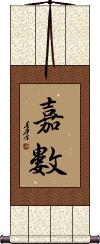
This is the most common version of the Japanese surname Kakazu in Kanji.
A more rare version is 加数.
Violet Color
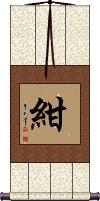
紺 is a slightly-rare Chinese and old Korean title for the color violet or purple.
In Japanese, this refers to a very deep blue color.
Kishan
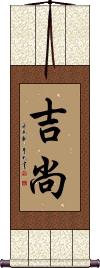
This an alternate transliteration to Mandarin Chinese for the name Kishan.
We like this one better because of the way it sounds, and the good meaning. 吉尚 is also a rare but real family name in Chinese culture.
Shimabukuro
Surname
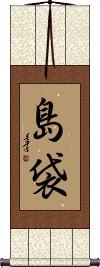
This is the Japanese surname Shimabukuro.
There are alternate romanizations such as Jimabukuro, Shimabuku, Shimafukuro, Shimatai, and Shikubukuro.
Occasionally, you will see 嶋袋 as Shimabukuro, but that is a rare variant of this name.
To Come / To Arrive
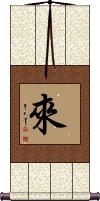
來 means to come or to arrive.
In Japanese, this can be the female given name Rai or the surnames Takagi or Kuru (and a few other rare names). Often written 来 instead of the original 來 in modern Japanese.
In the Buddhist context, this can mean the coming or refer to the future.

胡 is a common Chinese surname with ancient origins, often linked to noble lineages (like Duke Hu of Chen, a descendant of Emperor Shun), or the ancient State of Hu.
Other rare surnames such as 虎 (tiger), and 黃 or 許 romanize as Hu in some dialects.
Clear Blue Sky
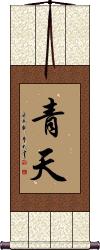
青天 means clear sky and/or blue sky in Chinese and Japanese Kanji.
Sometimes this term is used in Chinese to refer to an upright and honorable official or politician (a very rare thing).
In Japanese, this can also be the name Harutaka.
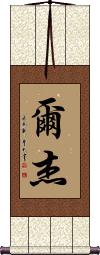
This is a common transliteration to Mandarin Chinese for the name RJ.
There's not actually letters in Chinese, so initial names like this are tough.
In this rare case, there are Chinese characters that roughly sound like the English letters R and J.
Responsibility
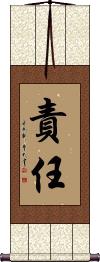
責任 is the Chinese, Japanese, and Korean word for “responsibility.”
責任 can also refer to someone who is willing to take the blame when things go wrong (instead of making excuses or passing the blame to someone else). While this is a noble idea, I think it is getting rare these days in both eastern and western cultures.
Also associated with the idea of "duty."
Antiwar / Anti-War
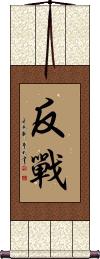
反戰 means antiwar, as in what a pacifist believes in.
China does plenty of saber-rattling but thankfully doesn't go to war very often, and Japan has embraced a pacifist ideology. Therefore, it's rare to need this word. However, this is the kind of word that war protesters would write on their signs.
 There is a modern Japanese version of the second character which has become the standard in Japan after WWII. If you want your calligraphy written in the modern Japanese form, please click on the Kanji shown to the right instead of the button above. Note: Most Japanese and all Chinese people will recognize the form shown in the upper left.
Leung
Surname

梁 is the most common character that can represent a surname romanized as Leung (from Cantonese) or Liang (from Mandarin).
The actual meaning is roof beam, structural beam, pillar and sometimes bridge.
This can refer to the Liang dynasty of China (502-557 AD).
This can also be the rare surname Reon in Japanese.
Amazing Grace
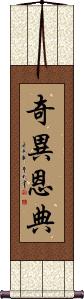
奇異恩典 is the title, “Amazing Grace” in Chinese.
The first two characters can also mean amazing, fantastic, exotic, astonishing, odd, strange, wonderful, extraordinary, uncommon, or rare.
The last two characters mean “grace,” as in “grace or favor of/from God.”
Illusion
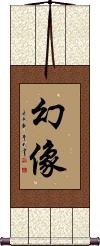
幻像 is a universal word for Illusion in Chinese, Japanese Kanji, and old Korean Hanja.
The first character means phantasm, vision, dream, illusion, apparition, or fantasy.
The second character means statue, picture, image, figure, portrait, shape, form, appearance, to be like, to resemble, to take after, to seem, or in rare/ancient context: an elephant.
 Note that the first character can be written without the left-side radical in Chinese. This form is shown to the right. Both forms are acceptable in Chinese but the character shown to the right is more likely to be read as "elephant."
See Also: Reality

侯 is a Cantonese surname that romanizes as Hau.
It's Hou or Hóu in Mandarin.
The meaning is marquis or nobleman.
More rare, but 郝 is another character that is romanized as Hau from Cantonese, so double check that this is the correct character.
Big Dream
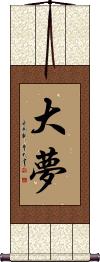
大夢 means “Big Dream” in Chinese and Japanese.
大夢 is primarily a Buddhist term referring to the great dream that represents a long and winding life that feels like a dream (since reality is an illusion anyway in Buddhism).
This can also be a female given name, Hiromu, or Oomu, in Japanese. Also, more rare unisex given names Daimu or Taimu.
Happy
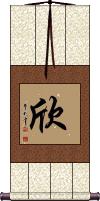
欣 is the type of happiness that you feel on the inside. It is the feeling of being released and delighted as well as being in a state of contentment. 欣 is more the internal happiness that perhaps only shows by the smile on your face. It can also be translated as “to take pleasure in” or “to rejoice.”
Note: 欣 is often used in compound words - especially in Korean Hanja.
As Japanese Kanji, this is so rare, that most Japanese people are not aware of its existence.
See Also: Happiness
Sun Goddess
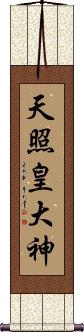
天照皇大神 is the title for Sun Goddess or Amaterasu Oomikami in Japanese.
Rare Chinese Buddhists/Shitoists may be familiar with this (so I have included the Chinese pronunciation above) however, this should generally be considered a specifically-Japanese title.
Besides Amaterasuoomikami, this can also be pronounced/romanized as Tenshoukoudaijin. There are several similar ways to write Sun Goddess in Japanese, so don't be surprised if you see different forms on the web, etc.
Treasure
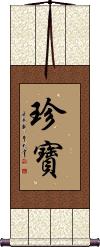
In Chinese, 珍寶 means treasure, something you value highly, or something very precious to you.
In Japanese, 珍寶 has a meaning like “rare treasure.”
珍 can mean a precious thing or treasure. 寶 can mean a jewel or gem, a treasure, or simply precious. Together these two characters reinforce each other into a word that clearly means treasure.
Legendary Turtle
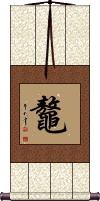
鼇 means “legendary turtle” in Chinese. 鼇 is a great mythological turtle that travels the seas. The creature is comparable to the dragon of China, however, it so happens that dragons became a bit more famous as history progressed. In modern Chinese, this character can just refer to a large sea turtle.
Note: 鼇 can be pronounced in Korean but this is a very rare Korean Hanja form - it hasn't been used in Korea for at least a few hundred years (even before they switched to Hangul characters).
Intense / Serious / Deep / Profound
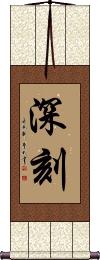
深刻 is a Chinese word that is the form of intense that describes a person who is deep, serious, and a true thinker.
If you find yourself contemplating the world and coming up with profound ideas, this might be the word for you. In some contexts (especially Korean), it can mean seriousness, gravity, or acuteness.
In Japanese, this can mean “serious problem” or can be a rare given name, Misa. You should not use this if your audience is Japanese.
Buddha / Buddhism
Hotoke
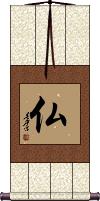
仏 is the single Japanese Kanji that can mean Buddha or Buddhism.
This Kanji was a shorthand way to write 佛 (Buddha) in Chinese (popular around the 13th century). Somehow, this became the version of this Chinese character that was absorbed into Japanese and thus became part of standard Kanji. Centuries later, this character is not recognized in China (except for those from China with a background in Chinese literature or language).
仏 is also a rare or derivative Korean Hanja form - but I doubt you will find any Korean that knows that.
Military Discipline
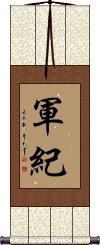
軍紀 means military discipline or military principles.
If maintaining your military discipline is important to you personally or important to your military unit, this is the wall scroll to have up behind your desk. In fact, it's the kind of thing I expect to see behind the desk of a First Sergeant or maybe a hardcore NCO.
Note: In some rare contexts, it could be extended to mean “morale,” but “discipline” is much closer to the commonly-held definition.
Note: This term is not well-known outside the military services in Asia (not used by the common person).
See Also: Self-Discipline
Nguyen / Ruan
Surname
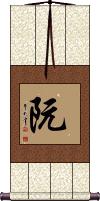
阮 is the original Chinese character that represented the Vietnamese surname Nguyễn before Vietnam stopped using Chinese characters and romanized their language. It is probably the most common surname in all of Vietnam. While romanized as Nguyen, it sounds more like the English word “Win” or “When.” 阮 can also represent the Nguyen Dynasty in Vietnam, which lasted from 1802 to 1945.
阮 is also the Chinese surname Ruan, most Chinese with this surname have ancestors from a small state named Ruan during the Shang Dynasty (1600-1046 BC) located in the southeast of modern-day Gansu Province.
In Japanese, this can be the rare surnames pronounced Min, Gen, Ken, Gan, or En.
Besides a surname, this character also represents an ancient musical instrument.
Buddhism
(2 Kanji)
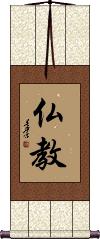
仏教 can mean Buddha or Buddhism in Japanese.
Depending on the context, this word can be used to refer to the religion and lifestyle of Buddhism or in some cases, the Buddha himself.
Note: Until the 5th century, Japan did not have a written language. At that time, Japan absorbed Chinese characters to form their written language (these characters are known as “Kanji” in Japanese). The first character of this Buddhism title was a shorthand way to write 佛 (Buddha) in Chinese (popular around the 13th century). Somehow, this became the version of this character that was absorbed into Japanese and thus became part of standard Kanji. Centuries later, this character is not recognized in China at all.
仏 is also a rare form of Buddha Korean Hanja - though seldom used even when the Korean Hanja writing system was more common 100 years ago.
Banzai / Wansui
Old Japanese / Traditional Chinese & Korean
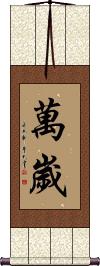
萬歲 is the traditional Chinese, Korean Hanja, and ancient Japanese way of writing banzai.
In modern times, the first character was simplified in Japan and China. So you might want to select the other entry for universal readability.
While it has become a popular, if not an odd, thing to scream as you jump out of an airplane (preferably with a parachute attached), banzai is actually a very old Asian way to say “hooray.” The Japanese word “banzai” comes from the Chinese word “wan sui,” which means “The age of 10,000 years.” It is actually a wish that the Emperor or the Empire live that long.
Imagine long ago when the Emperor made a rare public appearance. 萬歲 is what all people would yell to their leader in respect.
So if you like it as a hooray, or you want to wish someone that they live for 10,000 years, this is the calligraphy for you.
Other translations include Cheers! (not the drinking kind), hurrah!, long live [name]!, and congratulations!
To other things with banzai in their names, I am still waiting for the promised sequel to Buckaroo Banzai.
Notes: Sometimes people confuse banzai with bonsai. A bonsai is a miniature tree. They have nothing to do with each other.
Banzai
Modern Japanese Version
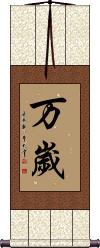
万歲 is the modern Japanese way to write banzai.
We've made two almost identical entries for this word, with just a variation on the first character. In the last century, 萬 was simplified to 万 in Japan and China. The new generation will expect it to be written as 万 but the old generation can still read the more traditional 萬 form. You must make your determination as to what version is best for you. If your audience is mostly Japanese, I suggest 万歲.
While it has become a popular, if not an odd, thing to scream as you jump out of an airplane (preferably with a parachute attached), banzai is actually a very old Asian way to say “hooray.” The Japanese word “banzai” comes from the Chinese word “wan sui” which means “The age of 10,000 years.” It is actually a wish that the Emperor or the Empire live that long.
Imagine long ago when the Emperor made a rare public appearance. This is what all of the people would yell to their leader in respect.
So if you like it as a hooray, or you want to wish someone that they live for 10,000 years, this is the calligraphy for you.
To other things with banzai in their names, I am still waiting for the promised sequel to Buckaroo Banzai.
Other translations: hurrah, long life, congratulations, cheers, live long.
Notes: Sometimes people confuse banzai with bonsai. A bonsai is a miniature tree. They have nothing to do with each other. Further, Bonzai is not a word at all - although it would make a great name for a calcium supplement for older people.
This in-stock artwork might be what you are looking for, and ships right away...
Gallery Price: $69.00
Your Price: $38.00
These search terms might be related to Rare:
Five Red Bats
House of Red Delights
Just as Liquor Turns a Face Red, Gold Turns a Heart Black
Pink Color
Red Color
Red Demon
Red Dragon
Red Dragon / Vermillion Dragon
Red Envelope
Red Flower
Red Leaves of Autumn
Red Maple Tree
Red Panda / Firefox
Scarlet / Bright Red
Scarlet / Red / Crimson
Special / Extraordinary
The Red String
The Red Thread of Fate
The following table may be helpful for those studying Chinese or Japanese...
| Title | Characters | Romaji (Romanized Japanese) | Various forms of Romanized Chinese | |
| Religious Seeker | 乞求者 | kotsugusha | qǐ qiú zhě qi3 qiu2 zhe3 qi qiu zhe qiqiuzhe | ch`i ch`iu che chichiuche chi chiu che |
| Tiger Heart | 虎心 | tora kokoro torakokoro | hǔ xīn / hu3 xin1 / hu xin / huxin | hu hsin / huhsin |
| Kakazu | 嘉數 嘉数 | kakazu | ||
| Violet Color | 紺 绀 | kon | gàn / gan4 / gan | kan |
| Kishan | 吉尚 | jí shàng / ji2 shang4 / ji shang / jishang | chi shang / chishang | |
| Shimabukuro | 島袋 | shimabukuro | ||
| To Come To Arrive | 來 来 | rai / takagi / kuru | lái / lai2 / lai | |
| Hu | 胡 | hú / hu2 / hu | ||
| Clear Blue Sky | 青天 | seiten | qīng tiān qing1 tian1 qing tian qingtian | ch`ing t`ien chingtien ching tien |
| RJ | 爾杰 尔杰 | ěr jié / er3 jie2 / er jie / erjie | erh chieh / erhchieh | |
| Responsibility | 責任 责任 | sekinin | zé rèn / ze2 ren4 / ze ren / zeren | tse jen / tsejen |
| Antiwar Anti-War | 反戰 反战 / 反戦 | han sen / hansen | fǎn zhàn / fan3 zhan4 / fan zhan / fanzhan | fan chan / fanchan |
| Leung | 梁 | reon / ryou reon / ryo | liáng / liang2 / liang | |
| Amazing Grace | 奇異恩典 | qí yì ēn diǎn qi2 yi4 en1 dian3 qi yi en dian qiyiendian | ch`i i en tien chiientien chi i en tien |
|
| Illusion | 幻像 幻像 / 幻象 | gen zou / genzou / gen zo | huàn xiàng huan4 xiang4 huan xiang huanxiang | huan hsiang huanhsiang |
| Hau | 侯 | hóu / hou2 / hou | ||
| Big Dream | 大夢 | daimu | dà mèng / da4 meng4 / da meng / dameng | ta meng / tameng |
| Happy | 欣 | kin | xīn / xin1 / xin | hsin |
| Sun Goddess | 天照皇大神 | amaterasuoomikami amaterasuomikami | tiān zhào huáng dà shén tian1 zhao4 huang2 da4 shen2 tian zhao huang da shen tianzhaohuangdashen | t`ien chao huang ta shen tienchaohuangtashen tien chao huang ta shen |
| Treasure | 珍寶 珍宝 | chin hou / chinhou / chin ho | zhēn bǎo / zhen1 bao3 / zhen bao / zhenbao | chen pao / chenpao |
| Legendary Turtle | 鼇 | áo / ao2 / ao | ||
| Intense Serious Deep Profound | 深刻 | shinkoku / misa | shēn kè / shen1 ke4 / shen ke / shenke | shen k`o / shenko / shen ko |
| Buddha Buddhism | 佛 仏 | hotoke / butsu | ||
| Military Discipline | 軍紀 军纪 | gun ki / gunki | jūn jì / jun1 ji4 / jun ji / junji | chün chi / chünchi |
| Nguyen Ruan | 阮 / 阮 阮 | Min / Gen | ruǎn / ruan3 / ruan | juan |
| Buddhism | 仏教 | bukkyou / bukyo | ||
| Banzai Wansui | 萬歲 万岁 | banzai / manzai | wàn suì / wan4 sui4 / wan sui / wansui | |
| Banzai | 万歲 / 萬歲 万岁 | banzai | wàn suì / wan4 sui4 / wan sui / wansui | |
| In some entries above you will see that characters have different versions above and below a line. In these cases, the characters above the line are Traditional Chinese, while the ones below are Simplified Chinese. | ||||

Successful Chinese Character and Japanese Kanji calligraphy searches within the last few hours...



