Many custom options...


And formats...



I Love Her in Chinese / Japanese...
Buy an I Love Her calligraphy wall scroll here!
Personalize your custom “I Love Her” project by clicking the button next to your favorite “I Love Her” title below...
1. Eternal Love / Love Eternally
2. Best Love / Most Sincere Love
3. Eternal Love
4. Passionate Love / Ardent Love and Devotion
5. Forever Love
6. Best Love / Most Sincere Love
7. Eternal Love
8. Love Forever / Love Eternal
9. My True Love
10. True Love
11. My True Love
12. Love and Honor
13. Love
14. One Love
15. I Love You
16. Love and Honor
17. Adoring Love
19. One Love
20. Love for Parents
21. Love Between Child and Parents
22. I love you to the moon and back
24. I Adore You
25. I Want You
26. I Need You
27. Listen to Your Heart / Follow Your Heart
28. Mind Body Spirit
Eternal Love / Love Eternally
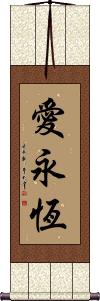
愛永恆 is the shortest way to express the idea of “love eternally” in Chinese.
The first character here means “love”
The last two mean eternal, eternally, everlasting, and/or perpetual.
See Also: Love Forever
Best Love / Most Sincere Love
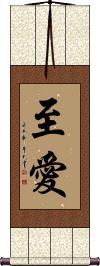
至愛 can mean the best love or most sincere love of your life.
This could be a romantic love such as your love for your spouse or a boyfriend/girlfriend.
It can also apply to the extreme love you have for your children or a parent and maybe a really good friend.
See Also: I Love You
Eternal Love
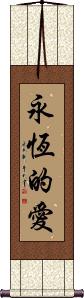
永恆的愛 is the best way to write “Eternal Love” in Chinese.
The first two characters mean eternal, eternally, everlasting, and/or perpetual.
The third character is a possessive article which sort of makes this selection mean “Love of the eternal kind.”
The last character is “love.”
This version is best if your audience is Chinese. We also have a Japanese version of eternal love.
See Also: Forever Love | Eternal Love (Japanese)
Passionate Love / Ardent Love and Devotion
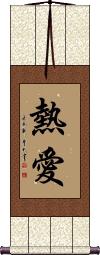
熱愛 means love passionately, ardent love, devotion, adoration.
The literal meaning is “hot love,” as the first character means heat, fervent, hot, and warm. Sometimes it can mean fever, restlessness, or zeal. The second character is, of course, love. If you adore and are devoted to someone with all your love, this is the title for you.
Forever Love
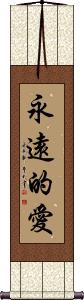
永遠的愛 refers to love that will last forever.
The first two characters mean forever, eternal, eternity, perpetuity, immortality, and/or permanence.
The third character is a possessive article which sort of makes this selection mean “The forever kind of love.”
The last character is “love.”
See Also: Eternal Love Always
Best Love / Most Sincere Love
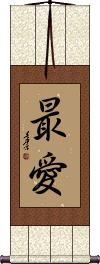
最愛 is a Japanese word that means the best love, beloved, or most sincere love of your life.
This could be a romantic love such as your love for your spouse or a boyfriend/girlfriend.
It can also apply to the extreme love you have for your children or a parent and maybe a really good friend.
Eternal Love
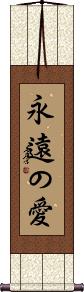
永遠の愛 is a great way to write “Eternal Love” in Japanese.
The first two characters mean eternal, eternity, perpetuity, forever, immortality, and permanence.
The third character is a possessive article which sort of makes this selection mean “Love, of the eternal kind.”
The last character is “love.”
Cultural note: Most of the time, it is taboo to use the word “love” in Japanese. For instance, a Japanese man will say, “I like you,” rather than, “I love you,” to his spouse/girlfriend. However, this entry for eternal love is acceptable because of the way it is composed.
This entry is only appropriate if your audience is Japanese. We also have a Chinese version of this eternal love.
Love Forever / Love Eternal
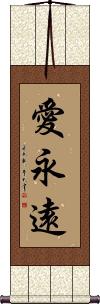
The first character here means “love.”
The last two mean forever, eternity, eternal, perpetuity, immortality, and/or permanence.
愛永遠 is the shortest and most universal way to express this idea in Chinese and Japanese.
Japanese note: This sound more like a title than a phrase in Japanese (if that makes any sense). 愛永遠 is a great title for a romantic book, the title of a movie, the name of a perfume, or even a name for a store.
See Also: Eternal Love | Forever Love
My True Love
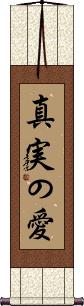
真実の愛 means “true love” or “genuine affection” in Japanese.
The first two Kanji mean true, real, genuine, or authentic.
The third Kanji is a connecting possessive article.
The last character is love or affection.
True Love
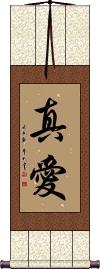
真愛 is literally “True Love” in Chinese.
The first character means “real,” “true,” and “genuine.” The second character means “love” and “affection.”
During the customization of your calligraphy wall scroll, there is a place to add an inscription. You might want that inscription to be your names in Chinese down the side of your wall scroll or perhaps just below these two main characters (just $9 extra). A nice gift to celebrate an anniversary or marriage!
My True Love
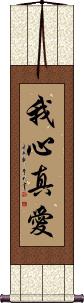
我心真愛 is a slightly poetic way to express this sentiment to someone.
The meaning is “My True Love,” but the characters directly translate as “I/Me/My Heart/Mind True/Real Love.”
Note that Chinese grammar and construction are different, so this sounds very eloquent and artsy in Chinese.
In Korean Hanja, the third character should be written differently. Just let me know when you place your order if you want that version - it will still make sense in Chinese. This phrase makes sense in Korean but is not commonly used.
Love and Honor
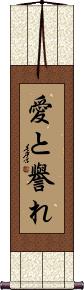
愛と譽れ means to love and honor in Japanese.
The first Kanji is literally “love.”
The second character just acts to connect the ideas like “and” or “with.”
The last two Kanji mean “honor” or “honour.” This is the kind of honor that suggests you are praising or admiring someone.
Note: Because this selection contains some special Japanese Hiragana characters, it should be written by a Japanese calligrapher.
See Also: Love and Honor
Love and Honor
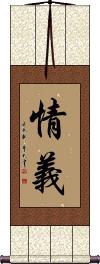
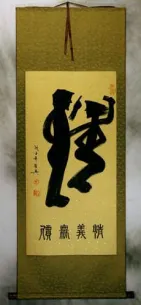
情義 means to love and honor in Chinese. 情義 is more or less the kind of thing you'd find in marriage vows.
The first character suggests emotions, passion, heart, humanity, sympathy, and feelings.
In this context, the second character means to honor your lover's wishes and treat them justly and righteously (fairly). That second character can also be translated as “obligation,” as in the obligation a husband and wife have to love each other even through difficult times.
In the context outside of a couple's relationship, this word can mean “comradeship.”
Japanese may see this more as “humanity and justice” than “love and honor.” It's probably best if your target is Chinese.
This is the short and sweet form, there is also a longer poetic form (you can find it here: Love and Honor if it’s not on the page you are currently viewing).
See Also: Love and Honor
Love and Honor
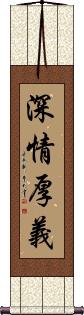
深情厚義 means to love and honor.
This is more or less the kind of thing you'd find in marriage vows.
The first two characters suggest deep love or deep emotions, passion, and feelings.
The last two characters mean generous justice or thick honor (the third character is an adjective that means generous or thick). It just means that you will honor your lover's wishes and treat them justly and righteously (fairly).
This is the longer four-character version, there is also a short and sweet two character version.
See Also: Love and Honor
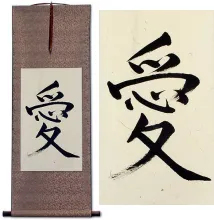
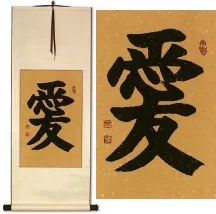
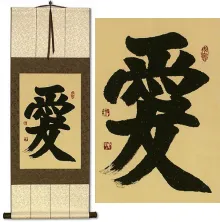
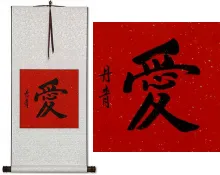
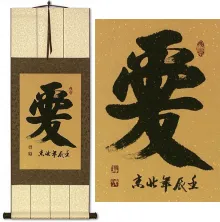
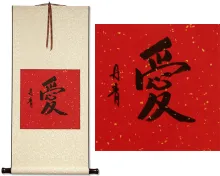
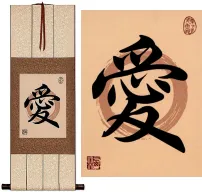
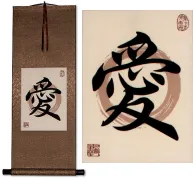
Love
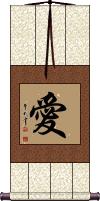
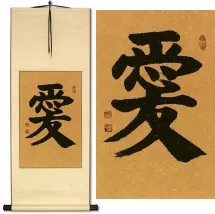
愛 universally means love in Chinese, Japanese Kanji, old Korean Hanja, and old Vietnamese.
愛 is one of the most recognized Asian symbols in the West and is often seen on tee shirts, coffee mugs, tattoos, and more.
愛 can also be defined as affection, to be fond of, to like, or to be keen on. It often refers to romantic love, and is found in phrases like, “I love you.” But in Chinese, one can say, “I love that movie” using this character as well.
This can also be a pet name or part of a pet name in the way we say “dear” or “honey” in English.
This can be a girl’s name “Ai” in both Chinese and Japanese.
More about this character:
This may be hard to imagine as a westerner but the strokes at the top of this love character symbolize family & marriage.
 The symbol in the middle is a little easier to identify. It is the character for "heart" (it can also mean "mind" or "soul"). I guess you can say that no matter if you are from the East or the West, you must put your heart into your love.
 The strokes at the bottom create a modified character that means "friend" or "friendship."
I suppose you could say that the full meaning of this love character is to love your family, spouse, and friends with all of your heart, since all three elements exist in this character.
See Also: I Love You | Caring | Benevolence | Friendliness | Double Happiness Happy Marriage Wall Scroll
One Love
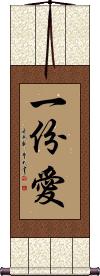
一份愛 means “one love.”
一份愛 is not referring to a person but the emotion of love.
It's like saying, “A piece of love” or “One unit of love.” There's not a perfect way to express a singular love, which is probably what you were searching for.
I Love You
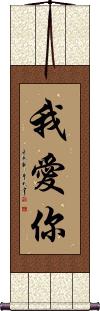
我愛你 directly translates as “I love you” from English to Chinese characters.
This “I love you” phrase is very commonly used between lovers in China.
Love and Honor
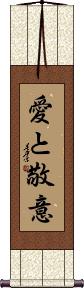
愛と敬意 is a Japanese phrase that means “Love and Honor” or “Love and Respect.”
There are a few ways to express this idea in Japanese, so you may see other versions used.
Adoring Love
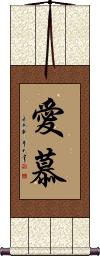
愛慕 means “adoring love” in Chinese, Japanese, and Korean.
I suppose this is the best kind of love to have. 愛慕 has the common character for love. But the second character modifies and reinforces the meaning to become adore, adoring love, or to love and adore.
Ancient Chinese warning:
Adoring someone is fine until you are in the shoes of the Prince of the Kingdom of Wu. This Prince adored a certain beautiful woman (Xi Shi) so much that he neglected his duties and soon let the kingdom fall into ruins.
Love and Affection
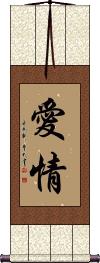
愛情 is a universal word in Japanese, Korean, and Chinese which means love and affection.
Some may translate this as “love between a man and a woman.”
Depending on the context, it can mean utter devotion or favorite.
One Love
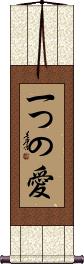
一つの愛 is how to write “One Love” in Japanese.
Note: Because this selection contains some special Japanese Hiragana characters, it should be written by a Japanese calligrapher.
Love for Parents
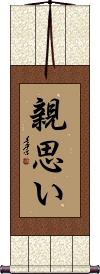
親思い is “love or affection for one's parents” in Japanese.
Love Between Child and Parents
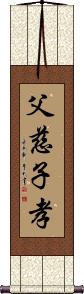
父慈子孝 is a Chinese proverb that means “benevolent father, filial son.”
Figuratively, this is the natural love between parents and children.
I love you to the moon and back

我愛你到地老天荒 is a Chinese version of “I love you to the moon and back.”
The literal meaning of this phrase is, “I love you from the end of the Earth to the reaches of Heaven” or more simply translated as, “I love you until the end of time.”
I Love You / Aishiteru
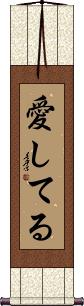
It's very uncommon (some will say taboo) to say “I love you” in Japanese culture. It's especially awkward for a man to tell a woman this in Japanese. Everyone is more likely to say “Watashi wa anata ga suki desu” or “I like you” (literally, “I regarding you, have like.”
If you have to say “I love you” in Japanese, 愛してる is a selection of Kanji and Hiragana that provide a way.
Note: Because this selection contains some special Japanese Hiragana characters, it should be written by a Japanese calligrapher.
I Adore You
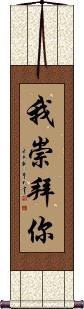
我崇拜你 is how to write, “I adore you” or “I worship you” in Chinese.
I Want You
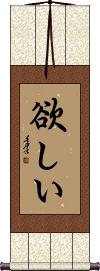
Some people like to say, “I love you,” but if you want to say “I want you,” here it is in Japanese... 欲しい
This can be read as “I want you” or as a single word, “wanted,” “wished for,” “in need of,” or “desired.”
Note: Because this selection contains some special Japanese Hiragana characters, it should be written by a Japanese calligrapher.
I Need You
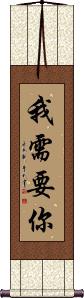
Some people like to say, “I love you” but others might want to say “I need you.” That is what this 我需要你 phrase is all about.
The first character means “I.” The second and third create a compound word that means “need” and “want” at the same time. The last character means “you.”
I Need You
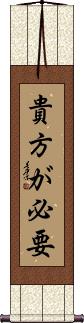
Some people like to say, “I love you” but others might want to say “I need you.” 貴方が必要 is “I need you” in Japanese.
The first two characters mean “You.”
The middle character is a connecting particle. In this case, it more or less means “are.”
The last two characters mean necessary, needed, essential, indispensable, or necessity.
The “I” in the title is implied. Effectively this means “I need you.”
Listen to Your Heart / Follow Your Heart
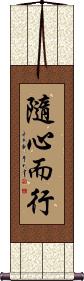
隨心而行 is the closest way to express this idea in Chinese. Literally translated, this phrase means “Allow your heart to dictate your behavior” or “Let your heart guide your conduct” in Chinese. You could also translate this as “follow your heart.” Or, with a bit of imagination, it could mean: “let your spirit be your guide.”
Note that in some cases, “heart” can mean “mind,” “soul” or even “spirit” in Chinese. In ancient China, it was thought that the big pumping organ in your chest was where your thoughts came from, or where your soul resides.
Ancient western thought followed a similar belief. Thus phrases like “I love you with all my heart” and “I give you my whole heart.”
Mind Body Spirit
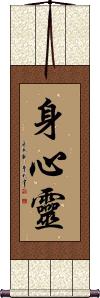
身心靈 is probably the best way to express the idea of “Body, Mind, and Spirit” in Chinese and old Korean Hanja. We are actually using the word “heart” here because, for thousands of years, the heart was thought to be the place where your thoughts, feelings, and emotions came from. We do something similar in the west when we say “warm-hearted” or “I love you with all of my heart.” In this context, heart = mind in Asian language and culture.
The very literal translation of these three characters is “body, heart & spirit,” which could also be interpreted as “body, mind & soul.”
We have arranged these characters in this order because it simply “feels” like the proper order in the Chinese language. Word lists like this are not so common for calligraphy artwork, so we must be careful to put them in the most natural order. It should be noted that this is not a common title in Asia, nor is it considered an actual phrase (as it lacks a clear subject, verb, and object).
 In Japanese Kanji, they use an alternate form of the character for soul or spirit. If you want this using the Japanese alternate, please click on the Kanji shown to the right instead of the button above.
Japanese disclaimer: This is not a natural phrase/list in Japanese. While not totally-natural in Chinese, this word list is best if your audience is Chinese.
This in-stock artwork might be what you are looking for, and ships right away...
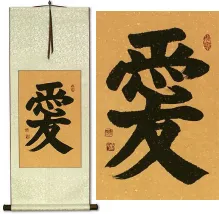
Gallery Price: $87.50
Your Price: $39.00


Gallery Price: $65.00
Your Price: $39.88
Gallery Price: $65.00
Your Price: $39.88

Gallery Price: $200.00
Your Price: $122.88
Gallery Price: $200.00
Your Price: $69.88
The following table may be helpful for those studying Chinese or Japanese...
| Title | Characters | Romaji (Romanized Japanese) | Various forms of Romanized Chinese | |
| Eternal Love Love Eternally | 愛永恆 爱永恒 | ài yǒng héng ai4 yong3 heng2 ai yong heng aiyongheng | ai yung heng aiyungheng |
|
| Best Love Most Sincere Love | 至愛 至爱 | zhì ài / zhi4 ai4 / zhi ai / zhiai | chih ai / chihai | |
| Eternal Love | 永恆的愛 永恒的爱 | yǒng héng de ài yong3 heng2 de ai4 yong heng de ai yonghengdeai | yung heng te ai yunghengteai |
|
| Passionate Love Ardent Love and Devotion | 熱愛 热爱 | netsu ai / netsuai | rè ài / re4 ai4 / re ai / reai | je ai / jeai |
| Forever Love | 永遠的愛 永远的爱 | yǒng yuǎn de ài yong3 yuan3 de ai4 yong yuan de ai yongyuandeai | yung yüan te ai yungyüanteai |
|
| Best Love Most Sincere Love | 最愛 | moai | ||
| Eternal Love | 永遠の愛 | ei en no ai eiennoai | ||
| Love Forever Love Eternal | 愛永遠 爱永远 | ai ei en / aieien | ài yǒng yuǎn ai4 yong3 yuan3 ai yong yuan aiyongyuan | ai yung yüan aiyungyüan |
| My True Love | 真実の愛 | shin jitsu no ai shinjitsunoai | ||
| True Love | 真愛 真爱 | shinai | zhēn ài / zhen1 ai4 / zhen ai / zhenai | chen ai / chenai |
| My True Love | 我心真愛 我心真爱 | wǒ xīn zhēn ài wo3 xin1 zhen1 ai4 wo xin zhen ai woxinzhenai | wo hsin chen ai wohsinchenai |
|
| Love and Honor | 愛と譽れ 愛と誉れ | ai to homa re aitohomare | ||
| Love and Honor | 情義 情义 | qíng yì / qing2 yi4 / qing yi / qingyi | ch`ing i / chingi / ching i | |
| Love and Honor | 深情厚義 深情厚义 | shēn qíng hòu yì shen1 qing2 hou4 yi4 shen qing hou yi shenqinghouyi | shen ch`ing hou i shenchinghoui shen ching hou i |
|
| Love | 愛 爱 | ai | ài / ai4 / ai | |
| One Love | 一份愛 一份爱 | yí fèn ài yi2 fen4 ai4 yi fen ai yifenai | i fen ai ifenai |
|
| I Love You | 我愛你 我爱你 | wǒ ài nǐ wo3 ai4 ni3 wo ai ni woaini | ||
| Love and Honor | 愛と敬意 | ai to keii / aitokeii / ai to kei | ||
| Adoring Love | 愛慕 爱慕 | ai bou / aibou / ai bo | ài mù / ai4 mu4 / ai mu / aimu | |
| Love and Affection | 愛情 爱情 | aijou / aijo | ài qíng / ai4 qing2 / ai qing / aiqing | ai ch`ing / aiching / ai ching |
| One Love | 一つの愛 | hito tsu no ai hitotsunoai | ||
| Love for Parents | 親思い | oya omoi / oyaomoi | ||
| Love Between Child and Parents | 父慈子孝 | fù cí zǐ xiào fu4 ci2 zi3 xiao4 fu ci zi xiao fucizixiao | fu tz`u tzu hsiao futzutzuhsiao fu tzu tzu hsiao |
|
| I love you to the moon and back | 我愛你到地老天荒 我爱你到地老天荒 | wǒ ài nǐ dào dì lǎo tiān huāng wo3 ai4 ni3 dao4 di4 lao3 tian1 huang1 wo ai ni dao di lao tian huang woainidaodilaotianhuang | wo ai ni tao ti lao t`ien huang woainitaotilaotienhuang wo ai ni tao ti lao tien huang |
|
| I Love You Aishiteru | 愛してる | ai shi te ru aishiteru | ||
| I Adore You | 我崇拜你 | wǒ chóng bài nǐ wo3 chong2 bai4 ni3 wo chong bai ni wochongbaini | wo ch`ung pai ni wochungpaini wo chung pai ni |
|
| I Want You | 欲しい | hoshii / hoshi | ||
| I Need You | 我需要你 | wǒ xū yào nǐ wo3 xu1 yao4 ni3 wo xu yao ni woxuyaoni | wo hsü yao ni wohsüyaoni |
|
| I Need You | 貴方が必要 | ana ta ga hitsu you anatagahitsuyou ana ta ga hitsu yo | ||
| Listen to Your Heart Follow Your Heart | 隨心而行 随心而行 | suí xīn ér xíng sui2 xin1 er2 xing2 sui xin er xing suixinerxing | sui hsin erh hsing suihsinerhhsing |
|
| Mind Body Spirit | 身心靈 / 身心霊 身心灵 | mi shin rei mishinrei | shēn xīn líng shen1 xin1 ling2 shen xin ling shenxinling | shen hsin ling shenhsinling |
| In some entries above you will see that characters have different versions above and below a line. In these cases, the characters above the line are Traditional Chinese, while the ones below are Simplified Chinese. | ||||

Successful Chinese Character and Japanese Kanji calligraphy searches within the last few hours...



