Many custom options...


And formats...



Give in Chinese / Japanese...
Buy a Give calligraphy wall scroll here!
Personalize your custom “Give” project by clicking the button next to your favorite “Give” title below...
Never Give In / Never Succumb / Never Lose
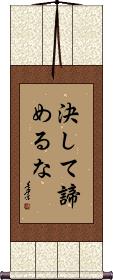
決して諦めるな is a Japanese term that informally means “never give up.”
It's also a Japanese way to say “never surrender.”
Note: Because this selection contains some special Japanese Hiragana characters, it should be written by a Japanese calligrapher.
See Also: Tenacity | Perseverance | Hope
Never Give Up
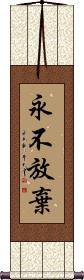
The first character means “eternal” or “forever,” and the second means “not” (together, they mean “never”). The last two characters mean “give up” or “abandon.” Altogether, you can translate this proverb as “never give up” or “never abandon.”
Depending on how you want to read this, 永不放棄 is also a statement that you will never abandon your hopes, dreams, family, or friends.
I give you my hand
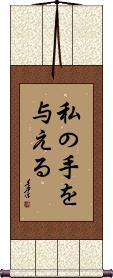
私の手を与える means “I give you my hand,” in Japanese.
Note: Because this selection contains some special Japanese Hiragana characters, it should be written by a Japanese calligrapher.
God Give Me Strength
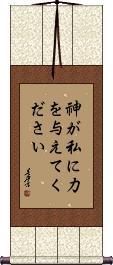
神が私に力を与えてください is “God give me strength” in Japanese.
This is the long and formal version. We also have a short version.
Note: Because this selection contains some special Japanese Hiragana characters, it should be written by a Japanese calligrapher.
God Give Me Strength
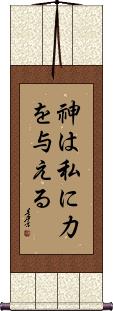
神は私に力を與える means “God give me strength,” in Japanese.
神は私に力を與える is the short version, we also have a longer more formal version.
Note: Because this selection contains some special Japanese Hiragana characters, it should be written by a Japanese calligrapher.
Give Up Desire
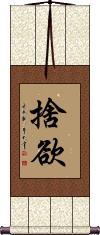
捨欲 is a Buddhist term that means to give up desire or the act of cutting off desire.
In Buddhism, our attachments, greed, and/or desires are the root of our suffering. Release them and live a happy life!
God Give Me Strength
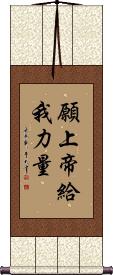
願上帝給我力量 is a wish or a prayer that you might call out at a desperate time.
Translated by us for a military serviceman in Iraq. He may need to use this phrase often, though I am not sure where he's going to find a place to hang a wall scroll.
This in-stock artwork might be what you are looking for, and ships right away...

Gallery Price: $100.00
Your Price: $49.88
Gallery Price: $200.00
Your Price: $69.88
These search terms might be related to Give:
Always With a Book in Hand
Confer
Create / Creation
Enthusiasm / Passion for a Cause
Evil Cause, Evil Result
Fight to the End / Fight Until the Bitter End
Flowers Fall / the End Comes
Go Kan Ryu
Go With the Flow
Go-Dan / 5th Degree Black Belt
Grant
Hand-to-Hand Fighting / Grappling
I Give You My Hand
Karma - Cause and Effect
Kempo Karate / Law of the Fist Empty Hand
One Who Walks by the River May End Up With Wet Feet
Passion for a Cause
Past Future and Present
Release / Let Go
Tang Hand
Tang Soo Do / Tang Hand Way
The Game of Weiqi / Weichi / Go
The Way of Learning Has No End
Not the results for give that you were looking for?
Below are some entries from our dictionary that may match your give search...
| Characters If shown, 2nd row is Simp. Chinese |
Pronunciation Romanization |
Simple Dictionary Definition |
任 see styles |
rèn ren4 jen makoto まこと |
to assign; to appoint; to take up a post; office; responsibility; to let; to allow; to give free rein to; no matter (how, what etc); classifier for terms served in office, or for spouses, girlfriends etc (as in 前任男友) obligation; duty; charge; responsibility; (given name) Makoto Bear, endure, let; office; it is used to connote laisser-faire; one of the 四病, as 任運 implies laisser-aller; it is intp. by let things follow their own course, or by 自然 naturally, without intervention. |
念 see styles |
niàn nian4 nien nen ねん |
More info & calligraphy: Mindfulness(1) (esp. 〜の念) sense; idea; thought; feeling; (2) desire; concern; (3) (esp. 念に〜、念の/が〜) attention; care; (personal name) Nen smṛti. Recollection, memory; to think on, reflect; repeat, intone; a thought; a moment. |
整 see styles |
zhěng zheng3 cheng hitoshi ひとし |
More info & calligraphy: In Good Order(male given name) Hitoshi |
烈 see styles |
liè lie4 lieh retsu れつ |
More info & calligraphy: Ardent / Fierce(female given name) Retsu Burning, fierce; virtuous, heroic. |
生 see styles |
shēng sheng1 sheng yanao やなお |
More info & calligraphy: Birth / Life(n,n-suf) (See 芝生) area of thick growth (of trees, grass, etc.); (surname) Yanao jāti 惹多; life; utpāda means coming forth, birth, production; 生 means beget, bear, birth, rebirth, born, begin, produce, life, the living. One of the twelve nidānas, 十二因緣; birth takes place in four forms, catur yoni, v. 四生, in each case causing: a sentient being to enter one of the 六道 six gati, or paths of transmigration. |
電 电 see styles |
diàn dian4 tien hikaru ひかる |
More info & calligraphy: Electricity / Lightning(out-dated kanji) lightning; flash of lightning; lightning bolt; (female given name) Hikaru Lightning, symbolizes the impermanent and transient. |
ギフ see styles |
gibu ギブ |
(noun/participle) (1) give; (interjection) (2) (abbreviation) (See ギブアップ) I give up; uncle!; (personal name) Gibb |
十戒 see styles |
shí jiè shi2 jie4 shih chieh jukkai じゅっかい |
More info & calligraphy: Ten Commandments(1) (Buddhist term) the 10 precepts; (2) Ten Commandments; Decalogue; Decalog; (surname) Jukkai Śikṣāpada. The ten prohibitions (in Pāli form) consist of five commandments for the layman: (1) not to destroy life 不殺生 pāṇātipātāveramaṇi; (2) not to steal 不倫盜 adinnādānāver; (3) not to commit adultery 不婬慾 abrahmacaryaver.; (4) not to lie 不妄語musāvādāver.; (5) not to take intoxicating liquor 不飮酒 suramereyya-majjapamādaṭṭhānāver. Eight special commandments for laymen consist of the preceding five plus: (6) not to eat food out of regulated hours 不非時食 vikāla-bhojanāver.; (7) not to use garlands or perfumes 不著華鬘好香塗身 mālā- gandha-vilepana-dhāraṇa-maṇḍana-vibhūṣanaṭṭhānā; (8) not to sleep on high or broad beds (chastity) 不坐高廣大牀 uccāsayanā-mahāsayanā. The ten commandments for the monk are the preceding eight plus: (9) not to take part in singing, dancing, musical or theatrical performances, not to see or listen to such 不歌舞倡伎不往觀聽 nacca-gīta-vādita-visūkadassanāver.; (10) to refrain from acquiring uncoined or coined gold, or silver, or jewels 不得捉錢金銀寶物 jātarūpa-rajata-paṭīggahaṇāver. Under the Māhayāna these ten commands for the monk were changed, to accord with the new environment of the monk, to the following: not to kill, not to steal, to avoid all unchastity, not to lie, not to slander, not to insult, not to chatter, not to covet, not to give way to anger, to harbour no scepticism. |
教授 see styles |
jiào shòu jiao4 shou4 chiao shou sazuku さずく |
More info & calligraphy: Professor(1) professor; (noun, transitive verb) (2) teaching; instruction; (given name) Sazuku To instruct, give instruction. |
獻身 献身 see styles |
xiàn shēn xian4 shen1 hsien shen |
More info & calligraphy: Sacrifice / Devotion / DedicationSee: 献身 |
以眼還眼 以眼还眼 see styles |
yǐ yǎn huán yǎn yi3 yan3 huan2 yan3 i yen huan yen |
More info & calligraphy: Eye for an eye |
捨生取義 舍生取义 see styles |
shě shēng qǔ yì she3 sheng1 qu3 yi4 she sheng ch`ü i she sheng chü i |
More info & calligraphy: Better to sacrifice your life than your principles |
天無絕人之路 天无绝人之路 see styles |
tiān wú jué rén zhī lù tian1 wu2 jue2 ren2 zhi1 lu4 t`ien wu chüeh jen chih lu tien wu chüeh jen chih lu |
More info & calligraphy: There is always a way out |
授人以魚不如授人以漁 授人以鱼不如授人以渔 see styles |
shòu rén yǐ yú bù rú shòu rén yǐ yú shou4 ren2 yi3 yu2 bu4 ru2 shou4 ren2 yi3 yu2 shou jen i yü pu ju shou jen i yü |
More info & calligraphy: Teach A Man To Fish |
予 see styles |
yǔ yu3 yü yasushi やすし |
(literary) to give (pronoun) (form) (See 余・よ・3) I; me; (personal name) Yasushi |
休 see styles |
xiū xiu1 hsiu yasumu やすむ |
to rest; to stop doing something for a period of time; to cease; (imperative) don't (personal name) Yasumu Desist, give up; resign; divorce; blessing, favour. |
侅 see styles |
gāi gai1 kai |
to give; prepared for included in; embraced in |
儘 尽 see styles |
jǐn jin3 chin mama まま |
to the greatest extent; (when used before a noun of location) furthest or extreme; to be within the limits of; to give priority to (n,n-adv) (1) (kana only) as it is; as one likes; because; as; (2) (kana only) condition; state; (surname) Mama |
儭 see styles |
chèn chen4 ch`en chen |
to assist; to give alms |
冒 see styles |
mào mao4 mao hounen / honen ほうねん |
to emit; to give off; to send out (or up, forth); to brave; to face; (bound form) reckless; to falsely adopt (sb's identity etc); to feign; (literary) to cover (personal name) Hounen To risk; rash; counterfeit; introduce. |
卹 恤 see styles |
xù xu4 hsü |
anxiety; sympathy; to sympathize; to give relief; to compensate |
尥 see styles |
liào liao4 liao |
to give a backward kick (e.g. of a horse) |
廻 迴 see styles |
huí hui2 hui meguru めぐる |
variant of 迴|回[hui2] (female given name) Meguru Return, turn back, turn to, give back; a turn.; v. 囘 6. |
徇 see styles |
xùn xun4 hsün tonau となう |
to give in to; to be swayed by (personal considerations etc); Taiwan pr. [xun2]; to follow; to expose publicly; variant of 侚[xun4]; variant of 殉[xun4] (given name) Tonau |
忌 see styles |
jì ji4 chi ki き |
to be jealous of; fear; dread; scruple; to avoid or abstain from; to quit; to give up something (1) mourning; mourning period; (suffix noun) (2) anniversary of one's death Avoid, tabu, dread; hate, jealous. |
恤 see styles |
xù xu4 hsü |
anxiety; sympathy; to sympathize; to give relief; to compensate |
戒 see styles |
jiè jie4 chieh kai; ingoto(ok) かい; いんごと(ok) |
to guard against; to exhort; to admonish or warn; to give up or stop doing something; Buddhist monastic discipline; ring (for a finger) (1) (かい only) {Buddh} admonition; commandment; (2) sila (precept) śīla, 尸羅. Precept, command, prohibition, discipline, rule; morality. It is applied to the five, eight, ten, 250, and other commandments. The five are: (1) not to kill; (2 ) not to steal; (3) not to commit adultery; (4) not to speak falsely; (5) not to drink wine. These are the commands for lay disciples; those who observe them will be reborn in the human realm. The Sarvāstivādins did not sanction the observance of a limited selection from them as did the 成實宗 Satyasiddhi school. Each of the five precepts has five guardian spirits, in all twenty-five, 五戒二十五神. The eight for lay disciples are the above five together with Nos. 7, 8, and 9 of the following; the ten commands for the ordained, monks and nuns, are the above five with the following: (6) not to use adornments of flowers, nor perfumes; (7) not to perform as an actor, juggler, acrobat, or go to watch and hear them; (8) not to sit on elevated, broad, and large divans (or beds); (9) not to eat except in regulation hours; (10) not to possess money, gold or silver, or precious things. The 具足戒full commands for a monk number 250, those for a nun are 348, commonly called 500. Śīla is also the first of the 五分法身, i.e. a condition above all moral error. The Sutra of Brahma's Net has the following after the first five: (6) not to speak of the sins of those in orders; (7) not to vaunt self and depreciate others; (8) not to be avaricious; (9) not to be angry; (10) not to slander the triratna. |
找 see styles |
zhǎo zhao3 chao |
to try to find; to look for; to call on sb; to find; to seek; to return; to give change |
抒 see styles |
shū shu1 shu jo |
to express; to give expression to; variant of 紓|纾[shu1]; to relieve to extend |
捅 see styles |
tǒng tong3 t`ung tung |
to poke; to jab; to give (sb) a nudge; to prod; to disclose; to reveal |
Click here for more give results from our dictionary
The following table may be helpful for those studying Chinese or Japanese...
| Title | Characters | Romaji (Romanized Japanese) | Various forms of Romanized Chinese | |
| Never Give In Never Succumb Never Lose | 決して諦めるな | kesshite akirameruna kesshiteakirameruna keshite akirameruna | ||
| Never Give Up | 永不放棄 永不放弃 | yǒng bù fàng qì yong3 bu4 fang4 qi4 yong bu fang qi yongbufangqi | yung pu fang ch`i yungpufangchi yung pu fang chi |
|
| I give you my hand | 私の手を與える 私の手を与える | watashi no te o ataeru watashinoteoataeru | ||
| God Give Me Strength | 神が私に力を與えてください 神が私に力を与えてください | kami ga watashi ni chikara o atae te kudasai | ||
| God Give Me Strength | 神は私に力を與える 神は私に力を与える | kami wa watashi ni chikara o ataeru | ||
| Give Up Desire | 捨欲 舍欲 | shayoku | shě yù / she3 yu4 / she yu / sheyu | she yü / sheyü |
| God Give Me Strength | 願上帝給我力量 愿上帝给我力量 | yuàn shàng dì gěi wǒ lì liàng yuan4 shang4 di4 gei3 wo3 li4 liang4 yuan shang di gei wo li liang yuanshangdigeiwoliliang | yüan shang ti kei wo li liang yüanshangtikeiwoliliang |
|
| In some entries above you will see that characters have different versions above and below a line. In these cases, the characters above the line are Traditional Chinese, while the ones below are Simplified Chinese. | ||||

Successful Chinese Character and Japanese Kanji calligraphy searches within the last few hours...



