Many custom options...


And formats...



Desires in Chinese / Japanese...
Buy a Desires calligraphy wall scroll here!
Personalize your custom “Desires” project by clicking the button next to your favorite “Desires” title below...
Release of Desires
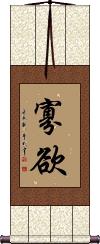
寡欲 is a Buddhist word meaning unselfishness, wanting little, giving up desires, or achieving a reduction of desires in one's life.
When one achieves this, one has a more content and happy life.
Give Up Desire
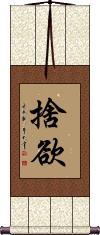
捨欲 is a Buddhist term that means to give up desire or the act of cutting off desire.
In Buddhism, our attachments, greed, and/or desires are the root of our suffering. Release them and live a happy life!
Immovable Liberation
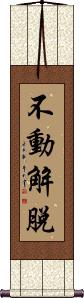
不動解脫 is a Buddhist term that refers to liberation from being disturbed by the illusions of life.
In short, this can be called “immovable liberation.”
This allows one to remain unaffected by the impermanent things such as emotions, attachments, desires, and greed of the world.
Hentai
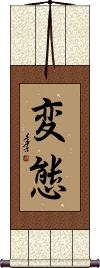
変態 is a Japanese word that originally meant transformation, metamorphosis, abnormality, or pervert.
In English, this has come to be the name for a genre of Japanese anime and manga pornography. However, in Japan, it remains a short word to describe any perverse or bizarre sexual desires or acts.
Four Noble Truths: Path Leading Away From Suffering
Magga
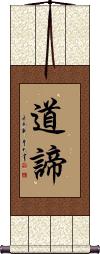
道諦 is the idea that once you have dealt with your desires and left all desire and attachment behind, only then are you on the path away from suffering (and on your way to enlightenment).
道諦 is also called the path to liberation in some English texts on Buddhism.
This term is exclusively used by devout Buddhists. It is not a common term, and is remains an unknown concept to most Chinese, Japanese and Korean people.
See Also: Buddhism | Enlightenment
Contentment
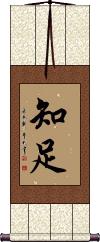
知足 means content with one's situation or to know contentment (hence happiness).
From the Zen Buddhist context, Chisoku or 知足 (knowing what’s enough) means always to know and be
satisfied with one’s lot.
Human pain and suffering are born of greed, and that greed arises because we do not know what’s enough.
The Chinese philosopher, Menzi (372-289 BCE) said, “to nourish the mind, there is nothing better than to make the desires few.”
This relays the idea that the best method to cultivate the mind is to have little desire.
Kama - Desire Wish Longing
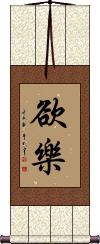
欲樂 is the Chinese and Japanese title representing the Buddhist and Jainist joys of the five desires.
Kama comes from the Pali/Sanskrit काम. The meaning is “desire, wish, longing.”
In Jainism, it can include sensual pleasure, sexual desire, and longing.
However, the Buddhist context refers more to any desire, wish, passion, longing, the pleasure of the senses, desire for, longing to and after, the aesthetic enjoyment of life, affection, or love, enjoyment of love is particularly with or without the enjoyment of sexual, sensual and erotic desire, and is often used without sexual connotations.
These search terms might be related to Desires:
Blessings and Good Wishes
Considerate of the Needs of Others
Longevity / Long Life Wishes
Not the results for desires that you were looking for?
Below are some entries from our dictionary that may match your desires search...
| Characters If shown, 2nd row is Simp. Chinese |
Pronunciation Romanization |
Simple Dictionary Definition |
情 see styles |
qíng qing2 ch`ing ching makoto まこと |
More info & calligraphy: Passions / Feelings / Emotions(1) feelings; emotion; sentiment; (2) compassion; sympathy; (3) passion; affection; love; (4) the way things really are; the actual situation; (personal name) Makoto The feelings, passions, desires, affections, sensations; sentient; affinities; affairs, facts. Particular affections, duties, or affairs. |
欲 see styles |
yù yu4 yü yoku よく |
to wish for; to desire; variant of 慾|欲[yu4] greed; craving; desire; avarice; wants; (surname) Yoku rājas, passion. Also kāma, desire, love. The Chinese word means to breathe after, aspire to, desire, and is also used as 慾 for lust, passion; it is inter alia intp. as 染愛塵 tainted with the dust (or dirt) of love, or lust. The three desires are for beauty, demeanour, and softness; the five are those of the five physical senses. |
仙人 see styles |
xiān rén xian1 ren2 hsien jen sennin せんにん |
More info & calligraphy: Sennin(1) immortal mountain wizard (in Taoism); mountain man (esp. a hermit); (2) one not bound by earthly desires or the thoughts of normal men; (surname, given name) Sennin seer |
寡欲 see styles |
guǎ yù gua3 yu4 kua yü keyoku かよく |
More info & calligraphy: Release of Desiresreduction of desires |
情欲 see styles |
qíng yù qing2 yu4 ch`ing yü ching yü jōyoku じょうよく |
More info & calligraphy: Lust / Desire / PassionThe passions, desires. |
欲樂 欲乐 see styles |
yù lè yu4 le4 yü le yokuraku |
More info & calligraphy: Kama - Desire Wish Longing |
捨 舍 see styles |
shě she3 she sha しゃ |
to give up; to abandon; to give alms {Buddh} equanimity; upeksa; upekkha upekṣā, neglect, indifference, abandoning, M.W. To relinquish, renounce, abandon, reject, give. One of the chief Buddhist virtues, that of renunciation, leading to a state of "indifference without pleasure or pain" (Keith), or independence of both. v. 舍. It is defined as the mind 平等 in equilibrium, i.e. above the distinction of things or persons, of self or others; indifferent, having abandoned the world and all things and having no affections or desires. One of the seven bodhyaṅgas. Translit. sa, śa, s(r). |
獮 狝 see styles |
xiǎn xian3 hsien sen |
to hunt in autumn (archaic) markaṭa, 獮猴 a monkey, typical of the mind of illusion, pictured as trying to pluck the moon out of the water; also of the five desires; of foolishness; of restlessness. |
襟 see styles |
jīn jin1 chin eri えり |
lapel; overlap of Chinese gown; fig. bosom (the seat of emotions); to cherish (ambition, desires, honorable intentions etc) in one's bosom (1) collar; lapel; neckband; neck; (2) nape of the neck; scruff of the neck; (female given name) Eri |
貪 贪 see styles |
tān tan1 t`an tan tan; ton; don たん; とん; どん |
to have a voracious desire for; to covet; greedy; corrupt (1) coveting; (2) {Buddh} (usu. とん) raga (desire) rāga; colouring, dyeing, tint, red; affection, passion, vehement longing or desire; cf. M. W. In Chinese: cupidity, desire; intp. tainted by and in bondage to the five desires; it is the first in order of the 五鈍使 pañca-kleśa q. v., and means hankering after, desire for, greed, which causes clinging to earthly life and things, therefore reincarnation. |
七魄 see styles |
qī pò qi1 po4 ch`i p`o chi po |
seven mortal forms in Daoism, representing carnal life and desires; contrasted with 三魂 three immortal souls |
三愛 三爱 see styles |
sān ài san1 ai4 san ai miyoshi みよし |
(1) koto, alcohol and poetry; the three loves; (2) {Buddh} the three desires of the realms of existence; (male given name) Miyoshi three kinds of attachment |
三欲 see styles |
sān yù san1 yu4 san yü sanyoku |
three lusts, i. e. for 形貌 form, 姿態 carriage or beauty, and 細觸refinement, or softness to the touch. |
二行 see styles |
èr xíng er4 xing2 erh hsing nigyō |
Two classes of conduct: following wrong views; following wrong desires, or emotions. There are other pairs. |
五情 see styles |
wǔ qíng wu3 qing2 wu ch`ing wu ching gojou / gojo ごじょう |
the five passions (anger, joy, hatred, desire and grief) The feelings, or passions, which are stirred by the 五根 five senses. |
五欲 see styles |
wǔ yù wu3 yu4 wu yü goyoku |
The five desires, arising from the objects of the five senses, things seen, heard, smelt, tasted, or touched. Also, the five desires of wealth, sex, foodand-drink, fame, and sleep. |
五箭 see styles |
wǔ jiàn wu3 jian4 wu chien go sen |
The five arrows, i. e. the five desires 五欲. |
人欲 see styles |
jinyoku じんよく |
human desires; human passions |
俗念 see styles |
zokunen ぞくねん |
worldliness; worldly ambition; unholy desires |
僊人 仙人 see styles |
sennin せんにん |
(1) immortal mountain wizard (in Taoism); mountain man (esp. a hermit); (2) person not bound by earthly desires |
六欲 see styles |
liù yù liu4 yu4 liu yü rokuyoku |
The six sexual attractions arising from color; form; carriage; voice (or speech); softness (or smoothness); and features. |
六色 see styles |
liù sè liu4 se4 liu se roku shiki |
six desires [of a woman] |
凡情 see styles |
fán qíng fan2 qing2 fan ch`ing fan ching bonjō |
Desires or passions of the unconverted. |
十力 see styles |
shí lì shi2 li4 shih li jūriki |
Daśabala. The ten powers of Buddha, giving complete knowledge of: (1) what is right or wrong in every condition; (2) what is the karma of every being, past, present, and future; (3) all stages of dhyāna liberation, and samādhi; (4) the powers and faculties of all beings; (5) the desires, or moral direction of every being; (6) the actual condition of every individual; (7) the direction and consequence of all laws; (8) all causes of mortality and of good and evil in their reality; (9) the end of all beings and nirvāṇa; (10) the destruction of all illusion of every kind. See the 智度論 25 and the 倶舍論 29. |
受欲 see styles |
shòu yù shou4 yu4 shou yü juyoku |
to indulge in desires |
四欲 see styles |
sì yù si4 yu4 ssu yü shiyoku |
The four desires or passions: 情 sexual love; 色 sexual beauty or attractiveness; 食 food; 婬 lust. |
四流 see styles |
sì liú si4 liu2 ssu liu shiru |
The four currents (that carry the unthinking along): i. e. the illusions of 見 seeing things as they seem, not as they really are; 欲 desires; 有 existence, life; 無明 ignorance, or an unenlightened condition. |
四苑 see styles |
sì yuàn si4 yuan4 ssu yüan shion |
The pleasure grounds outside 善見城 Sudarśana, the heavenly city of Indra: E. 衆車苑 Caitrarathavana, the park of chariots; S. 麤惡苑 Parūṣakavana, the war park; W. 雜林苑 Miśrakāvana, intp. as the park where all desires are fulfilled; N. 喜林苑 Nandanavana, the park of all delights. Also 四園. |
四蛇 see styles |
sì shé si4 she2 ssu she shida |
idem 四毒蛇. The Fanyimingyi under this heading gives the parable of a man who fled from the two bewildering forms of life and death, and climbed down a rope (of life) 命根, into the well of impermanence 無常, where two mice, night and day, gnawed the rattan rope; on the four sides four snakes 四蛇 sought to poison him, i. e. the 四大 or four elements of his physical nature); below were three dragons 三毒龍 breathing fire and trying to seize him. On looking up he saw that two 象 elephants (darkness and light) had come to the mouth of the well; he was in despair, when a bee flew by and dropped some honey (the five desires 五欲) into his mouth, which he ate and entirely forgot his peril. |
塵欲 尘欲 see styles |
chén yù chen2 yu4 ch`en yü chen yü jinyoku |
The desires connected with the six guṇas. |
Click here for more desires results from our dictionary
The following table may be helpful for those studying Chinese or Japanese...
| Title | Characters | Romaji (Romanized Japanese) | Various forms of Romanized Chinese | |
| Release of Desires | 寡欲 | keyoku | guǎ yù / gua3 yu4 / gua yu / guayu | kua yü / kuayü |
| Give Up Desire | 捨欲 舍欲 | shayoku | shě yù / she3 yu4 / she yu / sheyu | she yü / sheyü |
| Immovable Liberation | 不動解脫 不动解脱 | fudō gedatsu fudōgedatsu | bù dòng jiě tuō bu4 dong4 jie3 tuo1 bu dong jie tuo budongjietuo | pu tung chieh t`o putungchiehto pu tung chieh to |
| Hentai | 変態 | hen tai / hentai | ||
| Four Noble Truths: Path Leading Away From Suffering | 道諦 道谛 | doutai / dotai | dào dì / dao4 di4 / dao di / daodi | tao ti / taoti |
| Contentment | 知足 | chisoku | zhī zú / zhi1 zu2 / zhi zu / zhizu | chih tsu / chihtsu |
| Kama - Desire Wish Longing | 欲樂 欲乐 | yokuraku | yù lè / yu4 le4 / yu le / yule | yü le / yüle |
| In some entries above you will see that characters have different versions above and below a line. In these cases, the characters above the line are Traditional Chinese, while the ones below are Simplified Chinese. | ||||

Successful Chinese Character and Japanese Kanji calligraphy searches within the last few hours...



