Many custom options...


And formats...



Dates in Chinese / Japanese...
Buy a Dates calligraphy wall scroll here!
Personalize your custom “Dates” project by clicking the button next to your favorite “Dates” title below...
God of Zion / God of Abraham
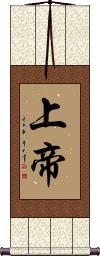
上帝 is how Chinese Christians and Jews refer to God, AKA The Judeo-Christian God.
There are Chinese Jews whose ancestry dates back to Jewish traders on the silk road. They are known as the Kaifeng Jews. Most have left China for Israel now.
There are also plenty of Christians in China of the Protestant and Catholic varieties. However, the churches are basically run by the government, and the Chinese Catholic church does not recognize the Pope.
Oddly, in my experience, I found the Chinese Protestant church to be much less political compared to Baptist and other Protestant churches that I have visited in America.
上帝 is also the typically-used title for God in Japanese.
While you may find this term in old Korean dictionaries, it is an obscure and rarely-used title for God in modern Korean.
See Also: Christianity | Jesus Christ
Northern Praying Mantis
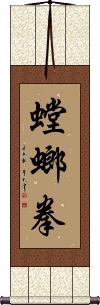
This can be translated literally as “Praying Mantis Fist.”
螳螂拳 is sometimes called Shandong Praying Mantis after its place of origin. It was created by Wang Lang and was named after the praying mantis, an insect, the aggressiveness of which inspired the style.
Shaolin records document that Wang Lang was one of the 18 masters gathered by the Shaolin Abbot Fu Ju, which dates him and Northern Praying Mantis style to the Song Dynasty (960-1279 A.D.).
The fact that the word “Northern” is used in the English title has more to do with where this style came from (Shandong is in northern China), but “north” is absent from this Chinese title.
Note: 螳螂拳 is also a title in Japanese - however, only a Japanese person who practices or is familiar with the “Praying Mantis Fist” style would recognize it.
Moon
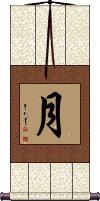
月 is how to write the title for “moon” in Chinese, Korean Hanja, and Japanese Kanji.
月 is also used to refer to the month. This is because China traditionally uses a lunar calendar, so saying “next moon” is the same as saying “next month” etc.
In modern Chinese and Japanese and old Korean, the character for a number is put in front of this moon character to represent western months. So “one moon” is January “two moons” is February etc.
If you are wondering, in the east Asian way to write dates, the character for “sun” or “day” is used with a number in front of it to express the day of the month. So “ten moons, one sun” becomes “October 1st” or “10/1” (this date happens to be Chinese National Day - The equivalent of Independence Day in the USA, Canada Day, or the Queen's Birthday).
In Japanese, 月 can be a surname that romanizes as Tsuki, Tsukizaki, or Takagetsu.
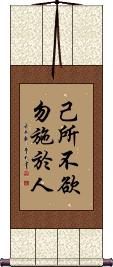
Confucius: Golden Rule / Ethic of Reciprocity
Do not do to others what you do not want done to yourself
Some may think of this as a “Christian trait,” but actually, it transcends many religions.
This Chinese teaching dates back to about 2,500 years ago in China. Confucius had always taught the belief in being benevolent (ren), but this idea was hard to grasp for some of his students, as benevolence could be kind-heartedness or an essence of humanity itself.
When answering Zhong Gong's question as to what "ren" actually meant, Confucius said:
己所不欲勿施于人 or "When you go out, you should behave as if you were in the presence of a distinguished guest; when people do favors for you, act as if a great sacrifice was made for you. Whatever you wouldn't like done to you, do not do that thing to others. Don't complain at work or home.”
Hearing this, Zhong Gong said humbly, “Although I am not clever, I will do what you say.”
From this encounter, the Chinese version of the “Golden Rule” or “Ethic of Reciprocity” came to be.
The characters you see above express, “Do not do to others whatever you do not want to be done to yourself.”
See Also: Confucius Teachings | Benevolence
Not the results for dates that you were looking for?
Below are some entries from our dictionary that may match your dates search...
| Characters If shown, 2nd row is Simp. Chinese |
Pronunciation Romanization |
Simple Dictionary Definition |
亡 see styles |
wáng wang2 wang suemaru すえまる |
to die; to lose; to be gone; to flee; deceased (n,n-suf) (1) (usu. after dates) (See 没・ぼつ・1) death; (prefix) (2) (usu. before names) (See 故・こ) the late; the deceased; (personal name) Suemaru Gone, lost, dead, ruined; not. |
初 see styles |
chū chu1 ch`u chu hatsumi はつみ |
(bound form) at first; initially; (bound form) first; early; (bound form) (in lunar calendar dates, before numerals 1–10) days 1 to 10 of a month, as in 初三[chu1 san1] "the third" (adj-no,n,n-pref,n-suf) first; new; (female given name) Hatsumi To cut cloth for clothes; beginning, first. |
頃 顷 see styles |
qǐng qing3 ch`ing ching kei / ke けい |
unit of area equal to 100 畝|亩[mu3] or 6.67 hectares; a short while; a little while ago; circa. (for approximate dates) (rare) (See 畝・ほ) qing (Chinese unit of land area equal to 100 mu) an instant |
像法 see styles |
xiàng fǎ xiang4 fa3 hsiang fa zoubou / zobo ぞうぼう |
{Buddh} age of the copied law (one of the three ages of Buddhism); middle day of the law; age of semblance dharma saddharma-pratirūpaka; the formal or image period of Buddhism; the three periods are 正像末, those of the real, the formal, and the final; or correct, semblance, and termination. The first period is of 500 years; the second of 1,000 years; the third 3,000 years, when Maitreya is to appear and restore all things. There are varied statements about periods and dates, e.g. there is a division of four periods, that while the Buddha was alive, the early stage after his death, then the formal and the final periods. |
外専 see styles |
gaisen がいせん |
(derogatory term) (slang) (abbreviation) (abbr. of 外(国)人専門) gaijin hunter; person who only dates (non-Asian) foreigners |
孫武 孙武 see styles |
sūn wǔ sun1 wu3 sun wu sonbu そんぶ |
Sun Wu, also known as Sun Tzu 孫子|孙子[Sun1 zi3] (c. 500 BC, dates of birth and death uncertain), general, strategist and philosopher of the Spring and Autumn Period (700-475 BC), believed to be the author of the “Art of War” 孫子兵法|孙子兵法[Sun1 zi3 Bing1 fa3], one of the Seven Military Classics of ancient China 武經七書|武经七书[Wu3 jing1 Qi1 shu1] (person) Sun Tzu (Chinese general and strategist, 544-496 BCE) |
定期 see styles |
dìng qī ding4 qi1 ting ch`i ting chi teiki / teki ていき |
at set dates; at regular intervals; periodic; limited to a fixed period of time; fixed term (1) fixed period; fixed term; (can be adjective with の) (2) regular; periodic; periodical; (3) (abbreviation) (See 定期乗車券) fixed-term commuter pass; (4) (abbreviation) (See 定期預金) fixed-term deposit; (5) (abbreviation) (See 定期取引) futures contracts; (surname) Teiki |
尉繚 尉缭 see styles |
wèi liáo wei4 liao2 wei liao |
Wei Lao (c. 450 BC, dates of birth and death unknown), advisor to the first Qin emperor Qin Shihuang 秦始皇[Qin2 Shi3 huang2], possible author of the Wei Liaozi 尉繚子|尉缭子[Wei4 Liao2 zi5] text on military strategy |
棗子 枣子 see styles |
zǎo zi zao3 zi5 tsao tzu |
dates; jujube |
檔期 档期 see styles |
dàng qī dang4 qi1 tang ch`i tang chi |
slot within a schedule; timeslot (for a TV program, a session with a photographer etc); range of dates in which an event is to be held (film screening, exhibition etc) |
起訖 起讫 see styles |
qǐ qì qi3 qi4 ch`i ch`i chi chi |
beginning and end (dates) |
起迄 see styles |
qǐ qì qi3 qi4 ch`i ch`i chi chi |
start and end (dates); origin and destination |
酒棗 酒枣 see styles |
jiǔ zǎo jiu3 zao3 chiu tsao |
dates in liquor |
醉棗 醉枣 see styles |
zuì zǎo zui4 zao3 tsui tsao |
dates in liquor |
八寶粥 八宝粥 see styles |
bā bǎo zhōu ba1 bao3 zhou1 pa pao chou |
rice congee made with red beans, lotus seeds, longan, red dates, nuts etc |
勝負服 see styles |
shoubufuku / shobufuku しょうぶふく |
(1) jockey's racing uniform; (2) (colloquialism) one's best clothes (esp. for women), normally put aside for important meetings, dates, etc. |
夏黃公 夏黄公 see styles |
xià huáng gōng xia4 huang2 gong1 hsia huang kung |
Xia Huanggong also known as Huang Shigong 黃石公|黄石公[Huang2 Shi2 gong1] (dates of birth and death uncertain), Daoist hermit of the Qin Dynasty 秦代[Qin2 dai4] and purported author of “Three Strategies of Huang Shigong” 黃石公三略|黄石公三略[Huang2 Shi2 gong1 San1 lu:e4], one of the Seven Military Classics of ancient China 武經七書|武经七书[Wu3 jing1 Qi1 shu1] |
姜子牙 see styles |
jiāng zǐ yá jiang1 zi3 ya2 chiang tzu ya |
Jiang Ziya (c. 1100 BC, dates of birth and death unknown), partly mythical sage advisor to King Wen of Zhou 周文王[Zhou1 Wen2 wang2] and purported author of “Six Secret Strategic Teachings” 六韜|六韬[Liu4 tao1], one of the Seven Military Classics of ancient China 武經七書|武经七书[Wu3 jing1 Qi1 shu1] |
学年暦 see styles |
gakunenreki がくねんれき |
school year calendar; calendar of school events and dates |
年代學 年代学 see styles |
nián dài xué nian2 dai4 xue2 nien tai hsüeh |
chronology (the science of determining the dates of past events) |
生卒年 see styles |
shēng zú nián sheng1 zu2 nian2 sheng tsu nien |
dates of birth and death (of historical figure) |
薑子牙 姜子牙 see styles |
jiāng zǐ yá jiang1 zi3 ya2 chiang tzu ya |
Jiang Ziya (c. 1100 BC, dates of birth and death unknown), partly mythical sage advisor to King Wen of Zhou 周文王[Zhou1 Wen2 wang2] and purported author of “Six Secret Strategic Teachings” 六韜|六韬[Liu4 tao1], one of the Seven Military Classics of ancient China 武經七書|武经七书[Wu3 jing1 Qi1 shu1] |
藺相如 蔺相如 see styles |
lìn xiāng rú lin4 xiang1 ru2 lin hsiang ju |
Ling Xiangru (dates unknown, 3rd century BC), famous statesman of Zhao 趙國|赵国 |
黃石公 黄石公 see styles |
huáng shí gōng huang2 shi2 gong1 huang shih kung |
Huang Shigong, also known as Xia Huanggong 夏黃公|夏黄公[Xia4 Huang2 gong1] (dates of birth and death uncertain), Daoist hermit of the Qin Dynasty 秦代[Qin2 dai4] and purported author |
カキタレ see styles |
kakitare カキタレ |
(slang) woman one dates only with the purpose of having sex |
勝負下着 see styles |
shoubushitagi / shobushitagi しょうぶしたぎ |
(colloquialism) (See 勝負服・2) "lucky" underwear (esp. panties), set aside for special dates |
司馬穰苴 司马穰苴 see styles |
sī mǎ ráng jū si1 ma3 rang2 ju1 ssu ma jang chü |
Sima Rangju (c. 800 BC, dates of birth and death unknown), military strategist of the Qi State 齊國|齐国[Qi2 guo2] and author of “Methods of Sima” 司馬法|司马法[Si1 ma3 Fa3], one of the Seven Military Classics of ancient China 武經七書|武经七书[Wu3 jing1 Qi1 shu1] |
生卒年月 see styles |
shēng zú nián yuè sheng1 zu2 nian2 yue4 sheng tsu nien yüeh |
dates of birth and death (of historical figure) |
阿育伽樹 阿育伽树 see styles |
ā yù qié shù a1 yu4 qie2 shu4 a yü ch`ieh shu a yü chieh shu aikuka ju |
The name of a tree under which the mother of the Buddha was painlessly delivered of her son, for which Chinese texts give eight different dates; the jonesia aśoka; it is also called 畢利叉 vṛkṣa. |
勝負パンツ see styles |
shoubupantsu / shobupantsu しょうぶパンツ |
(colloquialism) (See 勝負下着) "lucky" underwear (esp. panties), set aside for special dates |
Click here for more dates results from our dictionary
The following table may be helpful for those studying Chinese or Japanese...
| Title | Characters | Romaji (Romanized Japanese) | Various forms of Romanized Chinese | |
| God of Zion God of Abraham | 上帝 | joutei / jotei | shàng dì / shang4 di4 / shang di / shangdi | shang ti / shangti |
| Northern Praying Mantis | 螳螂拳 | tou rou ken tourouken to ro ken | táng láng quán tang2 lang2 quan2 tang lang quan tanglangquan | t`ang lang ch`üan tanglangchüan tang lang chüan |
| Moon | 月 | tsuki | yuè / yue4 / yue | yüeh |
| Confucius: Golden Rule Ethic of Reciprocity | 己所不欲勿施於人 己所不欲勿施于人 | jǐ suǒ bú yù wù shī yú rén ji3 suo3 bu2 yu4, wu4 shi1 yu2 ren2 ji suo bu yu, wu shi yu ren jisuobuyu,wushiyuren | chi so pu yü, wu shih yü jen chisopuyü,wushihyüjen |
|
| In some entries above you will see that characters have different versions above and below a line. In these cases, the characters above the line are Traditional Chinese, while the ones below are Simplified Chinese. | ||||

Successful Chinese Character and Japanese Kanji calligraphy searches within the last few hours...



