Many custom options...


And formats...



Not what you want?
Try other similar-meaning words, fewer words, or just one word.
Choice Symbol in Chinese / Japanese...
Buy a Choice Symbol calligraphy wall scroll here!
Personalize your custom “Choice Symbol” project by clicking the button next to your favorite “Choice Symbol” title below...
2. Better to Choose Nothing, Rather than Make a Poor Choice
3. A Deliberate Inaction is Better than a Blind Action
5. Bad Girl
6. Shidoin
7. Nike
8. Demon
10. Adventure Lover
11. Phan
13. Sense of Shame / Sense of Honor / Integrity / Modesty
14. Angel / Messenger of Heaven
15. Mother and Son
16. Daisy
17. Fujin
18. Acupuncture
19. Fast
22. Balance / Peace
24. Wolf
26. Double Happiness Guest Book
27. Guanxi
Choice / Choose / Select
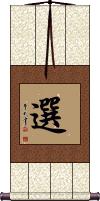
This single Chinese character, old Korean Hanja, and Japanese Kanji means: to choose; to pick; to select; to elect; selection; choice; choosing; picking; election.
In Japanese, it can also be the male given name Hitoshi.
In the Buddhist context, it means to choose, or a myriad.
Better to Choose Nothing, Rather than Make a Poor Choice
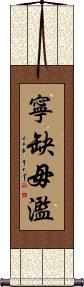
寧缺毋濫 is a Chinese proverb that can be translated as “Better to have nothing (than substandard choice).”
It basically suggests that one should prefer to go without something rather than accept a shoddy option.
See Also: A Deliberate Inaction is Better Than a Blind Action
A Deliberate Inaction is Better than a Blind Action
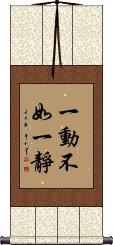
Sometimes 一動不如一靜 is translated by others as “Look before you leap” but the more accurate and direct translation is the one I used in the title.
While somewhat military in its origin, this proverb can apply to any situation where a decision needs to be made, but perhaps there are still some “unknowns.”
This phrase suggests that in our “action-based” world, sometimes the “smarter move” is “no move at all.”
See Also: Better to Choose Nothing Rather Than Make a Poor Choice
Chosen / Handpicked
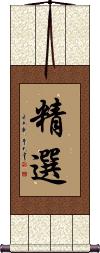
精選 is a Chinese and Japanese word that means carefully chosen; handpicked; best of the bunch; choice (product); careful selection.
This is not a common title for a wall scroll, so be sure you have a specific and appropriate purpose for this if you order it.
Bad Girl
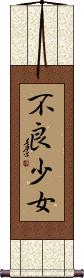
不良少女 is a Japanese word that means bad girl or female juvenile delinquent.
It's an unusual choice for calligraphy.
Shidoin
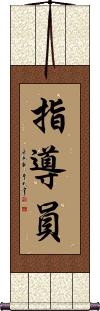
指導員 means instructor, coach, or advisor.
指導員 is similar to Sensei but not a typical choice for custom calligraphy.
Nike
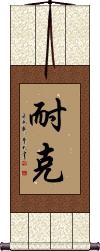
耐克 is the Chinese name for Nike, Inc.
Not sure this is the best choice for Chinese calligraphy, but if you really like their shoes, Just Do It!
Demon
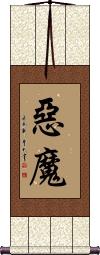
惡魔 is a common way to say demon, fiend, evil spirit, devil, or Satan in Chinese, Japanese Kanji, and old Korean Hanja.
This is a strange choice for a wall scroll, so consider this entry for reference only.
Longing for Lover
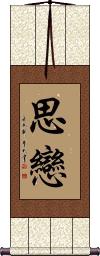
思戀 is a term used for when you miss a lover.
It suggests that you are separated (not by choice) and have longed for each other. It's a strong feeling of missing your lover.
Adventure Lover
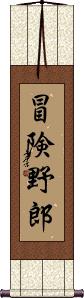
冒険野郎 is a Japanese title that means “adventure lover.”
This literally means something like “adventure wild man.”
This is a funny choice for a wall scroll, but it's a legitimate word in Japanese.
Phan

ファン is the name Phan in Japanese Katakana.
Unless you want your Vietnamese name, Phan in Japanese, this is probably not the correct choice for you.
Note: Because this title is entirely Japanese Katakana, it should be written by a Japanese calligrapher.
Death with Dignity
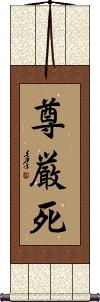
尊厳死 is not a good choice for a wall scroll unless you have a very specific and personal reason.
This was added at the request of a customer.
尊厳死 means “death with dignity” or “natural death” (as opposed to extending one's life unnaturally with life support).
Sense of Shame / Sense of Honor / Integrity / Modesty (Korean)
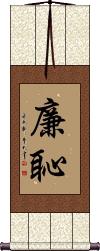
廉恥 simultaneously means “sense of honor” and “sense of shame” in Korean.
This term is often used as a tenet of Taekwondo, where the English terms “integrity” and “modesty” are applied.
廉恥 is also a Chinese word, though it is usually read with the “sense of shame” meaning, and is a poor choice for a wall scroll if your audience is Chinese.
Angel / Messenger of Heaven
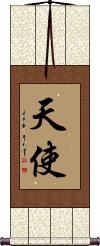
天使 is the meaning of Angel in Chinese, Japanese Kanji, and old Korean Hanja.
The first character means heaven. The second means messenger. Together it makes sense that we are talking about angels as Heaven's Messengers.
If you are an “Angel Junkie,” this may be the wall scroll for you.
I also think it's a great choice if your name happens to be Angel.
See Also: Angel
Mother and Son
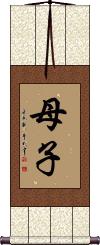
母子 simply means “mother and son,” or the essence of the relationship and bond between mother and son.
母子 is really a single word that expresses this idea (showing how important or significant this bond is).
This is not the most common choice for a wall scroll, it is acceptable if you feel this term is important to you.
See Also: Mother and Daughter
Daisy
The yellow flower
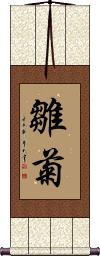
雛菊 is how they write “daisy” in Chinese and Japanese.
This is a good choice if you love daisies, or your name is Daisy. If you translated it directly, this means “chick flower” (as in baby chickens) or “baby chrysanthemum.” Of course, when an Asian person reads this, they just think “daisy.”
If you're into botany, this title represents “Bellis Perennis.”
In Japanese, this can be the female given name, Hinagiku.
Fujin
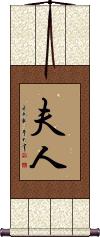
夫人 is a Japanese word that romanizes as Fujin.
I added this because several people have searched for Fujin. 夫人 can mean: lady; madam; Mrs.; consort of the emperor; wife; wife of a nobleman (aristocrat, etc.); the wife of a king. 夫人 means the same thing in Chinese, Japanese, and old Korean.
夫人 is an odd choice for a wall scroll, but I have fulfilled your search for Fujin, I think.
Acupuncture
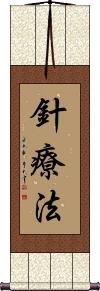
針療法 is one of two ways to write acupuncture in Chinese and Japanese.
The first character means “needle” or “pin.” The second character means “to treat” or “to cure.” The last character means “method” or “way.”
This is the only reasonable selection if your audience is Japanese. This is the formal way to express acupuncture in Chinese, so this version is universal in most of Asia (the best all-around choice in most cases).
Fast
Fast, as in a race car
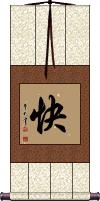
快 is the single character for “fast” in Chinese.
This applies to race cars, airplanes, rockets, etc.
This can also mean rapid, quick, speed, rate, soon, to make haste, clever, or sharp (of knives or wits). In some context it can mean cheerful or happy.
This is not a common choice for a wall scroll but if you're a speed freak, this may work for you.
Note: In Japanese, this usually has a meaning of pleasure, cheerful, delight, enjoyment, or the female given name Yoshi.
Courtesy / Etiquette
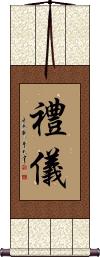
In Chinese, old Korean Hanja, and old Japanese Kanji, 禮儀 means “etiquette” or “courtesy.”
You'll also find a Japanese entry on our website, which uses a modern/simplified first Kanji. The characters shown here compose the best choice if your audience is Chinese or Korean - but also acceptable if you want an ancient-style Japanese scroll (in modern Japanese, it has the same pronunciation, but is written 礼儀).
Note: This can also be translated as propriety, decorum, or formality.
Loyalty / Devotion
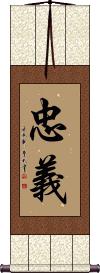
忠義 is another form of loyalty or devotion.
In Chinese, this is more specifically about being loyal and devoted to your friends.
In Japanese, this is more often used to mean loyalty to your country or nation.
Except for the slight difference noted above between Japanese and Chinese, this word is understood universally in Chinese, Japanese Kanji, and old Korean Hanja. It can also be used to describe devotion or fidelity.
It should be noted that this Kanji combination is being used less and less in modern Japan (this is a better choice if your audience is Chinese, though any Japanese person will clearly understand it).
Balance / Peace
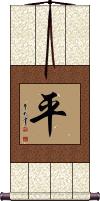
平 is a single character that means balance in Chinese but it's not too direct or too specific about what kind of balance.
Chinese people often like calligraphy art that is a little vague or mysterious. In this way, you can decide what it means to you, and you'll be right.
平 is also part of a word that means peace in Chinese, Japanese, and old Korean.
Some alternate translations of this single character include: balanced, peaceful, calm, equal, even, level, smooth, or flat.
Note that in Japanese, this just means “level” or “flat” by itself (not the best choice for balance if your audience is Japanese).
Holy Mother / Saint Mary
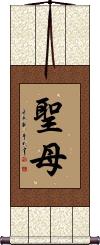
聖母 is the title for the Holy Mother, Madonna, or Virgin Mary used by Catholic Chinese, Korean, and Japanese people.
I think this would be a very cool wall scroll for a devout Catholic who also appreciates Asian artwork and language.
Note: Koreans often put a third character after these two, which creates a title that means “Hail Mary”; however, this character is not added or used in the same way in Japanese or Chinese. If you want that Korean title, just let me know, and we'll add that character for you. The two-character title shown to the left is universal, so I think it's the best choice.
Wolf
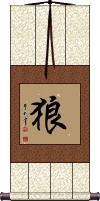
狼 is the character used to represent the elusive animal known as the wolf in both Chinese and Japanese.
If you are a fan of the wolf or the wolf means something special to you, this could make a great addition to your wall.
Do keep in mind, that much like our perception of wolves in the history of western culture, eastern cultures do not have a very positive view of wolves (save the scientific community and animal lovers). The wolf is clearly an animal that is misunderstood or feared the world over.
狼 is seldom used alone in Korean Hanja but is used in a compound word that means utter failure (as in a wolf getting into your chicken pen - or an otherwise ferocious failure). Not a good choice if your audience is Korean.
Patience / Perseverance
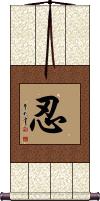
忍 contains the ideas of patience, equanimity, perseverance, forbearance, and endurance. Alone, this single character can be a bit ambiguous or flexible. It can also mean to endure, to bear, to put up with, or to conceal. If you want to simply decide what this character means to you within the general meaning but keep it a mystery to others, this is a good choice.
If you want to be more direct, you may want to choose one of our other selections that mean perseverance or patience (you will see this character within those larger words/phrases).
There is a secondary meaning in Japanese since this is the first character of the word ninja. Note that when writing this as Kanji, Japanese will tend to write it in the form shown to the right. If you select our Japanese master calligrapher, please expect this Kanji form (yes, it's just one stroke that is slightly different in location, crossing another stroke in the Japanese Kanji form).
See Also: Perseverance | Patience | Tenacious
Double Happiness Guest Book
Customize a special Asian guest book for your wedding
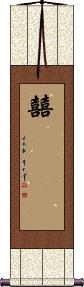
Start customizing a “Double Happiness Guest Book Wall Scroll” Here!
The paper panel length can be whatever you choose from 68cm to 135cm (27” to 53”).
If you don't mention what paper length you want in the special instructions tab (on the next page), we'll make it about 100cm (40”).
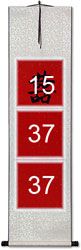
The medium-size scroll with a 33cm x 100cm (13” x 40”) paper panel can usually handle up to 89 signatures. That breaks down to 37 signatures per empty square and 15 signatures around the 囍 character. If you switch to a 135cm paper panel, add another 37 potential signatures.
We can splice two 135cm papers together, but that would be a crazy-long scroll. These are only estimates, your mileage may vary.
With silk panels, this will yield a wall scroll about 155cm (61”) long. That's enough for up to 89 signatures. Of course, that depends on if your guests just sign a brief salutation and name, or more verbose good wishes. Customer feedback is that 126 people can sign the 135cm long paper on a medium-sized scroll. If we go bigger than that, there will be a minor paper seam and an extra charge. Email me with your specifications if you need something special.
Most customers pick the festive red paper with gold flecks and white or ivory silk. Red is a good luck color in Chinese culture, thus the most popular choice. But, you can do any color combination that you want.
There is a long history of Chinese-character-use outside of mainland China. This Double Happiness character is also seen at weddings in Korea, Vietnam, Hong Kong, and Taiwan, as well as in Chinese communities in Thailand, Indonesia, and elsewhere. While Japan borrowed Chinese characters into their language, you won't see 囍 as often at Japanese weddings.
Guanxi
The Chinese Concept of Relationship and Exchange of Favors
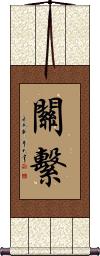
The dictionary definition is:
Relations/relationship, to concern, to affect, to have to do with, or connection.
But there's more to it...
In China, the relationship that you have with certain people can open doors for you. Having guanxi with someone also means they would never defraud you but are honor-bound to treat you fairly (of course, this goes both ways). Sometimes it is suggested that guanxi is the exchange of favors. 關繫 / 関繫 / 關係 is more about having a relationship that allows you to ask for and expect favors without shame.
There is no concept in western culture that exactly matches guanxi, but perhaps having a social or professional network is similar.
Note that there are some variations common within Chinese, Japanese Kanji, and Korean Hanja for this word... Japanese tend to use a Chinese alternate form as shown to the right for
the first character.
 There's also another alternate form of that first character (currently used as the official Simplified form in mainland China) which looks like the character shown to the right. It's basically the central radical of the alternate version shown above but without the “door radical” around it. In more free-flowing calligraphy styles, this version would be the likely choice for a calligrapher.
 In Modern Japanese, they use the character shown to the right.
They also tend to use this same form in Korean Hanja (I've only checked this word in my Korean dictionary, but it has not been confirmed by a translator's review).
 If that was not confusing enough, there is another alternate form of that second character. See right.
An Asian calligrapher of any nationality may use these forms at their discretion. However, They would tend to stick to the most common form used in their respective languages.
If you have any preference on any of these issues, please give us a special note with your order, and we'll make sure it's done the way you want.
This in-stock artwork might be what you are looking for, and ships right away...




Gallery Price: $200.00
Your Price: $124.88

Gallery Price: $200.00
Your Price: $98.88

Gallery Price: $40.00
Your Price: $16.88
The following table may be helpful for those studying Chinese or Japanese...
| Title | Characters | Romaji (Romanized Japanese) | Various forms of Romanized Chinese | |
| Choice Choose Select | 選 选 | sen | xuǎn / xuan3 / xuan | hsüan |
| Better to Choose Nothing, Rather than Make a Poor Choice | 寧缺毋濫 宁缺毋滥 | nìng quē wú làn ning4 que1 wu2 lan4 ning que wu lan ningquewulan | ning ch`üeh wu lan ningchüehwulan ning chüeh wu lan |
|
| A Deliberate Inaction is Better than a Blind Action | 一動不如一靜 一动不如一静 | yí dòng bù rú yí jìng yi2 dong4 bu4 ru2 yi2 jing4 yi dong bu ru yi jing yidongburuyijing | i tung pu ju i ching itungpujuiching |
|
| Chosen Handpicked | 精選 精选 | seisen | jīng xuǎn jing1 xuan3 jing xuan jingxuan | ching hsüan chinghsüan |
| Bad Girl | 不良少女 | furyoushoujo furyoshojo | ||
| Shidoin | 指導員 指导员 | shidouin / shidoin | zhǐ dǎo yuán zhi3 dao3 yuan2 zhi dao yuan zhidaoyuan | chih tao yüan chihtaoyüan |
| Nike | 耐克 | nài kè / nai4 ke4 / nai ke / naike | nai k`o / naiko / nai ko | |
| Demon | 惡魔 恶魔 | aku ma / akuma | è mó / e4 mo2 / e mo / emo | o mo / omo |
| Longing for Lover | 思戀 思恋 | sī liàn / si1 lian4 / si lian / silian | ssu lien / ssulien | |
| Adventure Lover | 冒険野郎 | bou ken ya rou boukenyarou bo ken ya ro | ||
| Phan | ファン | fan | ||
| Death with Dignity | 尊厳死 | son gen shi songenshi | ||
| Sense of Shame Sense of Honor Integrity Modesty (Korean) | 廉恥 廉耻 | ren chi / renchi | lián chǐ / lian2 chi3 / lian chi / lianchi | lien ch`ih / lienchih / lien chih |
| Angel Messenger of Heaven | 天使 | ten shi / tenshi | tiān shǐ / tian1 shi3 / tian shi / tianshi | t`ien shih / tienshih / tien shih |
| Mother and Son | 母子 | bo shi / boshi | mǔ zǐ / mu3 zi3 / mu zi / muzi | mu tzu / mutzu |
| Daisy | 雛菊 雏菊 | hinagiku | chú jú / chu2 ju2 / chu ju / chuju | ch`u chü / chuchü / chu chü |
| Fujin | 夫人 | fu jin / fujin | fū ren / fu1 ren5 / fu ren / furen | fu jen / fujen |
| Acupuncture | 針療法 针疗法 | hari ryou hou hariryouhou hari ryo ho | zhēn liáo fǎ zhen1 liao2 fa3 zhen liao fa zhenliaofa | chen liao fa chenliaofa |
| Fast | 快 | yoshi | kuài / kuai4 / kuai | k`uai / kuai |
| Courtesy Etiquette | 禮儀 礼仪 | lǐ yì / li3 yi4 / li yi / liyi | li i / lii | |
| Loyalty Devotion | 忠義 忠义 | chuu gi / chuugi / chu gi | zhōng yì / zhong1 yi4 / zhong yi / zhongyi | chung i / chungi |
| Balance Peace | 平 | hira | píng / ping2 / ping | p`ing / ping |
| Holy Mother Saint Mary | 聖母 圣母 | seibo | shèng mǔ / sheng4 mu3 / sheng mu / shengmu | |
| Wolf | 狼 | okami | láng / lang2 / lang | |
| Patience Perseverance | 忍 | nin | rěn / ren3 / ren | jen |
| Double Happiness Guest Book | 囍 喜喜 | xǐ / xi3 / xi | hsi | |
| Guanxi | 關繫 / 関繫 / 關係 关系 / 関係 | kankei | guān xì / guan1 xi4 / guan xi / guanxi | kuan hsi / kuanhsi |
| In some entries above you will see that characters have different versions above and below a line. In these cases, the characters above the line are Traditional Chinese, while the ones below are Simplified Chinese. | ||||

Successful Chinese Character and Japanese Kanji calligraphy searches within the last few hours...



