Many custom options...


And formats...



Ban in Chinese / Japanese...
Buy a Ban calligraphy wall scroll here!
Personalize your custom “Ban” project by clicking the button next to your favorite “Ban” title below...
1. Hanko
2. Fong
3. Fang
4. Hanawa
5. Bond
6. Bambang
7. Bambi
8. Baney
9. Bunn
11. Soban
12. Urbain
13. Zebra
14. Hoban
15. Caban
16. Bannon
17. Banta
18. Banning
19. Banner
20. Banda
21. Bandy
22. Albane
23. Bennet
24. Ebansu
25. Pangain-Noon
26. Spain
27. Trigger Fish
28. Obando
29. Eubank
30. Burbank
31. Banks
32. Alaban
33. Brisbane
34. Esteban
35. Soul Mates
37. Eubanks
38. Bannister
39. Bankston
40. Bankhead
41. Wilbanks
42. Urbanski
43. Fairbanks
44. Bancroft
45. Walking 100 Miles: Stopping at 90 miles, is the same as stopping half-way
46. One Who Does Not Do Bad Things, Worries Not of Knocks at His Door
Hanko
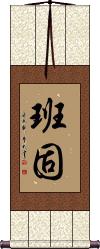
班固 is the Japanese surname Hanko.
Note: In Chinese, this title refers to Ban Gu, an Eastern Han dynasty historian who wrote the Dynastic History of Western Han.
Fong
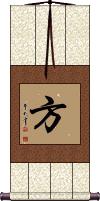
方 is the most common version of a Chinese surname that romanizes as Fong from Taiwan or Fang from mainland China.
The meaning of this character is square, upright, honest, fair and square, direction, place, or side. Sometimes 方 can refer to a method, prescription, or way of doing things.
In Japanese, this can be the given names Michi, Masani, Masashi,Tamotsu, Tadashi. It can also be Japanese surnames Hon, Hou, Ho, Fuon, Pan, Ban, Tokukata, or Kata.
Fang
方 is the most common version of a Chinese surname that romanizes as Fong from Taiwan or Fang from mainland China.
The meaning of this character is square, upright, honest, fair and square, direction, place, or side. Sometimes 方 can refer to a method, prescription, or way of doing things.
In Japanese, this can be the given names Michi, Masani, Masashi,Tamotsu, Tadashi. It can also be Japanese surnames Hon, Hou, Ho, Fuon, Pan, Ban, Tokukata, or Kata.
Hanawa
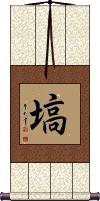
This is the most common Kanji for a surname that romanizes as Hanawa.
This is not the only Kanji that romanizes as Hanawa in Japanese, so make sure you are getting the right one.
The meaning of this character is originally something like truly (has this meaning currently in Chinese and old Korean). This can also be romanizes several other ways in Japanese for other names such as Ban, Han, Hane, Haniwa, Hani, Kou, Kasa, or Kaku. Names are kind of complicated in Japanese, as there are often many ways to pronounce the same Kanji.
Bond
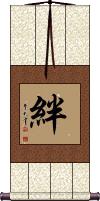
This Kanji represents a bond, as in the bond between mother and daughter, father and son, family ties, or a family bond.
絆 is the kind of character that says, no matter what happens (difficult times), we have this bond that cannot be broken.
If you go to the Japanese dictionary, the definition is the bonds (between people), (emotional) ties, relationship, connection, link, tether, or fetters.
Read this before ordering...
This Kanji is best if your audience is Japanese. While this is also a Chinese character, it has a completely different meaning in Chinese (it means to hinder or stumble in Chinese).
it’s
a very rare character in Korean Hanja but does mean bond in Korean (used in Korean words for certain kinds of glue and sticking plaster).
Bambang
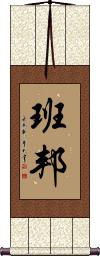
班邦 is the name Bambang in Chinese (Mandarin).
Bambi
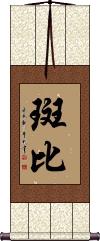
This is a common Mandarin Chinese transliteration for the female name Bambi.
Baney
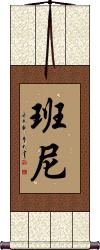
班尼 is the name Baney in Chinese (Mandarin).
Bunn
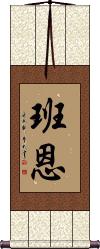
班恩 is the name Bunn in Chinese (Mandarin).
Partnership: Marriage
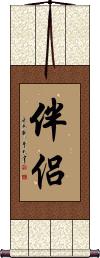
伴侶 is a Chinese, Japanese, and old Korean word that expresses the kind of partnership in which a good marriage is founded.
伴侶 could also be translated as mates or companionship or as a noun to refer to a partner or companion.
This does not have to include marriage but at least refers to a partnership with a deep relationship or bond.
Note that this is not the same as a business partner. Different words are used for various types business partnerships.
See Also: Friendship
Soban
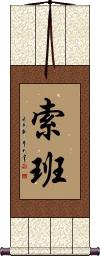
索班 is the name Soban in Chinese (Mandarin).
Urbain
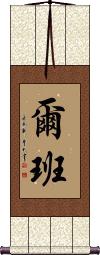
爾班 is the name Urbain in Chinese (Mandarin).
Zebra
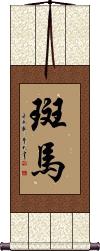
斑馬 is how to write zebra in Chinese. It will also be understood in Japanese, though they tend to write zebra as シマウマ in Katakana in Japan these days.
The actual meaning of the characters is something like “speckled horse.”
Hoban

霍班 is the name Hoban in Chinese (Mandarin).
Caban

卡班 is the name Caban in Chinese (Mandarin).
Bannon

班農 is the name Bannon in Chinese (Mandarin).
Banta

班塔 is the name Banta in Chinese (Mandarin).
Banning

班寧 is the name Banning in Chinese (Mandarin).

班納 is the name Banner in Chinese (Mandarin).
Banda

班達 is the name Banda in Chinese (Mandarin).
Bandy

班迪 is the name Bandy in Chinese (Mandarin).
Albane
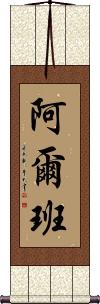
This is a common Mandarin Chinese transliteration for the female French name Albane.
Bennet
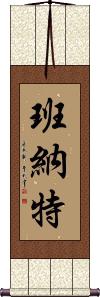
班納特 is the name Bennet in Chinese (Mandarin).
Ebansu
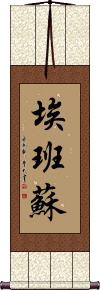
埃班蘇 is the name Ebansu in Chinese (Mandarin).
Pangain-Noon
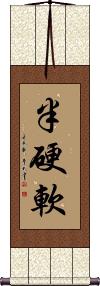
This is the martial arts title Pangai-Noon or Pan Gai Noon in Chinese.
The meaning is something like half hard, half soft.
Spain
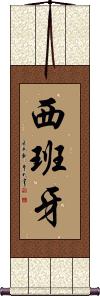
西班牙 is the Chinese name for the country of Spain.
This is sometimes used in Japanese too, though in modern times, Japanese tend to use a Katakana version of Spain.
See Also: Europe
Trigger Fish
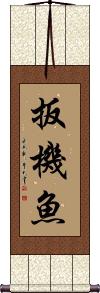
扳機魚 is the Chinese title for the Trigger Fish.
Obando

奧班多 is the name Obando in Chinese (Mandarin).
Eubank

尤班克 is the name Eubank in Chinese (Mandarin).
Burbank

伯班克 is the name Burbank in Chinese (Mandarin).
Banks

班克斯 is the name Banks in Chinese (Mandarin).
Alaban

阿拉班 is the name Alaban in Chinese (Mandarin).
Brisbane
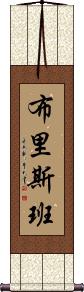
This is the Chinese name for Brisbane, as in the capital of Queensland, Australia.
Esteban
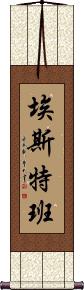
埃斯特班 is the transliteration to Mandarin Chinese for the Latin / Spanish name Esteban.
Soul Mates
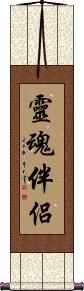
靈魂伴侶 is the literal translation of “Soul Mates.”
This is kind of the western way to express “soul mates” but translated into Chinese, Japanese Kanji, and old Korean Hanja.
The first two characters mean “soul” or “spirit.”
The second two characters mean “mate,” “companion” or “partner.”
Although not the most common title, these characters have good meaning and will be received well in Chinese, Japanese, and Korean. It's a universal title!
Spiritual Soul Mates
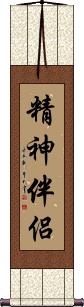
精神伴侶 means “Spiritual Soul Mates.” The first two characters mean “spiritual” or “soul.” The second two characters mean “mates,” “companions,” or “partners.”
This is more about the spiritual connection between partners rather than a “fate-brought-us-together” kind of soul mates.
Both halves of this title have meaning in Japanese but I've not yet confirmed that this is a commonly used title in Japan.
Eubanks

尤班克斯 is the name Eubanks in Chinese (Mandarin).
Bannister

班尼斯特 is the name Bannister in Chinese (Mandarin).
Bankston

班克斯頓 is the name Bankston in Chinese (Mandarin).
Bankhead

班克黑德 is the name Bankhead in Chinese (Mandarin).
Wilbanks

威爾班克斯 is the name Wilbanks in Chinese (Mandarin).
Urbanski

烏爾班斯基 is the name Urbanski in Chinese (Mandarin).
Fairbanks

費爾班克斯 is the name Fairbanks in Chinese (Mandarin).
Bancroft

班克羅夫特 is the name Bancroft in Chinese (Mandarin).
Walking 100 Miles: Stopping at 90 miles, is the same as stopping half-way
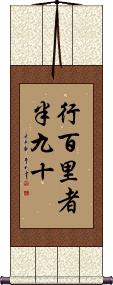
行百里者半九十 is an old Chinese proverb that speaks to the act of giving up. This phrase suggests that no matter how close you are to finishing your task or journey, giving up just before you finish is just as bad as giving up halfway.
50% finished or 90% finished, the result is the same: “You are not finished.”
You can take what you want from this proverb, but I think it suggests that you should finish what you start, and especially finish that last 10% of your journey or project so that you can honestly say “it's finished.”
Some notes: The character, 里, that I am translating as “mile” is an ancient “Chinese mile” which is actually about half a kilometer - it just doesn't sound right to say “When walking 100 half-kilometers...”
One Who Does Not Do Bad Things, Worries Not of Knocks at His Door
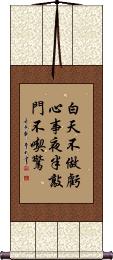
白天不做亏心事夜半敲门不吃惊 literally translates as: [If one does] not do bad things in the daytime, one need not be alarmed at knocks on the door in the middle of the night.
The meaning is something like, “A quiet conscience sleeps in thunder.” Basically, the message is, “don't commit crimes and you won't be jumpy every time the doorbell rings (so don't do anything wrong and your life will have fewer worries and you can sleep at night).”
These search terms might be related to Ban:
Even an Iron Bar Can Be Ground to a Needle
Not the results for ban that you were looking for?
Below are some entries from our dictionary that may match your ban search...
| Characters If shown, 2nd row is Simp. Chinese |
Pronunciation Romanization |
Simple Dictionary Definition |
絆 绊 see styles |
bàn ban4 pan rian りあん |
More info & calligraphy: Bond(1) bonds (between people); (emotional) ties; relationship; connection; link; (2) tether; fetters; (female given name) Rian |
伴侶 伴侣 see styles |
bàn lǚ ban4 lu:3 pan lü hanryo(p); banryo(ok) はんりょ(P); ばんりょ(ok) |
More info & calligraphy: Partnership: Marriagecompanion; partner; spouse a companion |
斑馬 斑马 see styles |
bān mǎ ban1 ma3 pan ma madarauma まだらうま |
More info & calligraphy: Zebra(rare) (See シマウマ) zebra |
班固 see styles |
bān gù ban1 gu4 pan ku hanko はんこ |
More info & calligraphy: Hanko(surname) Hanko |
班克斯 see styles |
bān kè sī ban1 ke4 si1 pan k`o ssu pan ko ssu |
More info & calligraphy: Banks |
西班牙 see styles |
xī bān yá xi1 ban1 ya2 hsi pan ya supein / supen すぺいん |
More info & calligraphy: Spain(ateji / phonetic) (kana only) Spain; (place-name) Spain |
伴 see styles |
bàn ban4 pan ban ばん |
partner; companion; comrade; associate; to accompany (noun/participle) companion; follower; attendant; retinue; (surname) Ban Companion, associate; translit. pan, ban, van, cf. 畔伴僧 Associate or accompanying monks. |
半 see styles |
bàn ban4 pan hanzaki はんざき |
half; semi-; incomplete; (after a number) and a half (n-pref,n) (1) half; semi-; partial; (suffix noun) (2) half-past; (3) (See 丁・3) odd number; (4) (archaism) han (unit of land area, approx. 595.8 m^2); (surname) Hanzaki Half. Used as translit. for pan, pun. |
坂 see styles |
bǎn ban3 pan ban ばん |
variant of 阪[ban3] slope; hill; (surname) Ban |
姅 see styles |
bàn ban4 pan |
menstruation |
岅 坂 see styles |
bǎn ban3 pan |
variant of 阪[ban3] See: 坂 |
扮 see styles |
bàn ban4 pan fun ふん |
to disguise oneself as; to dress up; to play (a role); to put on (an expression) (surname) Fun |
拌 see styles |
bàn ban4 pan |
to mix; to mix in; to toss (a salad) |
搬 see styles |
bān ban1 pan |
to move (i.e. relocate oneself); to move (something relatively heavy or bulky); to shift; to copy indiscriminately |
攽 see styles |
bān ban1 pan |
variant of 頒|颁[ban1] |
斑 see styles |
bān ban1 pan madara まだら |
spot; colored patch; stripe; spotted; striped; variegated (noun or adjectival noun) (1) (kana only) unevenness (of colour, paint, etc.); irregularity; nonuniformity; blotchiness; (noun or adjectival noun) (2) (kana only) unevenness (of quality, results, behaviour, etc.); inconsistency; instability; (noun or adjectival noun) (3) (kana only) fickleness; capriciousness; fitfulness; (surname) Madara Spotted, striped, streaked, variegated. |
斒 see styles |
bān ban1 pan han |
variegated; striped; marbled variegated |
昄 see styles |
bǎn ban3 pan |
great; expansive |
板 see styles |
bǎn ban3 pan ban ばん |
board; plank; plate; shutter; table tennis bat; clappers (music); CL:塊|块[kuai4]; accented beat in Chinese music; hard; stiff; to stop smiling or look serious (1) board; plank; (2) sheet (of metal); plate (of glass); pane; slab; (3) (See 俎板・1) cutting board; chopping board; (4) (abbreviation) (usu. as 板さん) (See 板前・1,板場・いたば・2) chef (esp. of high-end Japanese cuisine); cook; (5) stage (i.e. at a theatre); (personal name) Ban A board; a board struck for calling e. g. to meals. |
版 see styles |
bǎn ban3 pan han(p); ban はん(P); ばん |
a register; block of printing; edition; version; page (n,n-suf) (1) (ばん when a suffix) edition; version; printing; impression; implementation (of software); (2) {print} (also written 板) plate; block; cast; (counter) (3) counter for editions of a publication a wooden plate |
班 see styles |
bān ban1 pan han はん |
team; class; grade; (military) squad; work shift; classifier for groups of people and scheduled transport vehicles (n,n-suf) (1) (also read ぱん as a suffix) group; party; team; (n,n-suf) (2) {mil} squad; section A class, rank, band; translit. pan. |
瓣 see styles |
bàn ban4 pan han べん |
petal; segment; clove (of garlic); piece; section; fragment; valve; lamella; classifier for pieces, segments etc (out-dated kanji) (1) petal; (noun - becomes adjective with の) (2) valve A section, or division (of a melon). |
瘢 see styles |
bān ban1 pan |
mark; scar on the skin |
癍 see styles |
bān ban1 pan |
abnormal pigment deposit on the skin |
秚 see styles |
bàn ban4 pan |
old variant of 拌[ban4] |
粄 see styles |
bǎn ban3 pan |
(Hakka cuisine) snacks made from glutinous rice flour (rice cakes, noodles etc) |
舨 see styles |
bǎn ban3 pan |
sampan |
辦 办 see styles |
bàn ban4 pan ben |
to take care of (a matter); to deal with (a task, procedure etc); to organize (an event); to establish; to set up; to manage; to run (an enterprise); (law) to handle; to investigate; to prosecute (a case or suspect); (bound form) office (as in 招辦|招办[zhao1 ban4], admissions office) (abbr. for 辦公室|办公室[ban4 gong1 shi4]) To transact, carry out; prepare; punish. |
鈑 钣 see styles |
bǎn ban3 pan |
metal plate; sheet of metal |
阪 see styles |
bǎn ban3 pan ban ばん |
slope; hillside (abbreviation) (See 大阪) Osaka; (surname) Ban |
Click here for more ban results from our dictionary
The following table may be helpful for those studying Chinese or Japanese...
| Title | Characters | Romaji (Romanized Japanese) | Various forms of Romanized Chinese | |
| Hanko | 班固 | hanko | bān gù / ban1 gu4 / ban gu / bangu | pan ku / panku |
| Fong | 方 | hou / ho | fāng / fang1 / fang | |
| Fang | 方 | hou / ho | fāng / fang1 / fang | |
| Hanawa | 塙 | hanawa | què / que4 / que | ch`üeh / chüeh |
| Bond | 絆 绊 | kizuna | bàn / ban4 / ban | pan |
| Bambang | 班邦 | bān bāng / ban1 bang1 / ban bang / banbang | pan pang / panpang | |
| Bambi | 斑比 | bān bǐ / ban1 bi3 / ban bi / banbi | pan pi / panpi | |
| Baney | 班尼 | bān ní / ban1 ni1 / ban ni / banni | pan ni / panni | |
| Bunn | 班恩 | bān ēn / ban1 en1 / ban en / banen | pan en / panen | |
| Partnership: Marriage | 伴侶 伴侣 | hanryo | bàn lǚ / ban4 lv3 / ban lv / banlv | pan lü / panlü |
| Soban | 索班 | suǒ bān / suo3 ban1 / suo ban / suoban | so pan / sopan | |
| Urbain | 爾班 尔班 | ěr bān / er3 ban1 / er ban / erban | erh pan / erhpan | |
| Zebra | 斑馬 斑马 | shimauma | bān mǎ / ban1 ma3 / ban ma / banma | pan ma / panma |
| Hoban | 霍班 | huò bān / huo4 ban1 / huo ban / huoban | huo pan / huopan | |
| Caban | 卡班 | kǎ bān / ka3 ban1 / ka ban / kaban | k`a pan / kapan / ka pan | |
| Bannon | 班農 班农 | bān nóng / ban1 nong2 / ban nong / bannong | pan nung / pannung | |
| Banta | 班塔 | bān tǎ / ban1 ta3 / ban ta / banta | pan t`a / panta / pan ta | |
| Banning | 班寧 班宁 | bān níng / ban1 ning2 / ban ning / banning | pan ning / panning | |
| Banner | 班納 班纳 | bān nà / ban1 na4 / ban na / banna | pan na / panna | |
| Banda | 班達 班达 | bān dá / ban1 da2 / ban da / banda | pan ta / panta | |
| Bandy | 班迪 | bān dí / ban1 di2 / ban di / bandi | pan ti / panti | |
| Albane | 阿爾班 阿尔班 | ā ěr bān a1 er3 ban1 a er ban aerban | a erh pan aerhpan |
|
| Bennet | 班納特 班纳特 | bān nà tè ban1 na4 te4 ban na te bannate | pan na t`e pannate pan na te |
|
| Ebansu | 埃班蘇 埃班苏 | āi bān sū ai1 ban1 su1 ai ban su aibansu | ai pan su aipansu |
|
| Pangain-Noon | 半硬軟 半硬软 | bàn yìng ruǎn ban4 ying4 ruan3 ban ying ruan banyingruan | pan ying juan panyingjuan |
|
| Spain | 西班牙 | supein | xī bān yá xi1 ban1 ya2 xi ban ya xibanya | hsi pan ya hsipanya |
| Trigger Fish | 扳機魚 扳机鱼 | bān jī yú ban1 ji1 yu2 ban ji yu banjiyu | pan chi yü panchiyü |
|
| Obando | 奧班多 奥班多 | ào bān duō ao4 ban1 duo1 ao ban duo aobanduo | ao pan to aopanto |
|
| Eubank | 尤班克 | yóu bān kè you2 ban1 ke4 you ban ke youbanke | yu pan k`o yupanko yu pan ko |
|
| Burbank | 伯班克 | bó bān kè bo2 ban1 ke4 bo ban ke bobanke | po pan k`o popanko po pan ko |
|
| Banks | 班克斯 | bān kè sī ban1 ke4 si1 ban ke si bankesi | pan k`o ssu pankossu pan ko ssu |
|
| Alaban | 阿拉班 | ā lā bān a1 la1 ban1 a la ban alaban | a la pan alapan |
|
| Brisbane | 布里斯班 | bù lǐ sī bān bu4 li3 si1 ban1 bu li si ban bulisiban | pu li ssu pan pulissupan |
|
| Esteban | 埃斯特班 | āi sī tè bān ai1 si1 te4 ban1 ai si te ban aisiteban | ai ssu t`e pan aissutepan ai ssu te pan |
|
| Soul Mates | 靈魂伴侶 灵魂伴侣 | reikon hanryo reikonhanryo | líng hún bàn lǚ ling2 hun2 ban4 lv3 ling hun ban lv linghunbanlv | ling hun pan lü linghunpanlü |
| Spiritual Soul Mates | 精神伴侶 精神伴侣 | sei shin han ryo seishinhanryo | jīng shén bàn lǚ jing1 shen2 ban4 lv3 jing shen ban lv jingshenbanlv | ching shen pan lü chingshenpanlü |
| Eubanks | 尤班克斯 | yóu bān kè sī you2 ban1 ke4 si1 you ban ke si youbankesi | yu pan k`o ssu yupankossu yu pan ko ssu |
|
| Bannister | 班尼斯特 | bān ní sī tè ban1 ni2 si1 te4 ban ni si te bannisite | pan ni ssu t`e pannissute pan ni ssu te |
|
| Bankston | 班克斯頓 班克斯顿 | bān kè sī dùn ban1 ke4 si1 dun4 ban ke si dun bankesidun | pan k`o ssu tun pankossutun pan ko ssu tun |
|
| Bankhead | 班克黑德 | bān kè hēi dé ban1 ke4 hei1 de2 ban ke hei de bankeheide | pan k`o hei te pankoheite pan ko hei te |
|
| Wilbanks | 威爾班克斯 威尔班克斯 | wēi ěr bān kè sī wei1 er3 ban1 ke4 si1 wei er ban ke si weierbankesi | wei erh pan k`o ssu weierhpankossu wei erh pan ko ssu |
|
| Urbanski | 烏爾班斯基 乌尔班斯基 | wū ěr bān sī jī wu1 er3 ban1 si1 ji1 wu er ban si ji wuerbansiji | wu erh pan ssu chi wuerhpanssuchi |
|
| Fairbanks | 費爾班克斯 费尔班克斯 | fèi ěr bān kè sī fei4 er3 ban1 ke4 si1 fei er ban ke si feierbankesi | fei erh pan k`o ssu feierhpankossu fei erh pan ko ssu |
|
| Bancroft | 班克羅夫特 班克罗夫特 | bān kè luó fū tè ban1 ke4 luo2 fu1 te4 ban ke luo fu te bankeluofute | pan k`o lo fu t`e pankolofute pan ko lo fu te |
|
| Walking 100 Miles: Stopping at 90 miles, is the same as stopping half-way | 行百里者半九十 | xíng bǎi lǐ zhě bàn jiǔ shí xing2 bai3 li3 zhe3 ban4 jiu3 shi2 xing bai li zhe ban jiu shi xingbailizhebanjiushi | hsing pai li che pan chiu shih hsingpailichepanchiushih |
|
| One Who Does Not Do Bad Things, Worries Not of Knocks at His Door | 白天不做虧心事夜半敲門不吃驚 白天不做亏心事夜半敲门不吃惊 | bái tiān bú zuò kuī xīn shì yè bàn qiāo mén bù chī jīng bai2 tian1 bu2 zuo4 kui1 xin1 shi4 ye4 ban4 qiao1 men2 bu4 chi1 jing1 bai tian bu zuo kui xin shi ye ban qiao men bu chi jing | pai t`ien pu tso k`uei hsin shih yeh pan ch`iao men pu ch`ih ching pai tien pu tso kuei hsin shih yeh pan chiao men pu chih ching |
|
| In some entries above you will see that characters have different versions above and below a line. In these cases, the characters above the line are Traditional Chinese, while the ones below are Simplified Chinese. | ||||

Successful Chinese Character and Japanese Kanji calligraphy searches within the last few hours...



