Many custom options...


And formats...



Always on My Mind in Chinese / Japanese...
Buy an Always on My Mind calligraphy wall scroll here!
Personalize your custom “Always on My Mind” project by clicking the button next to your favorite “Always on My Mind” title below...
8. Contentment
9. No Worries
10. Tao / Dao of the Heart / Soul
11. Devotion / Dedication / Attentive / Focused
12. Choose Life
Mind of the Beginner
Shoshin
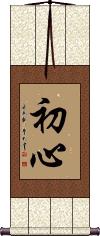
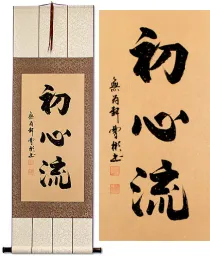
初心 is often translated in Japanese as “beginner's mind” or “beginner's spirit.”
In Chinese, the dictionary definition is “one's original intention.”
The first character means first, initial, primary, junior, beginning, or basic.
The second character means heart, mind, soul, or essence.
初心 is one of the five spirits of the warrior (budo) and is often used as a Japanese martial arts tenet. Under that context, places such as the Budo Dojo define it this way: The state of shoshin is that of a beginners mind. It is a state of awareness that always remains fully conscious, aware, and prepared to see things for the first time. The attitude of shoshin is essential to continued learning.
God is Always With You
God is With Me Always
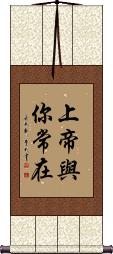
The direct translation of the Chinese characters, 上帝与你常在, is “God Together [with] You Always Exist.”
Keep in mind that Chinese grammar is sometimes very different from English. This makes perfect sense in Chinese.
Note: The title for God is the first two characters - the other words in the direct translation represent one character each.
You are Always in My Heart
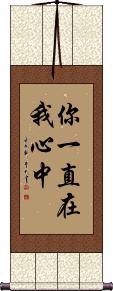
你一直在我心中 means “You are always in my heart” in Chinese.
你 = You
一直 = Always
在 = In/At
我 = Me/My
心中 = Heart/Mind
The idea or definition of heart and mind kind of overlap in ancient Chinese, so this can also mean “You are always in my mind.”
Always in My Heart
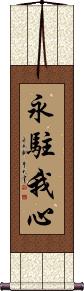
永駐我心 is one of a few ways to write “always in my heart” or “forever in my heart” in Chinese.
The first character means eternal, forever, or always.
The second character means resides, in, or stationed (in the case of troops).
The third character means me, my, or mine.
The last character means heart (but can also mean mind or soul).
Mind Your Own Business
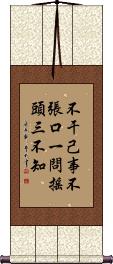
不干己事不张口一问摇头三不知 literally translates as [About] matters [that] don't concern [you], do not open [your] mouth, [and] when questioned, always shake [your] head “No.”
Figuratively, this means: It is best to remain reticent about other people's affairs and to refuse to make any comment on matters that don't concern you.
Forever In My Heart
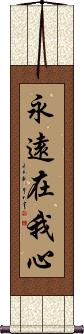
永遠在我心 means “forever in my heart” or “always in my heart” in Chinese.
This is the shorter, somewhat lyrical version of this phrase.
永遠 forever/eternal
在 at/in/exists
我 me/myself/my
心 heart/mind/soul
Forever In My Heart
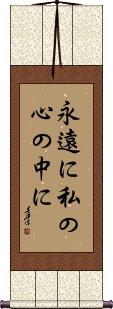
永遠に私の心の中に means “forever in my heart” or “always in my heart” in Japanese.
The character breakdown:
永遠 (eien) eternity; perpetuity; immortality; permanence.
に (ni) indicates the location of a person or thing.
私の (watashi no) my; mine.
心の中 (kokoro no naka) the middle of one's mind; the midst of one's heart.
に (ni) indicates the location of a person or thing (makes this “in” the middle of one's heart).
Note: There’s more than one way to say "Forever in My Heart" in Japanese, so you’ll find another version in our database. This is the very verbose version.
Note: Because this selection contains some special Japanese Hiragana characters, it should be written by a Japanese calligrapher.
Learning is Eternal
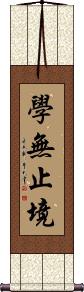
This Chinese philosophy tells of how we continue to learn throughout our lives.
This proverb can be translated in a few ways such as “Study has no end,” “Knowledge is infinite,” “No end to learning,” “There's always something new to study,” or “You live and learn.”
The deeper meaning: Even when we finish school we are still students of the world gaining more knowledge from our surroundings with each passing day.
See Also: An Open Book Benefits Your Mind | Wisdom | Learn From Wisdom
Contentment
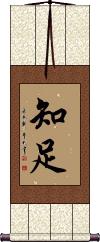
知足 means content with one's situation or to know contentment (hence happiness).
From the Zen Buddhist context, Chisoku or 知足 (knowing what’s enough) means always to know and be
satisfied with one’s lot.
Human pain and suffering are born of greed, and that greed arises because we do not know what’s enough.
The Chinese philosopher, Menzi (372-289 BCE) said, “to nourish the mind, there is nothing better than to make the desires few.”
This relays the idea that the best method to cultivate the mind is to have little desire.
No Worries
My Australian friends always say, “No worries, mate.” It's caught on with me, though I drop the “mate” part since it confuses my fellow Americans.
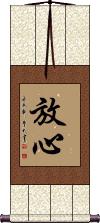
If you would like to express the idea of “no worries,” 放心 is the best and most natural way to say it in Chinese.
The characters you see to the left can be translated as “put your mind at rest” or “to be at ease.” You could literally translate “no worries,” but it doesn't “flow” like this simple Chinese version.
For your info, the first character means to release, to free, to let go, to relax, or to rest. The second character means your heart or your mind.
Note that in Japanese and Korean, this holds the similar meaning of “peace of mind” but can also mean absentmindedness or carelessness, depending on context.
Tao / Dao of the Heart / Soul
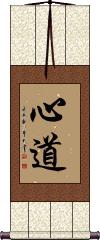
心道 means “The Way of the Heart” or “The Way of the Soul.” The first character means “heart” but can also mean soul, spirit, mind, or your essence. In this case, it is most accurately translated with the heart or soul meaning.
The second character is Dao as in Daoism. Please note, this is the same thing as Tao as in Taoism (just Romanized differently - it's always been the same in Chinese for about 2300 years.
Devotion / Dedication / Attentive / Focused
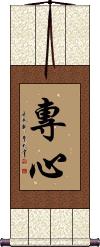
專心 makes a word that means “paying attention with your heart.”
It's often translated as “dedication,” as in “be absorbed in” or “concentrate one's efforts.” It's also used to mean “with the single mind,” “whole-heartedly,” “paying attention,” “undivided attention,” “concentration (-ed),” “engrossed,” “devotionally (listening/watching),” and/or “attentive.”
The first character means “for a particular person, occasion, or purpose,” “focused on one single thing,” “concentrated,” and sometimes, “special.”
The second character means “heart” or “mind” by itself.
My favorite translation, which comes from the Oxford Advanced Chinese/English Dictionary, is, “wholehearted devotion.”
If it seems like the meaning of this word is quite open, you are correct. The context in which the word is used matters a lot. It can mean different things depending on how you use it. This makes it kind of nice as you can decide what this means to you (within some limits). This is always positive in meaning, so even if a Chinese person reads it differently than you, it will still have a good meaning.
 In Japanese, they tend to use a variation of the second character which has one less stroke. If you want your calligraphy written this Japanese form, please click on the Kanji shown to the right instead of the button above. Note: Japanese and Chinese people will recognize either form.
Choose Life
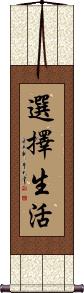
選擇生活 can mean to choose life instead of death (or suicide) or to choose to live life to the fullest.
I think of it as the key phrase used by Renton (Ewan McGregor) in the movie Trainspotting. While Chinese people will not think of Trainspotting when they see this phrase, for me, it will always be what comes near the end of this colorful rant:
Choose life. Choose a job. Choose a career. Choose a family. Choose a fucking big television. Choose washing machines, cars, compact disc players, and electrical tin can openers. Choose good health, low cholesterol, and dental insurance. Choose fixed-interest mortgage repayments. Choose a starter home. Choose your friends. Choose leisure wear and matching luggage. Choose a three-piece suite on-hire purchase in a range of fucking fabrics. Choose DIY and wondering who the fuck you are on a Sunday morning. Choose sitting on that couch watching mind-numbing, spirit-crushing game shows, stuffing fucking junk food into your mouth. Choose rotting away at the end of it all, pissing your last in a miserable home, nothing more than an embarrassment to the selfish, fucked-up brats you have spawned to replace yourself. Choose your future. Choose life.
This in-stock artwork might be what you are looking for, and ships right away...
Gallery Price: $200.00
Your Price: $118.88

Gallery Price: $202.00
Your Price: $111.88

Gallery Price: $106.00
Your Price: $58.88

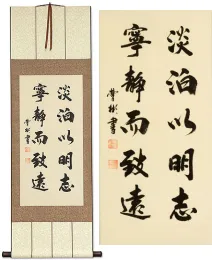
Gallery Price: $198.00
Your Price: $109.88

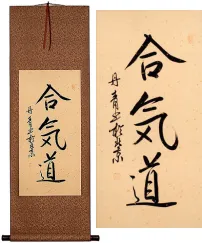

The following table may be helpful for those studying Chinese or Japanese...
| Title | Characters | Romaji (Romanized Japanese) | Various forms of Romanized Chinese | |
| Mind of the Beginner | 初心 | sho shin / shoshin | chū xīn / chu1 xin1 / chu xin / chuxin | ch`u hsin / chuhsin / chu hsin |
| God is Always With You | 上帝與你常在 上帝与你常在 | shàng dì yǔ nǐ cháng zài shang4 di4 yu3 ni3 chang2 zai4 shang di yu ni chang zai shangdiyunichangzai | shang ti yü ni ch`ang tsai shangtiyünichangtsai shang ti yü ni chang tsai |
|
| You are Always in My Heart | 你一直在我心中 | nǐ yī zhí zài wǒ xīn zhōng ni3 yi1 zhi2 zai4 wo3 xin1 zhong1 ni yi zhi zai wo xin zhong niyizhizaiwoxinzhong | ni i chih tsai wo hsin chung niichihtsaiwohsinchung |
|
| Always in My Heart | 永駐我心 永驻我心 | yǒng zhù wǒ xīn yong3 zhu4 wo3 xin1 yong zhu wo xin yongzhuwoxin | yung chu wo hsin yungchuwohsin |
|
| Mind Your Own Business | 不干己事不張口一問搖頭三不知 不干己事不张口一问摇头三不知 | bù gān jǐ shì bù zhāng kǒu yī wèn yáo tóu sān bù zhī bu4 gan1 ji3 shi4 bu4 zhang1 kou3 yi1 wen4 yao2 tou2 san1 bu4 zhi1 bu gan ji shi bu zhang kou yi wen yao tou san bu zhi | pu kan chi shih pu chang k`ou i wen yao t`ou san pu chih pu kan chi shih pu chang kou i wen yao tou san pu chih |
|
| Forever In My Heart | 永遠在我心 永远在我心 | yǒng yuǎn zài wǒ xīn yong3 yuan3 zai4 wo3 xin1 yong yuan zai wo xin yongyuanzaiwoxin | yung yüan tsai wo hsin yungyüantsaiwohsin |
|
| Forever In My Heart | 永遠に私の心の中に | ei en ni watashi no kokoro no naka ni | ||
| Learning is Eternal | 學無止境 学无止境 | xué wú zhǐ jìng xue2 wu2 zhi3 jing4 xue wu zhi jing xuewuzhijing | hsüeh wu chih ching hsüehwuchihching |
|
| Contentment | 知足 | chisoku | zhī zú / zhi1 zu2 / zhi zu / zhizu | chih tsu / chihtsu |
| No Worries | 放心 | houshin / hoshin | fàng xīn / fang4 xin1 / fang xin / fangxin | fang hsin / fanghsin |
| Tao Dao of the Heart Soul | 心道 | xīn dào / xin1 dao4 / xin dao / xindao | hsin tao / hsintao | |
| Devotion Dedication Attentive Focused | 專心 / 専心 / 耑心 专心 | sen shin / senshin | zhuān xīn zhuan1 xin1 zhuan xin zhuanxin | chuan hsin chuanhsin |
| Choose Life | 選擇生活 选择生活 | xuǎn zé shēng huó xuan3 ze2 sheng1 huo2 xuan ze sheng huo xuanzeshenghuo | hsüan tse sheng huo hsüantseshenghuo |
|
| In some entries above you will see that characters have different versions above and below a line. In these cases, the characters above the line are Traditional Chinese, while the ones below are Simplified Chinese. | ||||

Successful Chinese Character and Japanese Kanji calligraphy searches within the last few hours...



