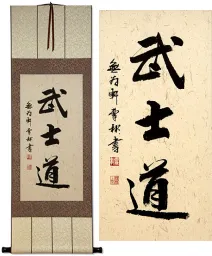
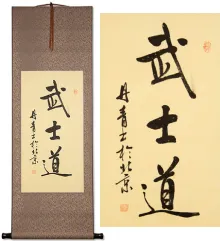
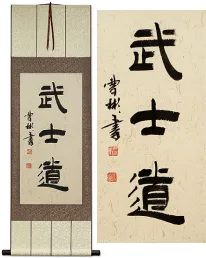
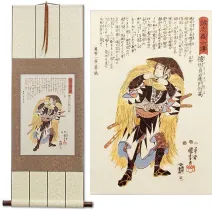
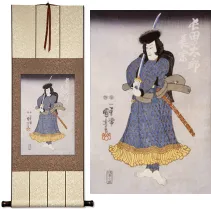
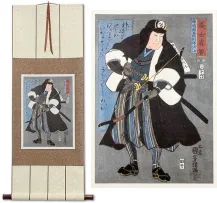
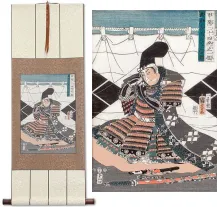
Bushido Code of the Samurai
Japanese Calligraphy Scroll
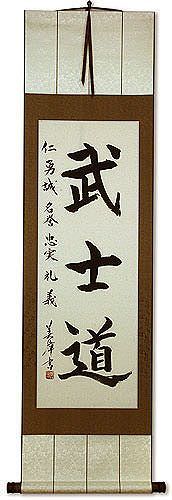
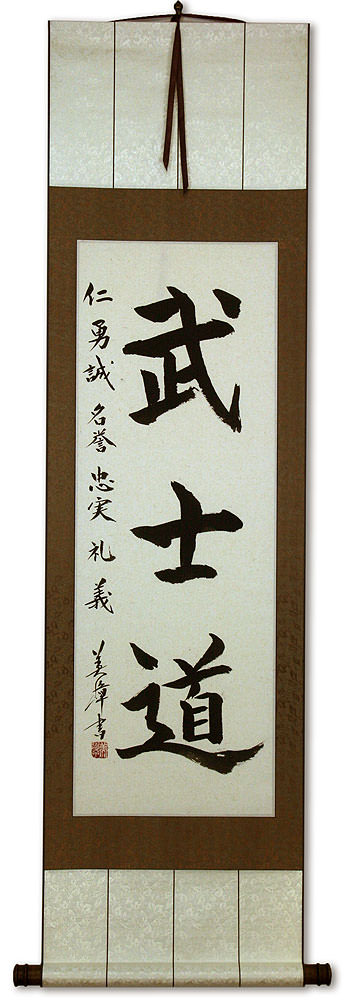
59¼"
20"
Typical Gallery Price: $330.00
$148.77Sold Out
Sorry you missed it.
• Hand-Painted Artwork.
• Handmade Wall Scroll.
• Money-Back Guarantee.
Approximate Measurements
Artwork Panel: 32.8cm x 91cm ≈ 13" x 35¾"
Silk/Brocade: 42cm x 150.5cm ≈ 16½" x 59¼"
Width at Wooden Knobs: 51cm ≈ 20"
Information about caring for your wall scrollSee Larger Image


The Way of the Samurai
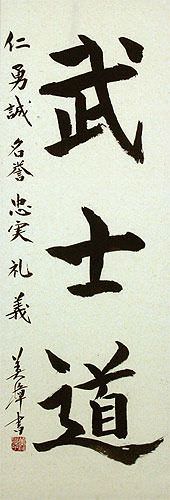
Close up view of the calligraphy artwork mounted to this silk brocade wall scroll
This is a special edition. This one features handmade natural fiber paper (natural unbleached beige colored paper), ivory silk panels with accent lines, and a copper-brown inner silk frame. This is a gorgeous wall scroll. However, if you want one in a different style, we build them custom!
See our Bushido Way of the Samurai page for more custom Japanese calligraphy options related to Bushido concepts.
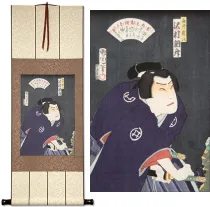
During the 9th and 12th centuries in Japan the warrior class were known as samurai, also called bushi (knights/warriors - bushi hence bushido).
They emerged from the provinces of Japan to become the ruling class until their decline and later total abolition in 1876 during the Meiji Era.
These warriors were men who lived by Bushido; it was their way of life. The samurai's loyalty to the emperor and his overlord or daimyo were unsurpassed. They were trustworthy and honest. They lived frugal lives with no interest in riches and material things, but rather in honor and pride. They were men of true valor. Samurai had no fear of death. They would enter any battle no matter the odds. To die in battle would only bring honor to one's family and one's lord.
The actual code was passed on verbally to each generation of samurai, but over time, seven chief virtues emerged, and became the written form of Bushido.
Of course, credit is generally given that a Chinese man (known in the west as "Confucius") is the father of these values in China. Therefore, you'll find these concepts belong not only to the Japanese samurai, but have spread throughout Asia. Variations of these soldierly and moral values can be seen in China, Korea, Vietnam, and elsewhere.
Authentic Japanese Calligraphy by Japanese Master Calligrapher Bishou Imai
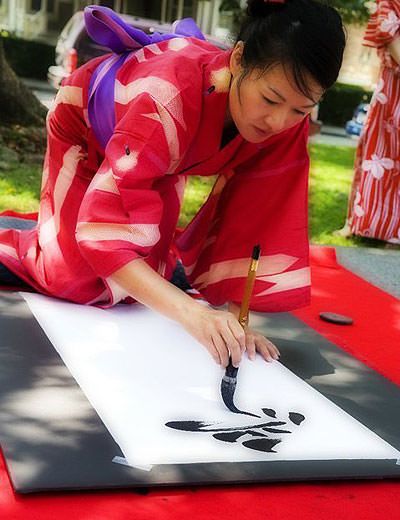
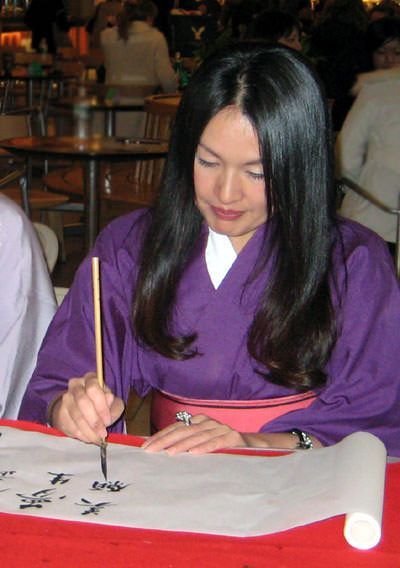
Japanese Master Calligrapher Bishou Imai.
Shown here crafting her artwork which follows
a 1600-year Japanese tradition.
Bishou was born and raised in Nara, Japan. She began her studies of Calligraphy at the age of four at Baikou Calligraphy School. When Bishou was 25 years old, she received a membership to the Tenshin Kai (calligraphy society) and her life as a calligrapher began. Bishou progressed to the next level, becoming a member of the Cho-ko Guild which is the most prestigious calligraphy society in Japan. During her apprenticeship, she taught calligraphy and studied the art of Japanese silk scroll making (hyougu) at Mizuno Hyougu-ten.
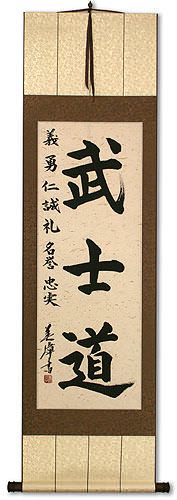
A sample of her work:
Bushido - Kaisho style
In 1998, Master Calligrapher Bishou Imai was awarded the highest rank in Japanese Calligraphy of Shihan. She currently holds a guild license for teaching both calligraphy and instructing teachers to teach calligraphy.
Bishou Imai is among the few to have won multiple best of category awards in national competitions (Japan). Her work has been displayed at the Tokyo Metropolitan Art Museum, Osaka Municipal Museum Of Art, Nara City Museum Of Art and Kyoto Municipal Museum Of Art.
In Addition to being a calligrapher, she is also an "artisan artist" (Hyougushi).

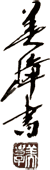
 is how Bishou is written. This name means "Beautiful Cliff/Mountain". You will see these characters signed just before the red signature stamp on her calligraphy pieces.
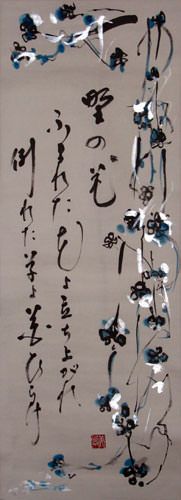
Kana Sosho
painting combination.
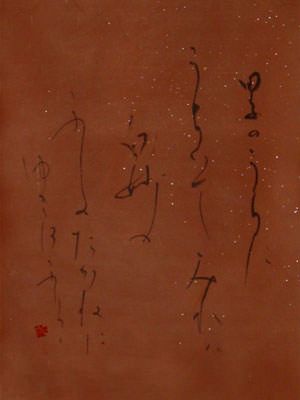
Kana style Japanese calligraphy
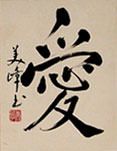
Single-Kanji
Love
calligraphy
in Kai-Gyosho
style.

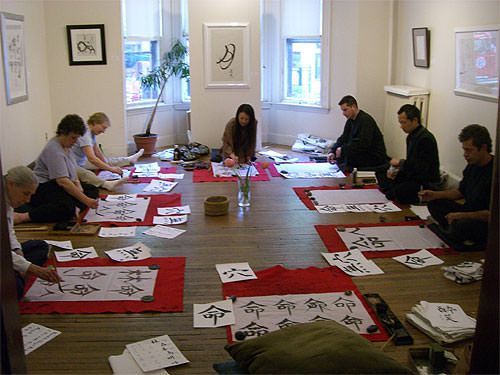
Master Imai, holding a Japanese calligraphy class in Boston.
This item was listed or modified
Apr 26th, 2017
Typical Gallery Price: $330.00
$148.77Sold Out
Sorry you missed it.