Custom Blessed Chinese & Japanese Calligraphy Wall Scroll
We have many options to create artwork with Blessed characters on a wall scroll or portrait.
Switched to secondary search mode due to lack of results using primary.
These secondary results may not be very accurate. Try a different but similar meaning word or phrase for better results. Or...
Look up in my Japanese Kanji & Chinese Character Dictionary(My dictionary is a different system then the calligraphy search you just tried)
If you want a special phrase, word, title, name, or proverb, feel free to contact me, and I will translate your custom calligraphy idea for you.
2. Year-In Year-Out Have Abundance
6. Bat
10. Blessed by God
13. Bright and Promising Future
14. Charm / Grace
16. Crisis equals Danger plus Opportunity?
17. Destiny / Fate
19. Destiny / Fate
20. Divine Blessing
21. Grace of God / Divine Blessing
22. Divine Grace
24. Dragon and Phoenix Brings Luck
26. Elegant / Exquisite / Grace
27. Grace / Favor
29. Fallen Angel
30. Grace / Favor
31. A Bright Future
32. Rise and Fall / Ups and Downs
33. Flowers Bloom and Flowers Fall
38. Fu Lu Shou
39. Lucky Star
40. Gassho
41. God Bless You
42. God Bless You / May God Protect You
43. God Bless You / God Be With You
44. 50th Golden Wedding Anniversary
45. Good Luck
47. Goshin-Do
48. Goshin-Kai
49. Grace
50. Grace from Heaven / Grace from God
51. Grace
53. Guan Yu
54. Happiness / Fortune / Lucky
56. Happiness
57. Heaven Blessing
59. Heaven Blesses the Diligent
61. Safety and Well-Being of the Family
62. A Life of Happiness and Prosperity
64. Longevity / Long Life Wishes
65. Love and Protect
66. Mary-Grace
69. Prosperity
71. Protection
72. Protector
74. Red Dragon / Vermillion Dragon
75. Reiki Precepts by Usui Mikao
77. Serendipity / Happy Coincidence
78. Serendipity / Lucky Coincidence
79. Shield
82. Under the Protection of the Dragon Saint
83. Warrior Saint / Saint of War
84. Wealth / Fortune / Riches / Abundance
87. Mysterious
Five Red Bats
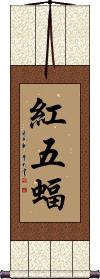
紅五蝠 is a play on words in Chinese because of some homophones.
The first thing you need to know is that the word for bat, 蝠, sounds exactly like the word for good fortune, 福. Thus, bats are often associated with good luck and good fortune in Chinese culture.
Five bats (五福 / 五蝠) means “five fortunes,” referring to luck, prosperity, wealth, happiness, and longevity.
The word red, 红, has the same sound as 宏 meaning vast, great, or magnificent. Therefore, a red bat means “vast fortune.”
Altogether, five red bats represent vast reaches of the five fortunes.
Year-In Year-Out Have Abundance
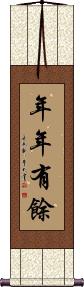
年年有餘 is a common proverb or wish of prosperity you'll hear around the time of Chinese New Year.
Directly translated character by character, it means “Year Year Have Surplus.” A more natural English translation including the deeper meaning would be “Every Year may you Have Abundance in your life.”
On a side note, this phrase often goes with a gift of something related to fish. This is because the last character, “yu” which means surplus or abundance, has exactly the same pronunciation in Mandarin as the word for “fish.”
This is also one of the most common titles for traditional paintings that feature koi fish.
In China, this phrase might make an odd wall scroll - a customer asked especially for this common phrase which is why it appears here. See my other abundance-related words if you want a wall scroll that will seem more comfortable in Chinese culture.
Note: This can be pronounced in Korean, but it's not a commonly used term.
See Also: Prosperity | Good Fortune
Abundance / Prosperous
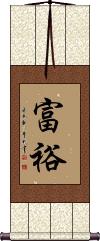
富裕 means prosperous, having an abundance, well-to-do, or well-off.
It's a simple word that suggests “you have made it” in Chinese, Japanese Kanji, and Korean Hanja.
See Also: Good Fortune
Abundance and Prosperity
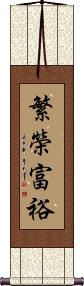
繁榮富裕 is a proverb about “Prosperity and Abundance.”
This presents and reinforces the ideas of being prosperous, a booming economy, well-to-do, well-off, wealthy, riches, and opulence.
While this is the ancient/traditional Chinese way to write this, most Japanese can fully read and understand it. It's also the correct form of old Korean Hanja (though few Koreans of the current generation will be able to read this).
See Also: Good Fortune
Amazing Grace
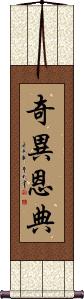
奇異恩典 is the title, “Amazing Grace” in Chinese.
The first two characters can also mean amazing, fantastic, exotic, astonishing, odd, strange, wonderful, extraordinary, uncommon, or rare.
The last two characters mean “grace,” as in “grace or favor of/from God.”
Amazing Grace
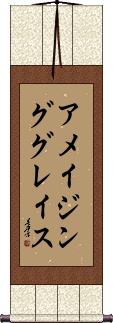
アメイジング・グレイス is the Japanese Katakana for Amazing Grace.
This phonetically sounds like the English, “Amazing Grace” but does not hold that meaning since it is a transliteration versus a translation.
Note: Because this title is entirely Japanese Katakana, it should be written by a Japanese calligrapher.
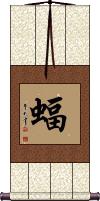
蝠 is the simplest way to write bat in Chinese and old Korean Hanja.
This also means bat in Japanese but is almost never written alone like this (it's often part of other titles for vampire bats or fruit bats).
In Chinese culture, the bat is a good luck charm, as the pronunciation is very similar to the word for “good luck” or “good fortune.” The character for bat (蝠) even looks like the good luck (福) character.
Beautiful Virtue
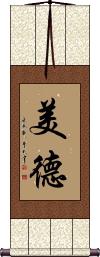
美德 written in Chinese or Korean Hanja can also mean “grace of character” or “noble virtue.”
 There is a slight variation in the modern Japanese Kanji form of the second character. If you want the modern Japanese version, please click on the special Kanji shown to the right instead of the button above. Note that the traditional Chinese form is still readable and understood by Japanese people (
it’s
the ancient Japanese form anyway).
There is a slight variation in the modern Japanese Kanji form of the second character. If you want the modern Japanese version, please click on the special Kanji shown to the right instead of the button above. Note that the traditional Chinese form is still readable and understood by Japanese people (
it’s
the ancient Japanese form anyway).
Blessings on this Home
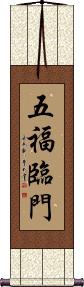
五福臨門 means “five good fortunes arrive [at the] door.”
It is understood to mean “may the five blessings descend upon this home.”
These blessings are known in ancient China to be: longevity, wealth, health, virtue, and natural death (living to old age). This is one of several auspicious sayings you might hear during the Chinese New Year.
Bless this House
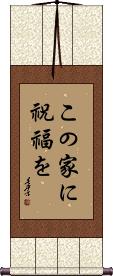
This means “Bless this house” or “Bless this home,” in Japanese.
Some may also translate this as “Bless this family,” since the Kanji for home can also mean family.
Note: Because this selection contains some special Japanese Hiragana characters, it should be written by a Japanese calligrapher.
Blessed by God
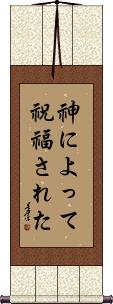
神によって祝福された means “Blessed by God” in Japanese.
This would be understood to mean “We have been blessed by God.”
Note: Because this selection contains some special Japanese Hiragana characters, it should be written by a Japanese calligrapher.
Blessings and Protection
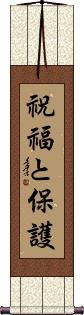
祝福と保護 means “blessings and protection,” in Japanese.
Blessings and Good Wishes
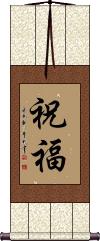
祝福 is a nice way to give good wishes to someone.
It can be a general blessing or used to congratulate someone for a special occasion or graduation.
This has a good meaning in Japanese but is more appropriate when expressed orally. 祝福 is not a natural selection for a wall scroll if your audience is Japanese.
Bright and Promising Future
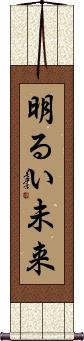
明るい未来 is a Japanese proverb that means “Bright Future.”
It suggests a lot of possibilities and potential awaits in your future. A great gift for a graduate.
The first part of this proverb literally means bright or light. The second part means the future but can also be translated as “the world to come.”
Note: Because this selection contains some special Japanese Hiragana characters, it should be written by a Japanese calligrapher.
Charm / Grace
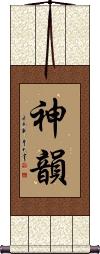
神韻 is the Chinese and Japanese word for charm or grace (in poetry or art) or exceptional artistry.
Word of God / The Gospel
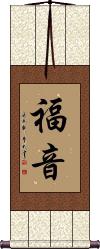
福音 is the Chinese, Korean and Japanese word for “Gospel” or “Word of God.”
福音 is a specifically Christian word in Asia (not used for any other religion).
The first character means blessing, good fortune, or good luck. This first character is a special character used throughout China to bring good tidings and fortune - especially during Chinese New Year. The second character means sound, noise, or news.
Together, these characters create a word that means “The Good News” or “The Sound of Good Fortune.”
When read by a Chinese or Japanese person, this word is always perceived as “The Christian Gospel,” “Word of God,” or even “The Voice of God.”
See Also: Christianity | Jesus Christ | God of Abraham
Crisis equals Danger plus Opportunity?
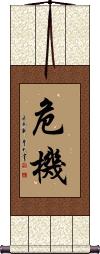
危機 means crisis in Chinese and Japanese.
Separately, the first character here does mean “danger” or “to endanger,” and the second character can mean “opportunity.”
However, I want to debunk a myth that was propagated by some westerners who did not have a clear understanding of Asian languages...
While often, Chinese/Japanese/Korean compound words (words of two or more characters) are the sum of their parts, this is not always the case. The compound is often understood with a completely different meaning than the two characters individually.
Many have said that the Chinese/Japanese/Korean word for Crisis is made up of the characters for “danger” and “opportunity.” 危機 is true when phrased this way.
However, it's not absolutely correct to say that “danger + opportunity = crisis” in Asian cultures.
English example:
If I tell you that...
Bovine creature + Guy behind the plate in baseball = Locomotive train protection

...you would think I was mad. But consider that “cow + catcher = cowcatcher,” which is the device that used to be found on steam engines to protect them if they hit an animal on the tracks. When we hear the word “cowcatcher,” we don't separate the words into their individual meanings (necessarily).
The same is true with the word for crisis in Chinese/Japanese/Korean. While you can separate the characters, few Asian people would automatically do so in their minds.
The final answer:
It is a half-truth to say, “danger plus opportunity equals crisis” in Chinese/Japanese/Korean. Use this statement and concept with caution.
Also, the second character can mean “secret” or “machine,” depending on context so I guess you have to say “a dangerous machine = crisis” or “danger + a secret = crisis.” Both of these are only slightly more ridiculous than the first premise.
PS: 危機 is probably not a great word for a scroll unless you have a special use for it.
Destiny / Fate
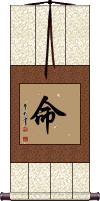
命 is often translated as “destiny.”
Sometimes this character is simply translated as “life” but more in terms of one's lot in life. In a certain context, this can mean command or decree (generally from a king or emperor). Of course, such a decree is part of fate and leads you to fulfill your destiny.
In Chinese, this word leans toward the fate or destiny definition.
In Korean, it is usually read simply as “life.”
In Japanese, it can mean all definitions shown above, depending on context.
See Also: Good Fortune
Fate / Chance Meeting
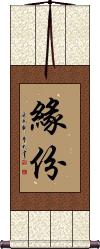
緣份 specifically represents the fate or destiny that brings two people together.
This is like the chance meeting of two people that leads sometime later to marriage.
This could also be the chance meeting of two business people who become partners and build a huge and successful company.
This idea is often associated with a fateful meeting leading to good fortune.
Some will define this word as “Destiny brings you two together” or “Meant to be.”
 Note: The second character can also be written without the left radical, as shown to the right. If you have a preference, please let use know in the special instructions for your project. There is no difference in meaning or pronunciation, just two (alternate) ways to write the same character.
See Also: Soulmates | Good Fortune
Destiny / Fate
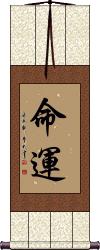
These two characters contain the ideas of fate, destiny, fortune, and luck.
You can also say that it means “what life throws at you” or “your lot in life” because the first character contains the idea of life or living.
This version is really only used in Chinese. There's another version with just the characters reversed that is more universal. In fact, skip this one. The opposite character order is better.
Destiny / Fate
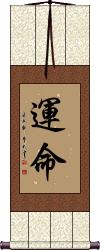
These two characters contain the ideas of fate, destiny, fortune, and luck in Chinese, Japanese Kanji, and old Korean Hanja.
運命 is often defined as “a person's fate” or “personal fate” in various dictionaries.
These two characters can be reversed (written in either order) and yield roughly the same meaning.
This particular character order is more common in old Korean and less common in modern Chinese.
See Also: Good Fortune | Good Luck
Divine Blessing
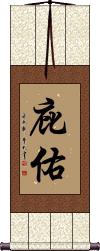
庇佑 is a Chinese way to say “divine blessing.”
This can also mean: to bless, to protect, or divine protection.
Also written as 庇祐 (variant second character).
Grace of God / Divine Blessing
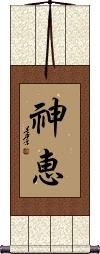
神惠 can be translated as “God's Blessing,” “Blessed by God,” or “Divine Blessing” in Japanese Kanji.
Divine Grace
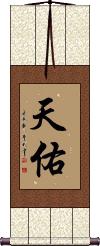
天佑 is a Chinese and Japanese word that means divine aid, divine grace, Heaven blessed, or providential help.
Some Chinese people will use this to infer that this means a home or family blessed by heaven or God. 天佑 is the shortest way to express that idea anyway.
Divine Protection
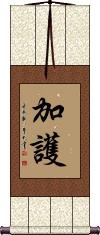
加護 is Japanese for “divine protection” or “the saving grace of God.”
Please consider this blessing to be Japanese only. This can have the same meaning in the context of Buddhism in Chinese, but it's also a nickname for “intensive care” at Chinese hospitals.
Note: My Japanese translator says this is not commonly used in Japanese. I added this because a customer asked for it. There is no better Japanese phrase to express this idea - so this is it if you want it.
Dragon and Phoenix Brings Luck
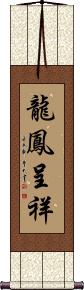
龍鳳呈祥 is often seen at weddings and other celebrations in China.
It suggests that the dragon and phoenix will bring you auspicious tidings.
The first character is a dragon.
The second is a phoenix.
The third is presents or brings.
And the last means auspicious, propitious, or luck.
Throughout China, the dragon and phoenix are symbols of good fortune. You will see these auspicious figures as decorative symbols on everything from buildings, furniture, wedding costumes, and sculptures in public parks to caskets and items used in ceremonies.
Eat Drink and Be Merry
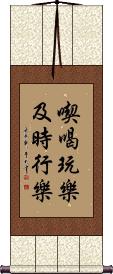
喫喝玩樂及時行樂 is just about the closest proverb to match the western idea of “Eat, drink, and be merry.”
This is a Chinese proverb that more literally means “Eat, drink, play, be merry, enjoy everything as long as you can.”
It's basically a suggestion that you try to enjoy everything in life, as long as you live, or as long as you are able.
Elegant / Exquisite / Grace
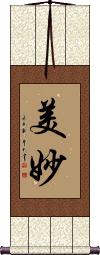
Beyond elegant and exquisite elegance, 美妙 is also the word used to say “beautiful” or “marvelous” when referring to a work of art.
Can also be translated as exquisiteness, gracefulness.
Note: Not a commonly used word in Japanese.
Grace / Favor
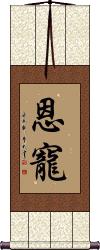
恩寵 means grace or favor in Chinese characters, Japanese Kanji, and old Korean Hanja.
In ancient China, this was a special favor bestowed by a ruler. It could also be the Emperor's generosity towards a favorite person or concubine.
Eternal Happiness
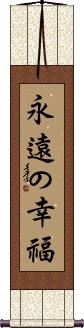
永遠の幸福 means “eternal happiness” in Japanese.
永遠 means eternal, eternity, perpetuity, forever, immortality, and permanence.
の is a possessive article which sort of makes this selection mean “happiness, of the eternal kind.”
幸福 means happiness, though this word can be translated as truly blessed, joy, happy, welfare, well-being, or fortunate.
Eternal Happiness
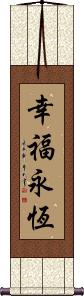
幸福永恆 is a short way to say eternal happiness in Chinese.
Breaking down the parts:
幸福 means happiness, happy, blessed, blessedness, joy, and/or well-being.
永恆 means eternal, everlasting, and/or forever.
Another way to write this is 永恆的幸福. It reverses the word order and adds a possessive article. I prefer the shorter version, which is slightly more natural in Chinese.
Fallen Angel
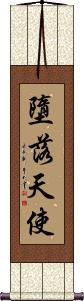
墮落天使 means “fallen angel” in Chinese.
墮落天使 is also the title of a 1995 movie that was popular in Hong Kong.
墮落 means to degrade, degenerate, become depraved, corrupt, fall from grace, or descend.
天使 means angel (more literally “heavenly messenger” or “divine messenger”).
Grace / Favor
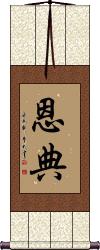
恩典 is one of several ways to express favor or grace in Chinese characters, Japanese Kanji, and old Korean Hanja.
This version can refer to an act of grace or the granting of a special privilege.
A Bright Future
Incredible 10,000-Mile Flight of the Peng
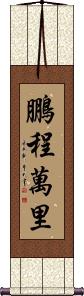
鵬程萬里 is an ancient Chinese proverb used in modern times to wish someone a long and successful career.
It's really about the 10,000 Flight of the Peng (Peng, also known as Roc is a mythical fish that can turn into a bird and take flight).
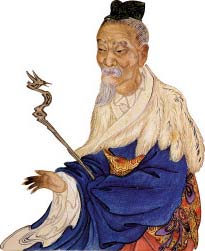
莊子
Zhuangzi or Chuang Tzu
Breaking down each character:
1. Peng or Roc (a kind of bird).
2. Journey (in this case, a flight).
3. 10,000 (Ten Thousand).
4. Li is a unit of distance often referred to as a “Chinese Mile,” though the real distance is about half a kilometer.
Direct Translation: “Peng's Journey [of] 10,000 Li.”
Literal meaning: “The 10,000-Li Flying Range Of The Roc.”
Perceived meaning: “To have a bright future” or “To go far.”
This proverb/idiom comes from the book of Zhuangzi or Chuang Tzu. It tells the tale of a huge fish that could turn into a gigantic bird. This bird was called a “peng” and was many miles long. This legendary size allowed the Peng to fly from the Northern Sea to the Southern Sea in a single bound.
Wishing someone “a Peng's Journey of 10,000 Li” will imply that they can travel far without stopping and will have great success, a long career, and a prosperous future.
Rise and Fall / Ups and Downs
Eiko-Seisui
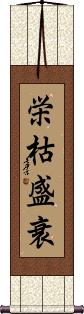
This Japanese proverb can be translated as “flourish and wither, prosper and perish,” “life is full of fortune and misfortune,” or simply “vicissitudes of life.”
栄枯盛衰 / 榮枯盛衰 is about the rise and fall of human affairs or the ups and downs of life. Prosperity comes and goes, everything is fleeting and temporary, but like waves, another swell of prosperity may come.
Here's how the Kanji break down in this proverb:
栄 = prosper; thrive; flourish; boom.
枯 = wither; die.
盛 = prosperous; flourishing; thriving; successful; energetic; vigorous; enthusiastic.
衰 = become weaker; decline; get weak; die down; subside; abate; fail.
 Notes: The original version of the first character looks like the image to the right. In modern Japan, they simplified that Kanji a bit into the version shown above. If you have a preference for which style is used for your calligraphy, please let me know when you place your order.
Apparently, with that original version of the first character, this is also used in Korean Hanja. However, I have not confirmed that
it’s
used in the same way or is widely-known in Korean.
Flowers Bloom and Flowers Fall
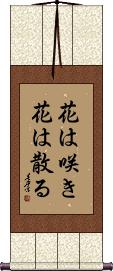
花は咲き花は散る is a Japanese proverb about the cycle of life, or how things come and go in life.
This can be used to suggest that youth, fortune, and life can come and go (everything is temporary).
Note: Because this selection contains some special Japanese Hiragana characters, it should be written by a Japanese calligrapher.
Fortune favors the brave
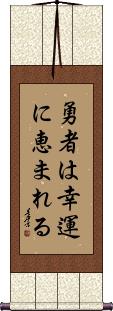
勇者は幸運に恵まれる is a Japanese proverb that suggests that in history, the brave or courageous tend to be the ones who win.
Note: Because this selection contains some special Japanese Hiragana characters, it should be written by a Japanese calligrapher.
Fortune Favors The Brave
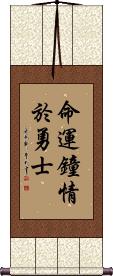
命運鐘情於勇士 means “Fortune favors the brave” in Chinese.
This is not the only way to express the idea of fortune favoring the bold or brave.
It's not originally a Chinese phrase, so it's been translated into Chinese in various ways.
Fortune Favors the Bold
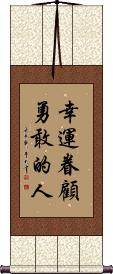
幸运眷顾勇敢的人 can be translated as “Fortune favors the brave/bold/courageous” in Chinese.
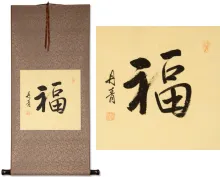
Good Luck / Good Fortune
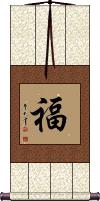
福 is pronounced “fu” in Chinese.
The character “fu” is posted by virtually all Chinese people on the doors of their homes during the Spring Festival (closely associated with the Chinese New Year).
One tradition from the Zhou Dynasty (beginning in 256 B.C.) holds that putting a fu symbol on your front door will keep the goddess of poverty away.
福 literally means good fortune, prosperity, blessed, blessedness, happiness, and fulfillment.
You'll also see this character in Vietnam (where Chinese characters were the written form until a romanization reform) where it is pronounced Phúc - a word commonly used in Vietnamese names because of its good meaning.
See Also: Lucky
Fu Lu Shou
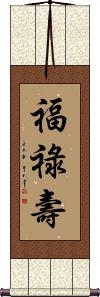
These are the short titles for Sanxing or 三星 (Three Stars).
福祿壽 are the gods of Jupiter, Ursa Major, and Sirius. Fu, Lu, and Shou represent fortune (福), presiding over the planet Jupiter, prosperity (祿), presiding over Ursa Major, and longevity (壽), presiding over Sirius.
In old Chinese folk religion, they are often represented as three old bearded wise men.
Lucky Star
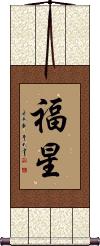
福星 is the lucky star, one of three Chinese deities (三星 or Three Stars) representing fortune/luck, prosperity, and longevity.
In Japanese, this can be the given name Fukusei - with the same “lucky star” or “star of good fortune” meaning.
Gassho
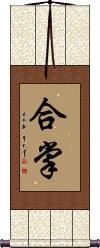
合掌 is the act of greeting someone (can also be done when departing) with hands brought together prayerfully.
In India, this would be accompanied by the verbal greeting and blessing of “Namaste.” In China, Japan, and Korea, this is how Buddhists will greet each other. Sometimes done by people who are not devout Buddhists in China, Japan, and Korea to show respect, reverence, or great thanks to someone for a gift, forgiveness, or some honor that has been bestowed.
In Japan, this is almost always associated with a deep bow. In China, where bowing is not an everyday occurrence, there may be a shallow bow, but the act will be done with deep feeling. Korean culture seems to have more bowing than China but less than Japan.
See Also: Namaste
God Bless You
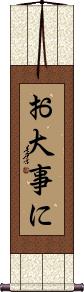
お大事に means “God bless you” in Japanese.
It can also mean “take care of yourself,” or “get well soon.” It's not always associated with religious meaning.
Note: Because this selection contains some special Japanese Hiragana characters, it should be written by a Japanese calligrapher.
God Bless You / May God Protect You
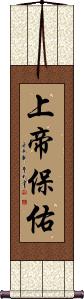
上帝保佑 is a blessing exchanged between Chinese Christians.
The first two characters mean God (The God of Zion). The second two characters express the idea of giving protection. Another way to translate this is “May God protect you.”
See Also: Guardian Angel
God Bless You / God Be With You
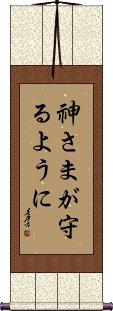
神さまが守るように is about as close as you can get to, “God Bless You” in Japanese.
This literally means “[May] God Protect [You].” It can also mean “God is Always With You,” as the word in this phrase that means “protect” can also mean to follow or be with. In fact, the Japanese dictionary entry for that word reads like this: to protect; to guard; to defend; to keep (i.e. a promise); to abide; to observe; to follow.
Note: Because this selection contains some special Japanese Hiragana characters, it should be written by a Japanese calligrapher.
50th Golden Wedding Anniversary
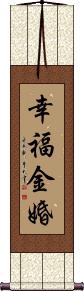
幸福金婚 means “Happy Golden Anniversary” and is a great gift for a couple who is celebrating 50 years together.
The first two characters mean happy, blessed, or happiness.
The last two characters mean “couple's golden anniversary.” It means “golden wedding” or “golden marriage,” but this is only used for the 50-year-mark of a marriage (the same way we use gold to represent 50 years in the west).
幸福金婚 is a nice title to use with an inscription. You could request something like, “Happy 50th Anniversary, Mr. and Mrs. Smith,” to be written down the side of this title in smaller Chinese characters.
Please note: This can be pronounced and understood in Japanese but not as commonly used in Japan. Japanese people who read this will understand it but might tend to feel it’s of Chinese origin.
Good Luck
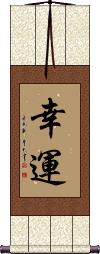
幸運 can be translated as “good luck,” fortunate, lucky, and/or “good fortune” in Chinese, Korean and Japanese.
Occasionally, this is also translated as a type of happiness or a short way to write serendipity.
House of Good Fortune
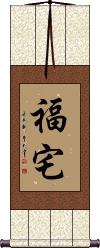
福宅 is perhaps the Chinese equivalent of “This blessed house” or perhaps “home sweet home.”
This phrase literally means “Good fortune house” or “Good luck household.” It makes any Chinese person who sees it feel that good things happen in the home in which this calligraphy is hung.
Goshin-Do
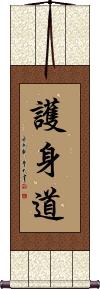
護身道 is the title for the school of martial arts known as Goshin-Do.
The literal translation of these three characters is something like “self-protection way” or “protection of the body way.”
To put this in context, the term 護身 is often used for charms or amulets that are meant to protect the wearer from harm.
Note: This phrase is pronounceable in Chinese, but it not commonly known in China.
Goshin-Kai
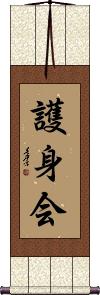
護身会 is the title for the Goshin-Kai school of Japanese martial arts.
護身 (Goshin) means self-protection, protection of the body.
会 (Kai) means meeting, assembly, society, association, or club.
Grace
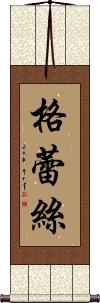
格蕾絲 is the name Grace transliterated into Mandarin Chinese.
Please note: This sounds like grace but does not mean grace. If you want the meaning of grace, please choose a different title.
Grace
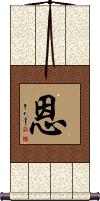
恩 is often translated as “kind act from above,” as in “The Grace of God.”
This doesn't necessarily have to come from God. It could be a favor paid to you, or help that you received (or gave). Of course, you can decide for yourself whether the grace or favor given to you by a friend is actually a gift from God.
Other possible translations of this character:
Favor / favour, acts of kindness, merits, beneficial Influence, kindness, indebtedness, obligation, and benevolent influence.
Grace from Heaven / Grace from God
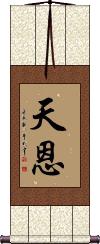
天恩 is the deepest way to say “Heaven's Grace” or “God's Grace” in Chinese.
The first character means Heaven or sky (referring, in this case, to the domain of God).
The second character means grace, blessings, benevolence, favor/favour, acts of kindness, merits, or beneficial influence.
This title can also be defined as:
Blessings of Heaven, Favor of the Emperor, Divination's luckiest day, or blessings of nature. Note: When you see “Emperor” above, remember that the Emperor, like the Pope, is theoretically chosen by God or seen as an emissary or conduit of God in ancient Asian culture. It would only be read that way in a certain context, such as “The Emperor, in his mercy, bestowed upon him Heaven's Grace, and the prisoner was set free.”
Note: Technically, this is a Japanese word too (pronounced "ten-on") but it’s rarely used in Japan anymore. Therefore, this title is best if your audience is Chinese.
Grace from Heaven / Grace from God
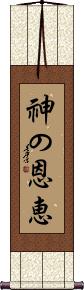
神の恩恵 means God's Grace in Japanese.
The first two characters act to create a word that means “divine,” “God's,” or “The Spirit's.”
The last two Kanji mean grace, favor/favour, blessing, or benefit.
Grace
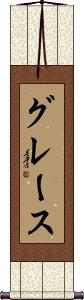
グレース is the name Grace in Japanese.
Note: Because this title is entirely Japanese Katakana, it should be written by a Japanese calligrapher.
Guan Gong / Warrior Saint
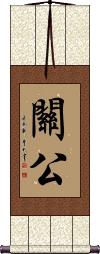
關公 is a Chinese title, Guan Gong, that means Lord Guan (The warrior saint of ancient China).
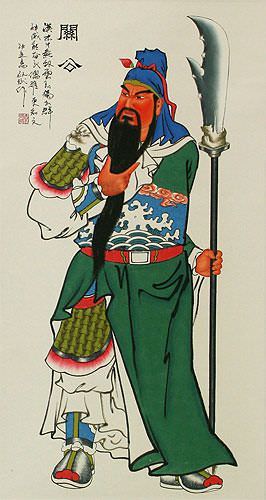 While his real name was Guan Yu / 關羽, he is commonly known by the title of Guan Gong (關公).
Some Chinese soldiers still pray to Guan Gong for protection. They would especially do this before going into battle. Statues of Guan Gong are seen throughout China.
Guan Yu
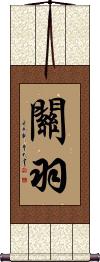
關羽 is the name Guan Yu, Army General for the Kingdom of Shu.
He is also known as Guan Gong (like saying Duke Guan or Sir Guan)
He was immortalized in the novel, “Romance of the Three Kingdoms.”
He was a fearsome fighter, also famous for his virtue and loyalty. He is worshiped by some modern-day soldiers and has the title “Warrior Saint” in China. Some believe he offers safety and protection for military servicemen.
Guan Yu lived until 219 A.D.
Happiness / Fortune / Lucky
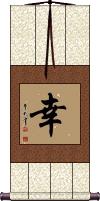
幸 can mean happiness, good fortune, good luck, and in the old days, good harvest or bounty.
Note: From Japanese, this character is sometimes romanized as “sachi,” and is often pronounced “kou” or sometimes “rei” when used in compound words with other Kanji.
Love and Happiness
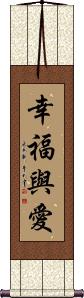
幸福與愛 is “happiness and love” in Chinese.
There is a suggestion of “good fortune” in the version of happiness used here.
Happiness
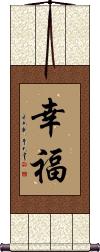
幸福 is a general state of happiness that can also be translated as truly blessed, welfare, well-being, or fortunate.
Heaven Blessing
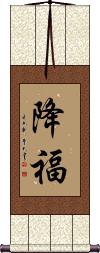
降福 is a Chinese word that means blessings from heaven.
Blessed by Heaven
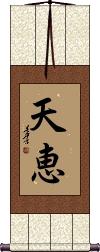
天恵 means “Heaven's Blessing,” “Blessings from Heaven,” or “Blessed by Heaven” in Japanese Kanji.
Depending on the context in which this is used, it can also mean “gift of nature,” or even “natural resources” (as in Heaven or God bestowed things like oil, iron, gold, and other natural resources upon mankind).
Heaven Blesses the Diligent
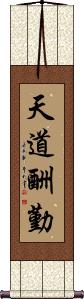
天道酬勤 can be interpreted in a few different ways:
God blesses those who work hard.
It is the way of Heaven to smile on the diligent.
God will reward those that are worthy.
Heaven blesses those who are diligent.
Whichever translation you like, a scroll like this on your wall may serve as a reminder to work hard because your diligence will pay off both in this life and the next.
Note: This can be pronounced in Korean, but it's not a commonly used term.
Heaven Rewards Hard Work
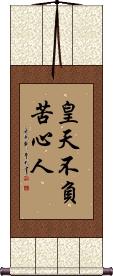
皇天不负苦心人 is an inspirational Chinese proverb that can be translated in a few ways:
Heaven will not disappoint the person who tries.
If you try hard, you're bound to succeed eventually.
Heaven rewards diligent work.
Sincere/heartful effort reaps the grace of Heaven.
Safety and Well-Being of the Family
Kanai Anzen
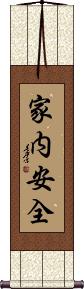
家內安全 is the Japanese way of saying “Family First.”
It's a Japanese proverb about the safety and well-being of your family and/or peace and prosperity in the household.
Some Japanese will hang an amulet in their home with these Kanji. The purpose is to keep your family safe from harm.
According to Shinto followers, hanging this in your home is seen as an invocation to God to always keep family members free from harm.
We were looking for a way to say “family first” in Japanese when this proverb came up in the conversation and research. While it doesn't say “family first,” it shows that the safety and well-being of your family is your first or most important priority. So, this proverb is the most natural way to express the idea that you put your family first.
See Also: Peace and Prosperity
A Life of Happiness and Prosperity
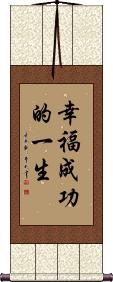
幸福成功的一生 means “A life of happiness and prosperity” or “A life of happiness and success.”
It's a very positive and inspirational wall scroll selection.
See Also: Prosperity
A Life of Happiness and Prosperity
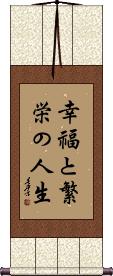
幸福と繁栄の人生 is a Japanese proverb that means “A life of happiness and prosperity” or “A life of happiness and success.”
Note: Because this selection contains some special Japanese Hiragana characters, it should be written by a Japanese calligrapher.
See Also: Prosperity
Live in Prosperity
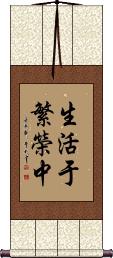
生活于繁榮中 means “live in prosperity.” It's kind of a suggestion to be prosperity the center of your world.
This is the way some people want to live (and you should always live for what you love). However, this phrase does not suggest a peaceful life - rather one that is always busy. It's not for everyone, but it might be for you.
See Also: Prosperity
Longevity / Long Life Wishes
A wish for a long and prosperous life
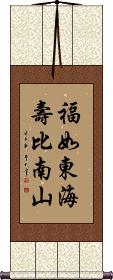
福如東海壽比南山 is a phrase that means “May you have good fortune as great as the eastern oceans, and may your life last as long as the southern mountains.”
In ancient Chinese mythology, the eastern oceans and southern mountains are where God resides (basically it is the same as saying “heaven”). So it's like saying, “May your good fortune and life be as vast as the heavens.”
There is also a longer, 14-character version of this phrase. Also, this can be cut into two scrolls (with half the phrase on each side - great for hanging on either side of a doorway). Just let me know if you'd like a special version (there is an additional cost).
Longevity / Long Life Wishes
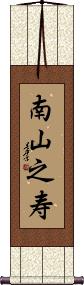
南山之壽 is a wish for long life for someone. The first part of this Japanese phrase is “Nan Zan,” which means “south mountain.” This mountain is one of the good wishes, good fortune, and prosperity. The title is often used as a salutation of good wishes.
The third Kanji is just a connector, and the last Kanji means long life or longevity.
I guess you could translate this phrase as “May your life be as long as Nan Zan is tall.”
Love and Protect
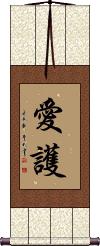
愛護 is the Chinese and Japanese Kanji for cherish, to treasure, to take care of, to love and protect, to provide loving protection, or tender care.
Mary-Grace
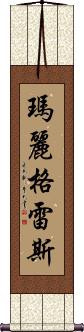
瑪麗格雷斯 is the name Mary-Grace in Chinese (Mandarin).
Mary-Grace
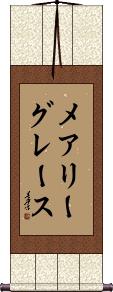
メアリーグレース is the name Mary-Grace in Japanese.
Note: Because this title is entirely Japanese Katakana, it should be written by a Japanese calligrapher.
Once in a Lifetime
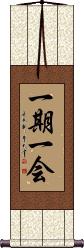
This Japanese title can be translated as “for this time only,” “chance meeting,” “one meeting, one opportunity,” “never again,” or “one chance in a lifetime.”
The characters literally mean “one time one meeting” - of course, the Kanji characters have meaning far beyond a direct translation like this.
Some might use this proverb to talk of an opportunity that presents itself just once in your life. It could also be a one-and-only chance meeting with your true soul mate. An expression of any event that might happen once in a lifetime.
This is primarily a Japanese title, however, there is also a Traditional Chinese (and old Korean) version of this proverb. Just the last character is different. The traditional form was used in Japan before WWII and in Korea prior to 1900. This title is somewhat known in China.
If you want the older traditional form, just click on the character to the right.
Opportunity / Good Luck
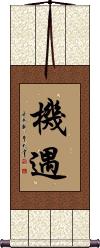
機遇 is the kind of opportunity that comes via good luck or good fortune.
This word is sometimes translated as “stroke of good luck.”
While there are other ways to express “opportunity,” I think this version is best for a calligraphy wall scroll or portrait.
Note: In Korean Hanja, this would also mean “Meeting someone under strange circumstances.”
See Also: Good Luck
Prosperity
(also means salary)
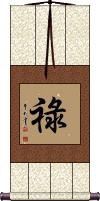
祿 is occasionally used in China to mean prosperity or good fortune.
祿 once meant the “official's salary” in old feudal China and Korea (obviously, the officials lived well, so you can imagine how this was associated with the idea of being prosperous).
祿 is only used in Korean historical documents for “salary.” In old Japanese, this means fief, allowance, stipend, reward, pension, grant, and sometimes happiness depending on context. It's very obscure in modern Japanese.
We have other entries that are better suited for a prosperity wall scroll. This entry just addresses “the coffee cup issue” where this character has been used on coffee cups and tee-shirts. However, without context, the meaning is ambiguous to some.
Blessings and Protection
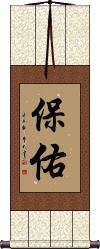
保佑 is the more religious and sometimes superstitious word for protection in Chinese. It's sort of a blessing of protection and is often translated as “bless and protect,” “blessing,” or “to bless.”
This would be used as the protection or blessing that a deity (such as God) would bestow upon you. It is not religion-specific in the same way a language cannot be specific to any religion.
 Note: Sometimes the second character is written in the form shown to the right. Let us know if you have a preference when you place your order.
See Also: Guardian Angel
Protection
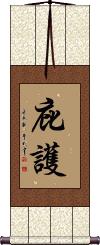
庇護 is not the most common word for a wall scroll, but this is the word for protection in Chinese, Japanese Kanji, and old Korean Hanja.
庇護 is the non-religious, non-superstitious form of protection.
庇護 can be translated as shelter, shield, defend, safeguard, take under one's wing, to put under protection. In a certain context, it means to grant asylum or give refuge and sanctuary.
See Also: Guardian Angel
Protector
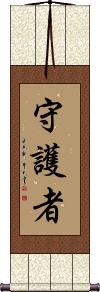
守護者 is a Chinese, Japanese Kanji, and old Korean Hanja title for a protector, watcher, or keeper.
The character breakdown:
守護 = to guard; to protect; protection; safeguard.
者 = person; someone of that nature; someone doing that work, the one [who, which].
From this breakdown, you can translate this as “The one who protects,” “Someone who safeguards,” or “guardian.”
Pursuit of Happiness
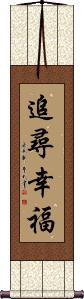
追尋幸福 is the best way to translate the English phrase “pursuit of happiness” into Chinese.
The first two characters mean “to pursue,” “to track down,” or “to search for.”
The last two mean happiness, happy, or being blessed.
See Also: Follow Your Dreams
Pursuit of Happiness
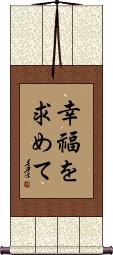
幸福を求めて is “Pursuit of Happiness” or “In Search of Happiness” in Japanese.
Here's how the characters break down:
幸福 (koufuku) happiness; blessedness; joy; well-being.
を (o) particle
求め (motome) to want; to seek; to pursue; to request
て (te) particle
Note: Because this selection contains some special Japanese Hiragana characters, it should be written by a Japanese calligrapher.
See Also: Follow Your Dreams
Red Dragon / Vermillion Dragon
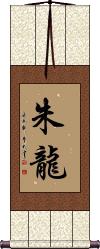
朱龍 is a sophisticated or scholarly way to say “Red Dragon.” 朱龍 is the title you'd expect in ancient Chinese literature.
The first character means red, cinnabar, or vermillion.
The second character means dragon.
It is said that the Vermillion Dragon represents kings that bestow blessings on lakes or bodies of water. This makes more sense in an ancient Chinese context.
Reiki Precepts by Usui Mikao
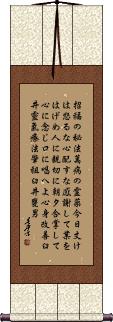
These are the precepts of Reiki that are attributed to Usui Mikao.
Here is a breakdown of the characters and a rough translation:
招福の秘法, 萬病の霊薬。
Invite blessings of [the] secret method, 10,000 illnesses of spiritual medicine.
今日丈けは: 怒るな, 心配すな, 感謝して, 業をはげめ, 人に親切に。
At least for today: Do not be angry, do not worry, be grateful, work with diligence, and be kind to people.
朝夕合掌して, 心に念じ, 口に唱へよ, 心身改善。
Morning [and] evening perform gassho (join hands), [with your] heart/mind in silent prayer, [with your] mouth chant, [thusly] mind [and] body [will] reform/improve.
臼井靈氣療法! -肇祖, 臼井甕男。
Usui Reiki Ryōhō! -Founder, Usui Mikao.
The middle portion of this is often titled, “The Five Principles of Reiki” and makes a nice calligraphy selection by itself. The Japanese text presented here can be considered the more verbose version.
Note: Because this selection contains some special Japanese Hiragana characters, it should be written by a Japanese calligrapher.
Reiki Precepts by Usui Mikao (Alternate)
Alternate Version
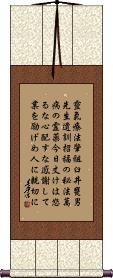
靈氣療法肇祖臼井甕男先生遺訓招福の秘法萬病の霊薬今日丈けは心配すな感謝して業を励げめ人に親切に is an alternate version of the precepts or tenets of Reiki by Usui Mikao.
It is impossible to be sure which version or versions were actually written by Usui Mikao. This is the less common of the three versions that you might see in the wild.
Here is a breakdown of the characters and a rough translation:
靈氣 療法 肇祖 臼井甕男。
Reiki therapy founder Mikao Usui
先生 遺訓。
Teacher's testament
招福の秘法, 萬病の霊薬。
Invite blessings of [the] secret method, 10,000 illnesses of spiritual medicine.
今日丈けは: 怒るな, 心配すな, 感謝して, 業をはげめ, 人に親切に。
At least for today: Do not be angry, do not worry, be grateful, work with diligence, [and] be kind to people.
Note: Because this selection contains some special Japanese Hiragana characters, it should be written by a Japanese calligrapher.
School of Happiness
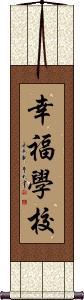
幸福學校 means “School of Happiness” or “Happiness School” in Chinese.
幸福 means happiness, happy, blessed, blessedness, joy, and/or well-being.
學校 means school or college.
Serendipity / Happy Coincidence
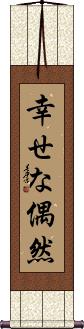
幸せな偶然 is one of many ways to express serendipity in Japanese.
The first two characters mean happiness, good fortune, luck, or blessing.
In the middle is a Japanese Hiragana character connecting these words/ideas.
The last two Kanji mean incidentally, by chance, randomly, unexpectedly, suddenly, accident, fortuity, or by coincidence.
Note: Because this selection contains some special Japanese Hiragana characters, it should be written by a Japanese calligrapher.
Serendipity / Lucky Coincidence
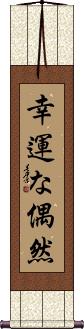
幸運な偶然 is one of many ways to express serendipity in Japanese.
The first two Kanji mean fortunate, lucky, fortune, or good luck.
In the middle is a Japanese Hiragana character connecting these words/ideas.
The last two Kanji mean incidentally, by chance, randomly, unexpectedly, suddenly, accident, fortuity, or by coincidence.
Shield
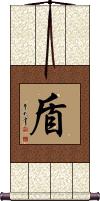
盾 is the single character for “shield” in Chinese, Japanese Kanji, and old Korean Hanja.
This can also be translated as escutcheon, protection, buckler, or aegis.
Soldier of the Gods
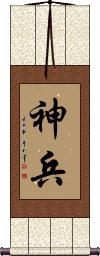
神兵 is a Japanese, Chinese, and Korean title that means “soldier dispatched by a god,” or “soldier under the protection of the gods.”
神兵 is used more in Japanese (especially in animation) than the other languages.
Soldier of Fortune
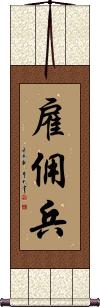
雇佣兵 is “soldier of fortune” in Chinese.
It can also be read as “mercenary” or “hired gun.”
Soldier of Fortune
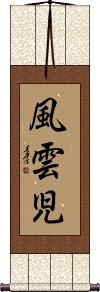
風雲児 is “soldier of fortune” in Japanese.
It can also be read as “lucky adventurer” or “adventurer who takes advantage of troubled times.”
Under the Protection of the Dragon Saint
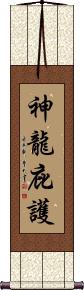
神龍庇護 is not the most common thing to say in Chinese, but it is grammatically correct and a cool title.
The first character means “supernatural or saintly.” The second is “dragon.” The last two mean protection. You could also translate this as something like “Protected by the Dragon God” or more closely “Holy Dragon.”
Warrior Saint / Saint of War
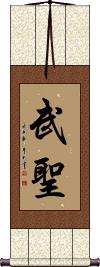
This Chinese title, Wusheng, means Saint of War.
武聖 is usually a reference to Guan Yu (關羽), also known as Guan Gong (關公).
Some Chinese soldiers still pray to Wusheng for protection. They would especially do this before going into battle.
Wealth / Fortune / Riches / Abundance
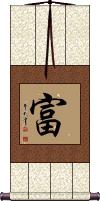
The title says it all; this word is clearly understood in Chinese and Japanese as well as Korean Hanja.
Wealth / Riches / Fortune
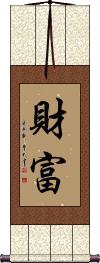
財富 means wealth or riches in Chinese.
Hanging this on your wall will label you as a “lover of money” or a “greedy person.” Order this only if you don't mind being seen in this light.
Five Ancestors Fist
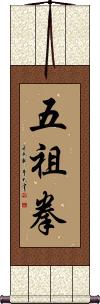
五祖拳 is a martial arts concept (or school) known as Five Ancestors' Fist.
The first character means five.
The second means ancestor, forefather, or grandparents.
The third means fist.
The ancestors referred to by this title and whose attributes contribute to this style are as follows:
1. Grace of the White Crane.
2. Agility of the Monkey.
3. Precision and skill of Emperor Taizu (great mythical ancestor).
4. Power of Luohan (Buddhist arhat).
5. Breath of Damo (founder of Buddhism, or the first Buddha).
Mysterious
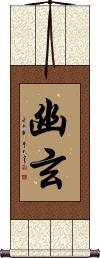
幽玄 is the Chinese, Japanese Kanji, and old Korean Hanja word meaning dim, deep, mysterious, subtle grace, hidden beauty, mysterious profundity, elegant simplicity, or subtle and profound.
This can also be the Japanese personal name Yuugen or Yugen.
This in-stock artwork might be what you are looking for, and ships right away...
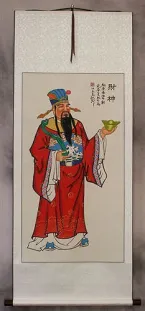
Gallery Price: $71.00
Your Price: $39.00


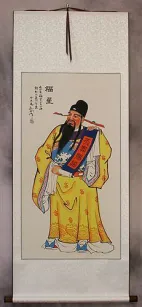
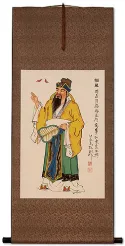
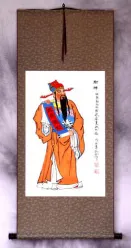
Gallery Price: $54.00
Your Price: $30.00
Gallery Price: $54.00
Your Price: $30.00
Gallery Price: $120.00
Your Price: $59.88
Gallery Price: $65.00
Your Price: $39.88

Gallery Price: $31.00
Your Price: $16.88

Gallery Price: $90.00
Your Price: $49.88

Gallery Price: $35.00
Your Price: $19.00

The following table may be helpful for those studying Chinese or Japanese...
| Title | Characters | Romaji (Romanized Japanese) | Various forms of Romanized Chinese | |
| Five Red Bats | 紅五蝠 红五蝠 | hóng wǔ fú hong2 wu3 fu2 hong wu fu hongwufu | hung wu fu hungwufu |
|
| Year-In Year-Out Have Abundance | 年年有餘 年年有馀 | nián nián yǒu yú nian2 nian2 you3 yu2 nian nian you yu niannianyouyu | nien nien yu yü niennienyuyü |
|
| Abundance Prosperous | 富裕 | fu yuu / fuyuu / fu yu | fù yù / fu4 yu4 / fu yu / fuyu | fu yü / fuyü |
| Abundance and Prosperity | 繁榮富裕 繁荣富裕 | hanei yuuhuku haneiyuuhuku hanei yuhuku | fán róng fù yù fan2 rong2 fu4 yu4 fan rong fu yu fanrongfuyu | fan jung fu yü fanjungfuyü |
| Amazing Grace | 奇異恩典 | qí yì ēn diǎn qi2 yi4 en1 dian3 qi yi en dian qiyiendian | ch`i i en tien chiientien chi i en tien |
|
| Amazing Grace | アメイジンググレイス | ameijingu gureisu ameijingugureisu | ||
| Bat | 蝠 | fú / fu2 / fu | ||
| Beautiful Virtue | 美德 美德 / 美徳 | bitoku | měi dé / mei3 de2 / mei de / meide | mei te / meite |
| Blessings on this Home | 五福臨門 五福临门 | wǔ fú lín mén wu3 fu2 lin2 men2 wu fu lin men wufulinmen | ||
| Bless this House | この家に祝福を | kono-ka ni shukufuku o kono-kanishukufukuo | ||
| Blessed by God | 神によって祝福された | kami ni yotte shukufuku sa remashita | ||
| Blessings and Protection | 祝福と保護 | shukufuku to hogo shukufukutohogo | ||
| Blessings and Good Wishes | 祝福 | shukufuku | zhù fú / zhu4 fu2 / zhu fu / zhufu | chu fu / chufu |
| Bright and Promising Future | 明るい未来 | akarui mirai akaruimirai | ||
| Charm Grace | 神韻 神韵 | shi nin / shinin | shén yùn / shen2 yun4 / shen yun / shenyun | shen yün / shenyün |
| Word of God The Gospel | 福音 | fukuin | fú yīn / fu2 yin1 / fu yin / fuyin | |
| Crisis equals Danger plus Opportunity? | 危機 危机 | kiki | wēi jī / wei1 ji1 / wei ji / weiji | wei chi / weichi |
| Destiny Fate | 命 | inochi / mei | mìng / ming4 / ming | |
| Fate Chance Meeting | 緣份 / 緣分 缘份 / 缘分 | yuán fèn / yuan2 fen4 / yuan fen / yuanfen | yüan fen / yüanfen | |
| Destiny Fate | 命運 命运 | mìng yùn / ming4 yun4 / ming yun / mingyun | ming yün / mingyün | |
| Destiny Fate | 運命 运命 | un mei / unmei | yùn mìng / yun4 ming4 / yun ming / yunming | yün ming / yünming |
| Divine Blessing | 庇佑 / 庇祐 庇佑 | bì yòu / bi4 you4 / bi you / biyou | pi yu / piyu | |
| Grace of God Divine Blessing | 神恵 / 神惠 神恵 | shin kei / shinkei | ||
| Divine Grace | 天佑 | ten yuu / tenyuu / ten yu | tiān yòu / tian1 you4 / tian you / tianyou | t`ien yu / tienyu / tien yu |
| Divine Protection | 加護 加护 | ka go / kago | jiā hù / jia1 hu4 / jia hu / jiahu | chia hu / chiahu |
| Dragon and Phoenix Brings Luck | 龍鳳呈祥 龙凤呈祥 | lóng fèng chéng xiáng long2 feng4 cheng2 xiang2 long feng cheng xiang longfengchengxiang | lung feng ch`eng hsiang lungfengchenghsiang lung feng cheng hsiang |
|
| Eat Drink and Be Merry | 喫喝玩樂及時行樂 吃喝玩乐及时行乐 | chī hē wán lè jí shí xíng lè chi1 he1 wan2 le4 ji2 shi2 xing2 le4 chi he wan le ji shi xing le chihewanlejishixingle | ch`ih ho wan le chi shih hsing le chih ho wan le chi shih hsing le |
|
| Elegant Exquisite Grace | 美妙 | bimyou / bimyo | měi miào / mei3 miao4 / mei miao / meimiao | |
| Grace Favor | 恩寵 恩宠 | on chou / onchou / on cho | ēn chǒng / en1 chong3 / en chong / enchong | en ch`ung / enchung / en chung |
| Eternal Happiness | 永遠の幸福 | ei en no kou fuku eiennokoufuku ei en no ko fuku | ||
| Eternal Happiness | 幸福永恆 幸福永恒 | xìng fú yǒng héng xing4 fu2 yong3 heng2 xing fu yong heng xingfuyongheng | hsing fu yung heng hsingfuyungheng |
|
| Fallen Angel | 墮落天使 堕落天使 | duò luò tiān shǐ duo4 luo4 tian1 shi3 duo luo tian shi duoluotianshi | to lo t`ien shih tolotienshih to lo tien shih |
|
| Grace Favor | 恩典 | on ten / onten | ēn diǎn / en1 dian3 / en dian / endian | en tien / entien |
| A Bright Future | 鵬程萬里 鹏程万里 | péng chéng wàn lǐ peng2 cheng2 wan4 li3 peng cheng wan li pengchengwanli | p`eng ch`eng wan li pengchengwanli peng cheng wan li |
|
| Rise and Fall Ups and Downs | 栄枯盛衰 / 榮枯盛衰 荣枯盛衰 | ei ko sei sui eikoseisui | ||
| Flowers Bloom and Flowers Fall | 花は咲き花は散る | hana wa sa ki hana wa chi ru hanawasakihanawachiru | ||
| Fortune favors the brave | 勇者は幸運に恵まれる | yuusha ha kouun ni megumareru yusha ha koun ni megumareru | ||
| Fortune Favors The Brave | 命運鐘情於勇士 命运钟情于勇士 | mìng yùn zhōng qíng yú yǒng shì ming4 yun4 zhong1 qing2 yu2 yong3 shi4 ming yun zhong qing yu yong shi | ming yün chung ch`ing yü yung shih ming yün chung ching yü yung shih |
|
| Fortune Favors the Bold | 幸運眷顧勇敢的人 幸运眷顾勇敢的人 | xìng yùn juàn gù yǒng gǎn de rén xing4 yun4 juan4 gu4 yong3 gan3 de ren2 xing yun juan gu yong gan de ren | hsing yün chüan ku yung kan te jen | |
| Good Luck Good Fortune | 福 | fuku | fú / fu2 / fu | |
| Fu Lu Shou | 福祿壽 | fú lù shòu fu2 lu4 shou4 fu lu shou fulushou | ||
| Lucky Star | 福星 | fukusei | fú xīng / fu2 xing1 / fu xing / fuxing | fu hsing / fuhsing |
| Gassho | 合掌 | gasshou / gasho | hé zhǎng / he2 zhang3 / he zhang / hezhang | ho chang / hochang |
| God Bless You | お大事に | odaijini | ||
| God Bless You May God Protect You | 上帝保佑 | shàng dì bǎo yòu shang4 di4 bao3 you4 shang di bao you shangdibaoyou | shang ti pao yu shangtipaoyu |
|
| God Bless You God Be With You | 神さまが守るように | kami sa ma ga mamo ru you ni kamisamagamamoruyouni kami sa ma ga mamo ru yo ni | ||
| 50th Golden Wedding Anniversary | 幸福金婚 / 倖福金婚 幸福金婚 | kou fuku kin kon koufukukinkon ko fuku kin kon | xìng fú jīn hūn xing4 fu2 jin1 hun1 xing fu jin hun xingfujinhun | hsing fu chin hun hsingfuchinhun |
| Good Luck | 幸運 幸运 | kou un / kouun / ko un | xìng yùn / xing4 yun4 / xing yun / xingyun | hsing yün / hsingyün |
| House of Good Fortune | 福宅 | fú zhái / fu2 zhai2 / fu zhai / fuzhai | fu chai / fuchai | |
| Goshin-Do | 護身道 护身道 | gou shin dou goushindou go shin do | hù shēn dào hu4 shen1 dao4 hu shen dao hushendao | hu shen tao hushentao |
| Goshin-Kai | 護身会 护身会 | go shin kai goshinkai | ||
| Grace | 格蕾絲 格蕾丝 | gé lěi sī ge2 lei3 si1 ge lei si geleisi | ko lei ssu koleissu |
|
| Grace | 恩 | on | ēn / en1 / en | |
| Grace from Heaven Grace from God | 天恩 | tiān ēn / tian1 en1 / tian en / tianen | t`ien en / tienen / tien en | |
| Grace from Heaven Grace from God | 神の恩恵 | kami no on kei kaminoonkei | ||
| Grace | グレース | gureesu / guresu | ||
| Guan Gong Warrior Saint | 關公 关公 | guān gōng guan1 gong1 guan gong guangong | kuan kung kuankung |
|
| Guan Yu | 關羽 关羽 | guān yǔ / guan1 yu3 / guan yu / guanyu | kuan yü / kuanyü | |
| Happiness Fortune Lucky | 幸 | saki / sachi / rei / rē | xìng / xing4 / xing | hsing |
| Love and Happiness | 幸福與愛 幸福与爱 | xìng fú yǔ ài xing4 fu2 yu3 ai4 xing fu yu ai xingfuyuai | hsing fu yü ai hsingfuyüai |
|
| Happiness | 幸福 | koufuku / kofuku | xìng fú / xing4 fu2 / xing fu / xingfu | hsing fu / hsingfu |
| Heaven Blessing | 降福 | jiàng fú / jiang4 fu2 / jiang fu / jiangfu | chiang fu / chiangfu | |
| Blessed by Heaven | 天恵 | ten kei / tenkei | ||
| Heaven Blesses the Diligent | 天道酬勤 | tiān dào chóu qín tian1 dao4 chou2 qin2 tian dao chou qin tiandaochouqin | t`ien tao ch`ou ch`in tientaochouchin tien tao chou chin |
|
| Heaven Rewards Hard Work | 皇天不負苦心人 皇天不负苦心人 | huáng tiān bù fù kǔ xīn rén huang2 tian1 bu4 fu4 ku3 xin1 ren2 huang tian bu fu ku xin ren huangtianbufukuxinren | huang t`ien pu fu k`u hsin jen huangtienpufukuhsinjen huang tien pu fu ku hsin jen |
|
| Safety and Well-Being of the Family | 家內安全 家内安全 | ka nai an zen kanaianzen | ||
| A Life of Happiness and Prosperity | 幸福成功的一生 | xìng fú chéng gōng de yì shēng xing4 fu2 cheng2 gong1 de yi4 sheng1 xing fu cheng gong de yi sheng xingfuchenggongdeyisheng | hsing fu ch`eng kung te i sheng hsingfuchengkungteisheng hsing fu cheng kung te i sheng |
|
| A Life of Happiness and Prosperity | 幸福と繁栄の人生 | kou fuku to ha nei no jin sei koufukutohaneinojinsei ko fuku to ha nei no jin sei | ||
| Live in Prosperity | 生活于繁榮中 生活于繁荣中 | shēng huó yú fán róng zhōng sheng1 huo2 yu2 fan2 rong2 zhong1 sheng huo yu fan rong zhong shenghuoyufanrongzhong | sheng huo yü fan jung chung shenghuoyüfanjungchung |
|
| Longevity Long Life Wishes | 福如東海壽比南山 福如东海寿比南山 | fú rú dōng hǎi shòu bǐ nán shān fu2 ru2 dong1 hai3 shou4 bi3 nan2 shan1 fu ru dong hai shou bi nan shan furudonghaishoubinanshan | fu ju tung hai shou pi nan shan fujutunghaishoupinanshan |
|
| Longevity Long Life Wishes | 南山之壽 南山之寿 | nan zan no jyu nanzannojyu | ||
| Love and Protect | 愛護 爱护 | ai go / aigo | ài hù / ai4 hu4 / ai hu / aihu | |
| Mary-Grace | 瑪麗格雷斯 玛丽格雷斯 | mǎ lì gé léi sī ma3 li4 ge2 lei2 si1 ma li ge lei si maligeleisi | ma li ko lei ssu malikoleissu |
|
| Mary-Grace | メアリーグレース | meariigureesu meariguresu | ||
| Once in a Lifetime | 一期一會 一期一会 | ichigo ichie ichigoichie | yī qī yī huì yi1 qi1 yi1 hui4 yi qi yi hui yiqiyihui | i ch`i i hui ichiihui i chi i hui |
| Opportunity Good Luck | 機遇 机遇 | jī yù / ji1 yu4 / ji yu / jiyu | chi yü / chiyü | |
| Prosperity | 祿 禄 | fuchi | lù / lu4 / lu | |
| Blessings and Protection | 保佑 / 保祐 保佑 | bǎo yòu / bao3 you4 / bao you / baoyou | pao yu / paoyu | |
| Protection | 庇護 庇护 | hi go / higo | bì hù / bi4 hu4 / bi hu / bihu | pi hu / pihu |
| Protector | 守護者 守护者 | shu go sha / shugosha | shǒu hù zhě shou3 hu4 zhe3 shou hu zhe shouhuzhe | shou hu che shouhuche |
| Pursuit of Happiness | 追尋幸福 追寻幸福 | zhuī xún xìng fú zhui1 xun2 xing4 fu2 zhui xun xing fu zhuixunxingfu | chui hsün hsing fu chuihsünhsingfu |
|
| Pursuit of Happiness | 幸福を求めて | koufuku o motome te koufukuomotomete kofuku o motome te | ||
| Red Dragon Vermillion Dragon | 朱龍 朱龙 | zhū lóng / zhu1 long2 / zhu long / zhulong | chu lung / chulung | |
| Reiki Precepts by Usui Mikao | 招福の秘法萬病の霊薬今日丈けは怒るな心配すな感謝して業をはげめ人に親切に朝夕合掌して心に念じ口に唱へよ心身改善臼井靈氣療法肇祖臼井甕男 | shou fuku no hihou man byou no rei yaku kyou da ke wa oko ru na shin pai su na kan sha shi te gyou wo ha ke me hito ni shin setsu ni asayuu gasshou shite kokoro ni nenji kuchi ni tonae yo shin shin kaizen usui rei ki ryou hou cho so usu i mika o sho fuku no hiho man byo no rei yaku kyo da ke wa oko ru na shin pai su na kan sha shi te gyo wo ha ke me hito ni shin setsu ni asayu gasho shite kokoro ni nenji kuchi ni tonae yo shin shin kaizen usui rei ki ryo ho cho so usu i mika o | ||
| Reiki Precepts by Usui Mikao (Alternate) | 靈氣療法肇祖臼井甕男先生遺訓招福の秘法萬病の霊薬今日丈けは怒るな心配すな感謝して業を励げめ人に親切に | reiki ryouhou chouso usui mikao sensei ikun shoufuku no hihou yorozu byou no reiyaku kyou take ke wa oko ru na shinpai suna kansha shite gou o hagemu ge me hito ni shinsetsu ni reiki ryoho choso usui mikao sensei ikun shofuku no hiho yorozu byo no reiyaku kyo take ke wa oko ru na shinpai suna kansha shite go o hagemu ge me hito ni shinsetsu ni | ||
| School of Happiness | 幸福學校 幸福学校 | xìng fú xué xiào xing4 fu2 xue2 xiao4 xing fu xue xiao xingfuxuexiao | hsing fu hsüeh hsiao hsingfuhsüehhsiao |
|
| Serendipity Happy Coincidence | 幸せな偶然 | shiawa se na guu zen shiawasenaguuzen shiawa se na gu zen | ||
| Serendipity Lucky Coincidence | 幸運な偶然 | kou un na guu zen kouunnaguuzen ko un na gu zen | ||
| Shield | 盾 | tate | dùn / dun4 / dun | tun |
| Soldier of the Gods | 神兵 | shin pei / shinpei | shén bīng shen2 bing1 shen bing shenbing | shen ping shenping |
| Soldier of Fortune | 雇佣兵 | gù yōng bīng gu4 yong1 bing1 gu yong bing guyongbing | ku yung ping kuyungping |
|
| Soldier of Fortune | 風雲児 | fuu un ji / fuuunji / fu un ji | ||
| Under the Protection of the Dragon Saint | 神龍庇護 神龙庇护 | shén lóng bì hù shen2 long2 bi4 hu4 shen long bi hu shenlongbihu | shen lung pi hu shenlungpihu |
|
| Warrior Saint Saint of War | 武聖 武圣 | wǔ shèng / wu3 sheng4 / wu sheng / wusheng | ||
| Wealth Fortune Riches Abundance | 富 | tomi | fù / fu4 / fu | |
| Wealth Riches Fortune | 財富 财富 | cái fù / cai2 fu4 / cai fu / caifu | ts`ai fu / tsaifu / tsai fu | |
| Five Ancestors Fist | 五祖拳 | wǔ zǔ quán wu3 zu3 quan2 wu zu quan wuzuquan | wu tsu ch`üan wutsuchüan wu tsu chüan |
|
| Mysterious | 幽玄 | yū gen / yūgen | yōu xuán / you1 xuan2 / you xuan / youxuan | yu hsüan / yuhsüan |
| In some entries above you will see that characters have different versions above and below a line. In these cases, the characters above the line are Traditional Chinese, while the ones below are Simplified Chinese. | ||||



